Quick Answer
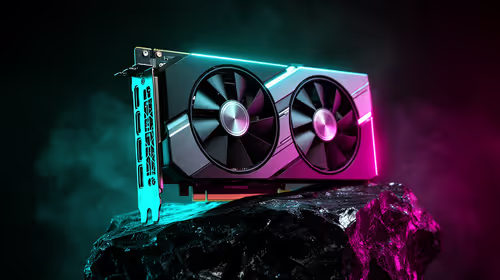
Windows 11 update BSOD on a RTX 5080 build is most often caused by a driver conflict, chipset issue, unstable BIOS setting, or a bad update order. Do not replace hardware first; roll through a clean driver install, chipset update, BIOS check, and a 10-minute stability test before spending R10,000 or more on new parts.
Stabilise The Driver Stack
Start with the display driver, motherboard chipset driver, and device firmware. For Nvidia builds, do a clean install from the current driver package; for AMD builds, refresh the Adrenalin and chipset packages together. On handhelds such as ROG Ally X, use the vendor update utility before adding generic packages.
Check BIOS And Power Settings
Confirm BIOS is current, then test default CPU and memory settings before restoring XMP or EXPO. A RTX 5080 build can crash or hitch if an update changes scheduler behaviour, power states, or USB devices. Keep one change per reboot and record whether the issue appears at idle, launch, or under a 60 fps game cap.
Prove The Fix With Tests
Use Event Viewer for bugcheck codes, run a short game test, and watch temperatures. For stutter, clear shader cache and test with overlays disabled. For BSOD, check RAM stability and storage health before blaming the GPU. SA buyers should only price replacement parts after the same fault repeats with clean drivers and default settings.
FAQ
Should I uninstall the Windows update immediately?
Only if the PC was stable before the update and fails after clean drivers. Try drivers, chipset, BIOS, and default memory settings first because those fixes keep security updates intact.
Can XMP or EXPO cause bsod after an update?
Yes. A profile that was barely stable can become exposed after driver or scheduler changes. Test stock memory settings, then re-enable the profile once the system is stable.
When is hardware replacement justified?
Replace hardware only after logs, clean installs, and cross-tests point to a repeatable fault. A one-day post-update crash is not enough proof to buy a new GPU, CPU, or motherboard.
Practical check
Record the Windows build, driver version, BIOS version, and crash time before each fix so the next step is evidence-based.