Quick Answer
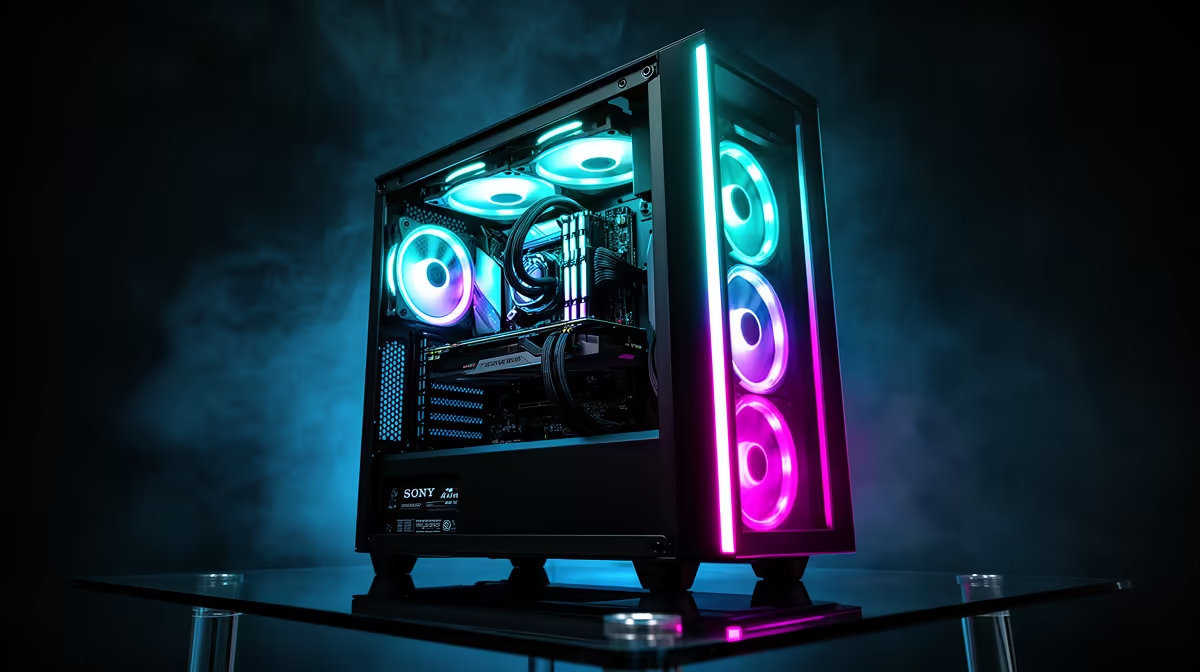
A competitive esports rig in Carletonville should chase frame rate, not eye candy: a Ryzen 5 7600 (6 cores) with an RTX 4060 pushes 240fps+ in Valorant and CS2 at 1080p, paired with a 1080p 165Hz monitor. The full setup costs roughly R18,000–R25,000.
Frames win matches
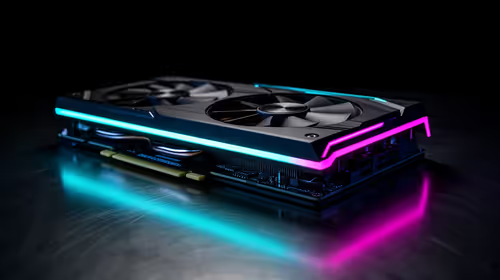
Esports titles like Valorant, CS2 and Apex run on modest settings to maximise frame rate and minimise input lag. The RTX 4060 clears 240fps in Valorant and 200fps+ in CS2 at 1080p competitive settings, while a fast 6-core Ryzen 5 7600 keeps 1% lows high so the game never stutters mid-fight. There's no need for an expensive GPU here — frame rate and a high-refresh display matter more than raw graphics horsepower.
Display, peripherals and Carletonville internet
The monitor is half the upgrade: a 1080p 165Hz (or 240Hz) panel turns those high frame rates into a visible advantage, with response times of 1ms. Pair it with a lightweight mouse and a fibre or stable LTE line — under 30ms ping to local SA servers keeps your shots registering on time.
Peripherals that matter
A lightweight gaming mouse (under 70g) and a fast 165Hz+ monitor matter as much as the PC in competitive play. A wired connection and a low-latency mouse cut the milliseconds that decide duels. Spend on these before chasing a higher-end GPU — the RTX 4060 already exceeds esports frame-rate needs.
FAQ
What frame rate do I need for competitive play?
Aim for frames above your monitor's refresh — 165fps+ on a 165Hz panel, ideally 240fps for the lowest input lag in shooters.
Is the RTX 4060 enough for esports?
Yes. It drives 200–300fps in Valorant and CS2 at 1080p, which is exactly what competitive players want.
Does monitor refresh rate really matter?
A lot. A 165Hz or 240Hz panel shows more frames and smoother motion, giving a measurable edge over a 60Hz display.
in-game FPS a few frames above your refresh rate and enable a low-latency mode — it cuts input lag without screen tearing.