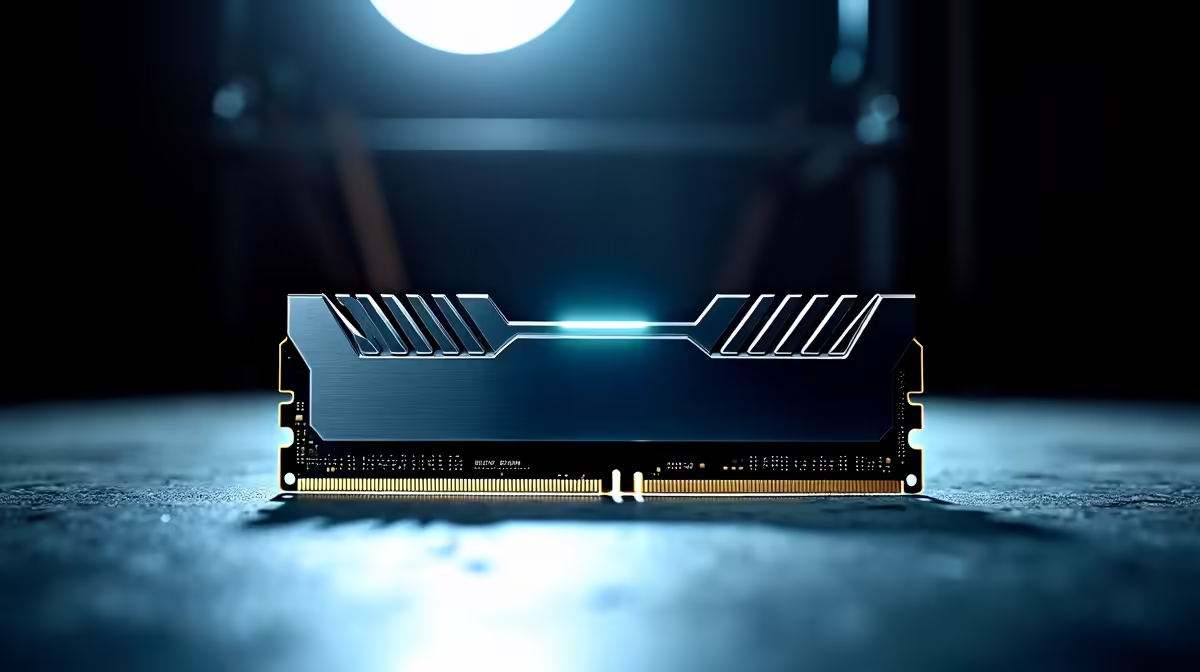
For a NAS-style home storage box, RAM matters more than people expect, especially if you run caching file systems or apps on it. Whether to add to your DDR5 kit or replace it depends on your current capacity and what the NAS actually does.
Quick Answer
For NAS-style home storage, replace or expand your DDR5 kit if you run a caching file system like ZFS or host apps and containers, where 16GB to 32GB helps. For simple file sharing and backups, modest RAM is plenty, so an upgrade may be unnecessary.
When more RAM helps a NAS
If your NAS uses a memory-hungry file system such as ZFS, extra RAM acts as a read cache that noticeably speeds up access and supports data integrity features, so moving toward 16GB or 32GB pays off. The same applies if you run containers, media servers or backup apps on the box, since those consume memory alongside the storage duties. In these cases, expanding the kit is a worthwhile upgrade.
When your current kit is fine
For a basic NAS that only shares files and stores backups over the network, RAM demands are low, and a typical 8GB or 16GB DDR5 kit already covers it. In that scenario, adding RAM gives little benefit, and the money is better spent on more storage capacity or a proper backup target. Check your NAS software's recommendations first, since the right answer depends entirely on the workload you run, not the storage size alone.
FAQ
How much RAM does a home NAS need?
A simple file-and-backup NAS runs fine on 8GB to 16GB. Caching file systems like ZFS or hosted apps benefit from 16GB to 32GB, so match RAM to the workload.
Does adding RAM speed up a basic NAS?
Usually little. Simple file sharing is not memory-bound, so extra RAM rarely helps. The gain appears mainly with caching file systems or apps running on the NAS.
Should I add RAM or storage to my NAS?
If you run only file sharing, add storage. If you use a caching file system or host apps and hit memory limits, expanding the DDR5 kit is the better upgrade.
Pro Tip
Check your NAS software's RAM guidance before upgrading; a ZFS-based box rewards more memory, while a simple file server does not, so match the kit to the workload.