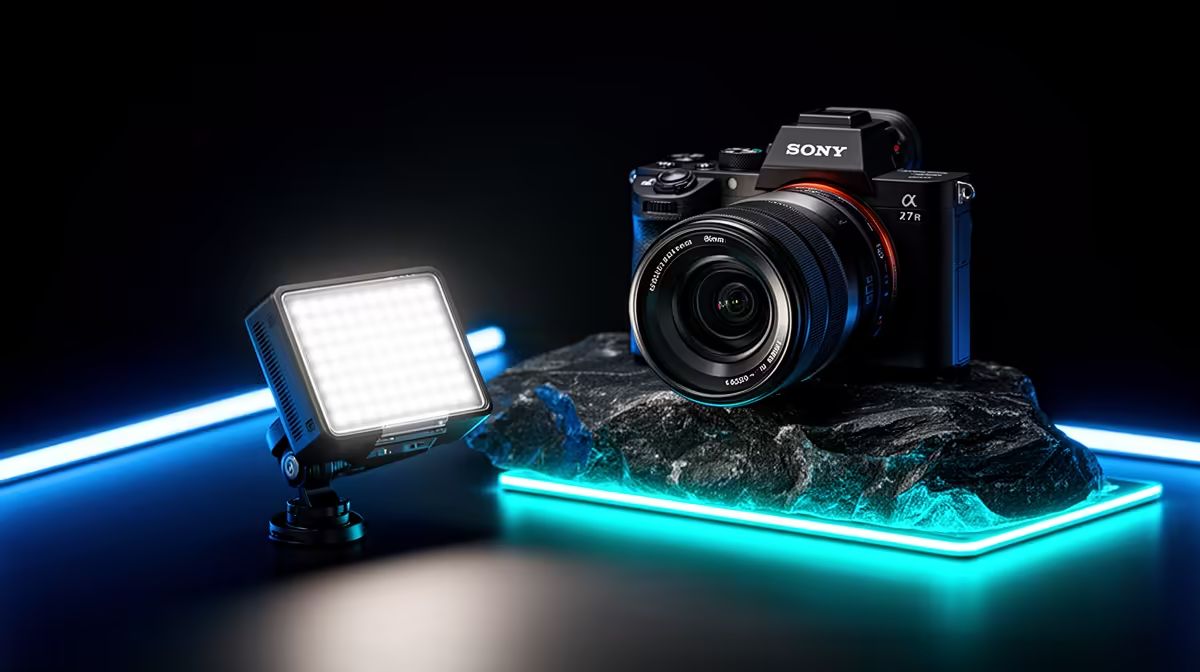
Shadows on a gaming stream do not just affect how you look. They affect how you read on a small phone screen, which is where the majority of South African viewers are watching. A face half in darkness looks amateurish at any resolution, and the fix does not require a second light or a studio. A single compact LED video light, positioned with some thought, handles most of the problem on its own.
Quick Answer
Place one compact LED at roughly 45 degrees to your face, slightly above eye level, and diffuse it if the panel allows. A pale wall opposite the light acts as natural fill, lifting the shadowed side enough that a second panel is not necessary for most gaming stream setups.
🔧 The 45-Degree Placement That Changes Everything
The angle at which you position the key light determines the shadow pattern far more than the light's power output does. Pointing the panel straight at your face from directly in front eliminates depth but creates a flat, passport-photo quality. Swinging it too far to one side leaves the opposite cheek in near-darkness and produces a dramatic look that suits film noir more than a Friday night gaming stream.
The 45-degree position delivers sculpted light that reads as natural. Place the LED panel roughly a third of the way around from directly in front of you -- at the 2 o'clock or 10 o'clock position. The shadow falls behind you and to the side rather than across your features.
Vertical height matters separately. The light should sit 10 to 20 centimetres above eye level. Too low creates upward shadows; too high casts a harsh shadow down into your eye sockets, one of the most common mistakes in gaming stream setups.
Diffusion Changes Shadow Edge Quality, Not Depth
A compact LED without diffusion produces hard-edged shadows because the light source is physically small. When the source is small relative to the subject, the transition zone between light and shadow is narrow and crisp, which reads as harsh on camera. Adding a diffusion panel, a soft box, or even a sheet of white tracing paper over the light physically widens the apparent source size.
Wider apparent sources produce softer shadow edges. The shadow does not disappear, but the transition from lit to unlit is gradual enough that it reads as natural fill rather than a hard line. For a gaming stream where you are in the frame most of the time, that soft gradation is significantly more flattering and requires no extra hardware beyond the diffuser.
✨ Using Your Room as a Free Second Light Source
A white or pale-painted wall positioned roughly one metre opposite your key light is doing useful work even if you have not noticed it. Light from the LED panel spills across the room and bounces off that wall back toward the unlit side of your face. This is called a wall bounce, and at the right distance it provides enough fill to lift the shadow side without introducing a second light source or any additional complexity.
The effectiveness depends on wall colour and distance. A white wall within a metre of your unlit side bounces noticeably more light back than a dark wall at two metres. If the shadow-side wall is dark, a large piece of white foam board propped opposite the key light produces a visible improvement. For a gaming stream at 1080p, that bounce recovers enough shadow detail to keep both sides of your face readable without a second panel.
💡 Brightness, Distance, and Overexposure
A compact panel at close range is often bright enough to overexpose at full power. Start at 50 to 60 percent brightness with the light 60 to 90 centimetres from your face, then check the camera preview. Overexposure erases facial detail just as effectively as shadow does: the camera's auto exposure compensates by darkening the whole scene, pulling down the areas that were correctly lit.
Pro Tip ⚡
Check your camera feed in streaming software at your normal game brightness before going live. A dark game scene and a brightly lit one look very different on the same setup. Run a few minutes of the game you actually play most to confirm the light balance holds across your typical scenes.
🎯 Fixing Glasses Glare Without Repositioning
The 45-degree position can bounce light directly off lens coatings and into the camera. Two small adjustments fix this without moving the light away from the effective angle: raise it slightly above the baseline 10 to 20 centimetres above eye level, and tilt the panel inward so the beam angles downward toward your face rather than sitting level. Both adjustments together shift the reflection point off the lens in most cases while keeping the shadow pattern intact.
Frequently Asked Questions
Where exactly should a single LED light sit to minimise shadows?
At roughly 45 degrees to one side and 10 to 20 centimetres above your eye line. That angle wraps light across your face so shadow falls behind rather than across your features, and the slight height keeps the brow shadow shallow.
Does one compact light really handle all the shadow?
Not completely. A single key light with a wall bounce softens roughly 70 percent of shadow in a typical setup. Full elimination needs a dedicated fill panel opposite the key. For most gaming streams at standard resolutions, the key-plus-bounce result is clean enough that viewers will not notice what remains.
How does a diffuser affect shadow quality on a compact LED?
A diffuser widens the apparent light source, making shadow edges soft rather than sharp. The shadow does not disappear, but the transition is gradual enough that it reads as natural depth. Diffusion does not add fill -- it changes the quality of the shadow edge from harsh to flattering.
What is the right height for the light above my face?
10 to 20 centimetres above eye level. Below eye level creates upward shadows that look unnatural. At eye level the result is flat. Much higher than 20 centimetres casts shadows into your eye sockets, which reads as harsh on camera.
Can I fix glasses glare without repositioning the light?
Yes. Raise the panel slightly above the baseline height and tilt it so the beam angles slightly downward. Both adjustments together shift the reflection off the lens coating while keeping the key at the 45-degree position that produces the best shadow pattern.
Ready to sort your stream lighting with one compact panel? Browse the compact LED video light range and pick the one sized for your desk that gives your face the clean, shadow-free look your viewers notice immediately.