


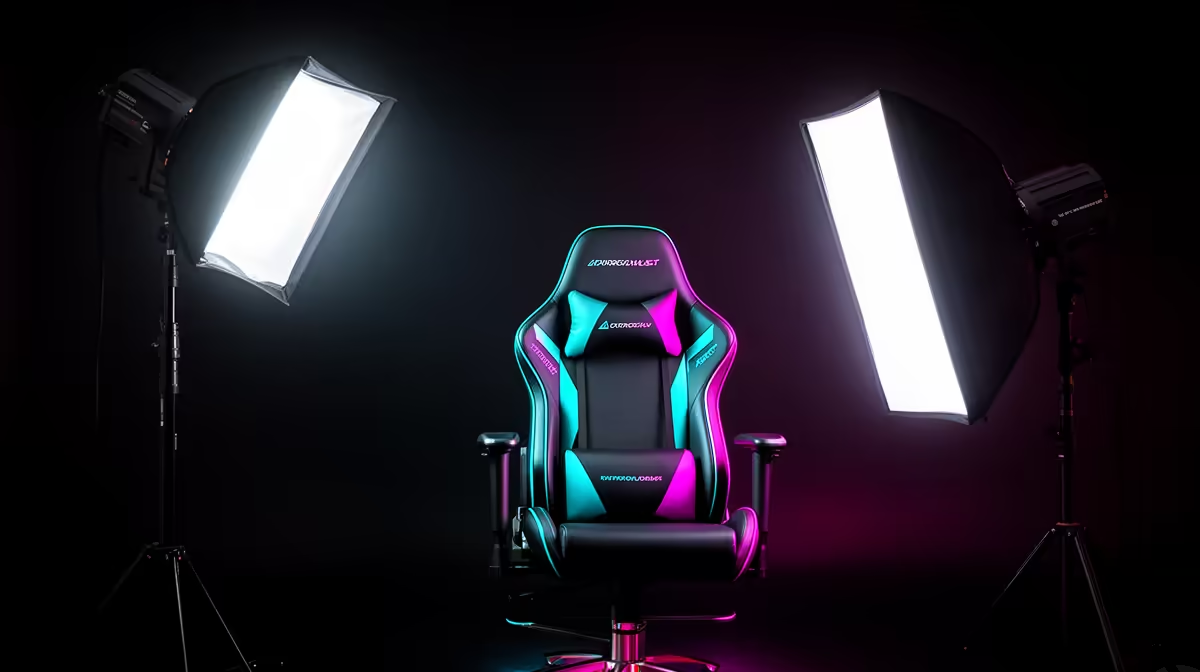
Flat, shadowless light makes footage look like a security camera recording. Three-point lighting solves that by placing three separate sources around the subject, each doing a distinct job, so the face has shape, shadows are controlled, and the subject reads as separate from the background. Softboxes handle the heavy lifting on key and fill, while a compact panel light rounds out the rig without adding bulk.
Quick Answer
Three-point lighting places a softbox key to one side, a second light as fill at roughly half the power, and a back light behind the subject to rim the edges. The key shapes the face, the fill lifts dark areas, and the back light creates depth that stops the subject merging into the backdrop.
🔆 The Key Light: Shaping the Face
The key is the dominant source, and its position determines the character of the whole shot. Place it roughly 45 degrees to one side of the camera and about 30 degrees above the subject's eye line. That angle creates natural-looking facial shadows across the nose and cheek, the same modelling that sunlight produces when it comes from a window at an angle rather than directly overhead.
A softbox is the standard choice here because its diffusion panel turns a small, bright source into a large, soft one. The bigger the softbox face relative to the subject's distance from it, the softer and more gradual the shadow edge. A 60 to 90cm box at 1.5 metres gives you a quality of light close to a large north-facing window, flattering for skin and easy to dial in.
Power matters too. The key sets your exposure anchor, so bring it up until your camera reads the correct exposure at your chosen aperture, then leave it there. The other two lights are set relative to this one.
💡 The Fill Light: Managing the Shadow Side
Without a fill, the shadow side of the face falls dark, sometimes too dark for the clean, professional look most video content needs. The fill light sits on the opposite side of the camera from the key, lower and closer, and its job is to lift those shadows to a controlled level rather than erase them.
The standard starting ratio is two to one: the fill at roughly half the key's output. That gap keeps shadow detail visible while preserving the modelling the key created. Push the fill brighter and the face flattens; pull it back further and the shadow side goes muddy.
A second softbox works well as fill because it produces the same soft, diffused quality as the key and the two sources blend cleanly. A smaller box than the key is fine here. Alternatively, a flat panel light on a stand is compact and easy to reposition, which makes it popular in smaller rooms where you need the second source but cannot afford to give it much floor space.
🔥 The Back Light: Separating Subject From Backdrop
The back light is the most commonly skipped in budget setups, and skipping it is exactly why so many home videos look flat even with decent key and fill. This third source sits behind the subject, usually high and slightly to one side, angled down to graze across the hair and the tops of the shoulders.
The rim of light it creates traces the subject's outline, which visually lifts them forward and away from the backdrop. Without it, even a well-lit face can seem to blend into whatever is behind it, and the image reads as two-dimensional.
A 19-inch panel works well in this position because it is slim, easy to mount high on a light stand, and its output focuses forward rather than spilling all over the room. Keep it out of frame and angle it so the edge touches the subject's profile rather than flooding the top of the head.
Pro Tip ⚡
In a small South African home office or flat, position the back light higher than you think you need it. Angling steeply downward keeps its beam off the backdrop and off the lens, and a steeper angle creates a more distinctive rim that reads well even after compression on YouTube or Zoom.
Frequently Asked Questions
What is the starting placement for the fill light?
Position the fill on the opposite side of the camera from the key, roughly at eye level or slightly below. Start it at half the key's output and adjust from there. Too much fill and the face flattens; too little and the shadow side darkens past the point where your camera can hold detail cleanly.
Does the back light need to be a specific type?
No fixed type is required, but a narrow, directional source works better than a wide diffuse one in this role. A panel light or a bare bulb with a reflector gives a tighter rim than a softbox would. The goal is a controlled edge of brightness on the hair and shoulders, not a second key hitting the subject from behind.
Can this setup work with only two lights?
Yes, with a compromise. If you drop the back light, your subject may blend into the backdrop, particularly on a dark background. If you drop the fill, the shadow side goes deep. Most creators who start with two lights use key plus fill, then add the back light when they notice the footage lacks depth. Two lights beats one, but three is the complete system.
Why does the key light go to the side rather than straight on?
A light aimed directly at the subject from in front of the camera flattens every feature. Shadows reveal form: they show the curve of the cheek, the depth of the eye socket, and the line of the jaw. Moving the key off-axis creates those shadows, which is how you turn a flat, overlit shot into something that looks intentional and professional.
What power output is enough for a home studio?
For a seated talking-head shot, 45W daylight bulbs in a 60cm softbox are sufficient at normal working distances. The key is colour consistency: mixing warm and cool bulbs across the three sources produces an uneven cast that white balance cannot fully fix.
Ready to build a proper three-point setup? Browse the softbox and panel light range at Evetech and find the lighting kit that fits your room and your content goals.










