Quick Answer
A podcast recording setup for a Vryheid creator costs roughly R14,000–R22,000: a Ryzen 5 7600 (6 cores), 16GB DDR5 and a 1TB NVMe SSD, plus a USB dynamic mic from R3,500. Audio work is CPU- and storage-driven, so a big graphics card adds nothing.
What the gear actually delivers
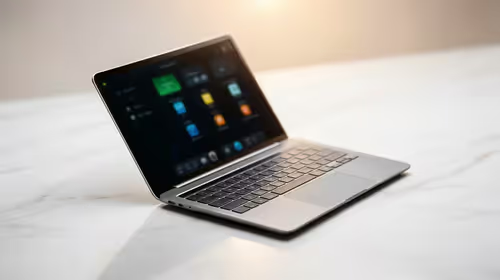
The microphone and acoustics shape your sound far more than the PC. A USB dynamic mic like the Shure MV7+ (~R6,000) rejects room echo and the rattle of a winter heater better than a sensitive condenser. For the computer, a 6-core Ryzen 5 7600 with 16GB DDR5 edits multi-track sessions in Reaper or Audition without lag, and a 1TB Gen4 NVMe keeps large WAV files responsive. Move to 32GB RAM only if you stack music and plugins.
Gaming overlap and Vryheid internet
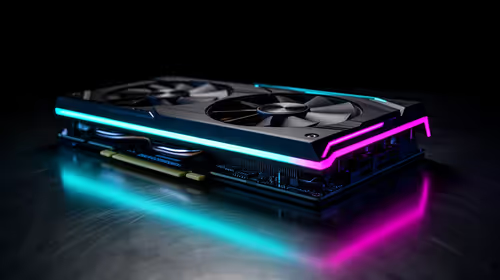
If you game too, the same CPU plus a budget RTX 4060 covers both — gaming wants the GPU, podcasting doesn't. Vryheid's fibre and LTE upload a 45-minute episode (under 90MB at 128 kbps) in minutes.
Acoustics and a starter kit
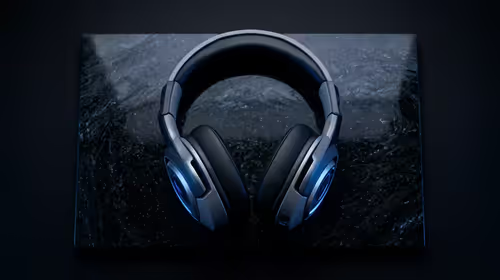
Treat your Vryheid recording space with soft furnishings before spending more — echo control lifts audio quality more cheaply than any gear upgrade. A sensible starter kit is a USB dynamic mic, closed-back headphones, a pop filter and a boom arm, around R8,000 total. Record at 24-bit WAV, export speech at 128–192 kbps. Record a short test and check levels on headphones before each session to catch a loose cable or hum before committing to a take.
FAQ
Do podcasting and gaming need separate PCs?
No. A Ryzen 5 7600 with an RTX 4060 and 32GB RAM handles both; podcasting uses the CPU, gaming uses the GPU.
What's the most important podcast purchase?
The microphone. A USB dynamic mic lifts perceived quality more than any CPU or RAM upgrade.
Is 16GB RAM enough for audio editing?
Yes for talk shows; step to 32GB if you layer music beds, run plugin chains, or multitask heavily.
mic 10–15cm away and slightly off-axis — it warms your voice while cutting plosives without extra hardware.