Quick Answer
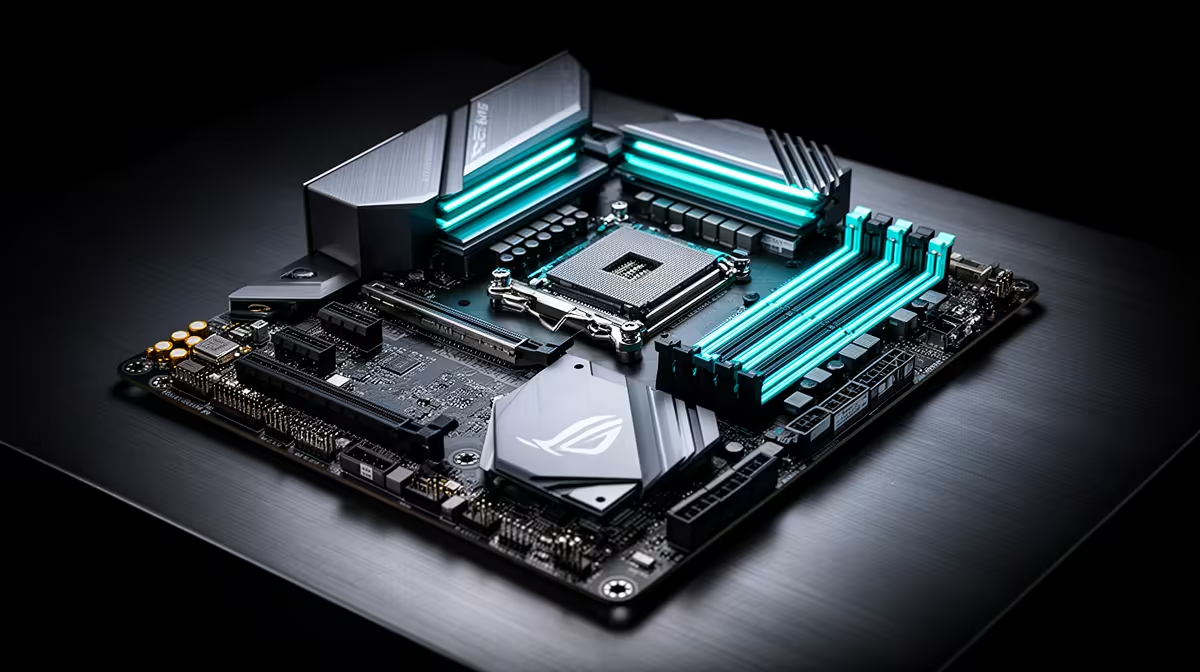
For an AM5 motherboard showing running hot and throttling, start with evidence rather than a parts swap. Heat issues are usually airflow, cooler mounting, fan curve, dust, thermal paste contact, or power-limit behaviour. Measure idle and load temperatures before replacing parts. AM5 B650 boards often sit around R2,500-R5,000, while X670E boards can move past R7,000, so a measured fix can prevent buying the wrong component.
Measure First
Idle temperature, load temperature, clocks, and fan speed tell the story. A Gen 5 SSD near 70 C needs heatsink airflow; a hot CPU needs cooler checks. Use named parts in your notes, such as MSI PRO B650-S WIFI or ASUS TUF Gaming X670E-PLUS WiFi, so BIOS, driver, and support checks stay specific. For SA buyers, local support is easier when the BIOS, RAM kit, and invoice match the same build.
Cooling For SA Rooms
Warm SA rooms expose weak airflow quickly. Clean filters, confirm fan direction, reseat uneven coolers, and test a sensible power limit. Use concrete checkpoints such as DDR5-6000 EXPO, PCIe 5.0 storage support, and 8-core Ryzen CPUs. If the issue began after a Windows update, test defaults and the same workload before calling hardware faulty.
Buy Or Repair Decision
Do not treat the category name as the diagnosis. A display symptom needs display testing, a stop code needs driver and memory checks, and a power-off event needs heat and PSU checks. For this AM5 motherboard, replace parts only when the same fault repeats at stock settings after driver, cable, heat, RAM, and storage checks.
FAQ
What temperature is too hot?
Repeated thermal-limit behaviour during normal gaming is a warning sign.
Will a better cooler fix it?
Often, if the current cooler is undersized or poorly mounted.
Should I replace the board?
Usually no, unless VRM heat or default-setting failures point to it.
Practical check
Before spending on an AM5 motherboard, write down the trigger, temperature readings, driver version, BIOS profile, and one repeatable pass or fail result.