Quick Answer
Here's the short version: for a Wits Actuarial Science student, the best R15,000 build is a Ryzen 5 7600, RTX 4060 8GB, 16GB DDR5, 1TB NVMe. This spec puts the money where Actuarial Science coursework needs it. Spend where the workload actually lands, not on the loudest spec.
Where the Actuarial Science budget should go
An actuarial machine lives in RStudio, pandas and sprawling Excel workbooks. That's CPU-and-memory work, not graphics, so the budget goes to a quick processor and plenty of RAM. In practice that means R and RStudio, Python with pandas, large Excel models and SAS, all of which lean on CPU single-thread speed, RAM and a fast SSD - and almost no graphics-card load.
The R15,000 build, part by part
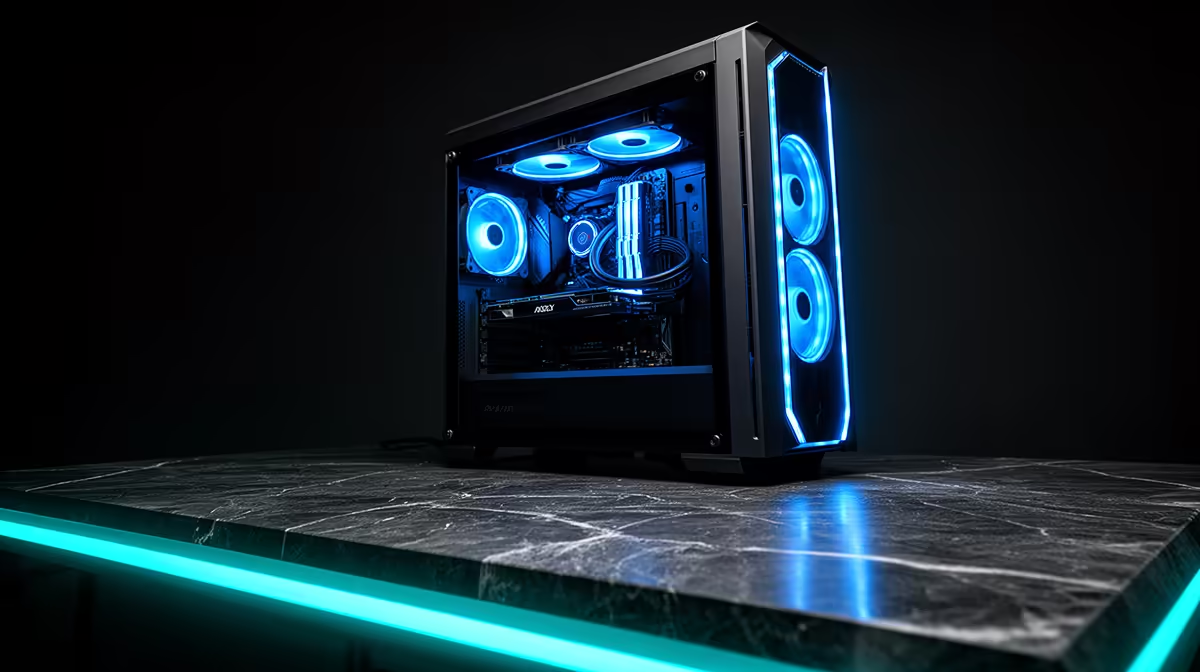
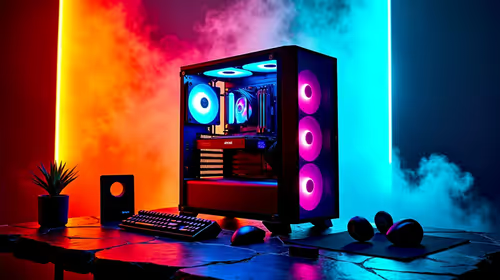
R15,000 buys a balanced tower: Ryzen 5 7600, RTX 4060 8GB, 16GB DDR5 and a 1TB NVMe SSD. The card is the headline upgrade over the entry build. The 16GB DDR5 keeps it responsive and the 1TB NVMe loads projects fast. 16GB is fine for coursework; 32GB only matters once Monte-Carlo runs and 2-million-row CSVs are routine.
The display matters more than the GPU
Because actuarial science doesn't need the GPU, this build runs on RTX 4060 8GB (or RX 7600 8GB). With an RTX 4060 you'll see 90-120 fps at 1080p High in most games and a playable 50-70 fps at 1440p. Go for a 24-27 inch IPS display - 1080p is plenty for study, and a higher refresh helps during long sessions.
Midrand buyer notes
Midrand is in Pretoria, so most students here commute or study remotely rather than living near Braamfontein. A desktop stays home and a light laptop covers lecture days; Evetech delivers to Midrand next business day from Joburg. Vumatel and Openserve fibre cover most of the area, with Rain 5G as a fallback between installs. NSFAS pays R5,200 for a device, short of the R8,000 entry laptop - plan to add to it or choose a desktop that holds value across all your study years.
FAQ
Do Actuarial Science students need a gaming graphics card?
No - Actuarial Science software barely touches the GPU. Integrated graphics handle the coursework, so any discrete card you add is purely for gaming after hours, not for study.
Is 16GB or 32GB RAM better for Actuarial Science?
16GB covers the first two years comfortably; reach for 32GB when bootstrap simulations and big joins become weekly work. DDR5 is standard on current AM5 boards.
Should an Actuarial Science student buy a desktop or a laptop?
A desktop gives far more performance per rand at R15,000 and is easy to upgrade later. A cheap laptop for lectures plus a desktop at home is the combination most students settle on.
second NVMe slot to your shortlist now; a 1TB drive today and a second one next year is the easiest mid-degree upgrade.