Quick Answer
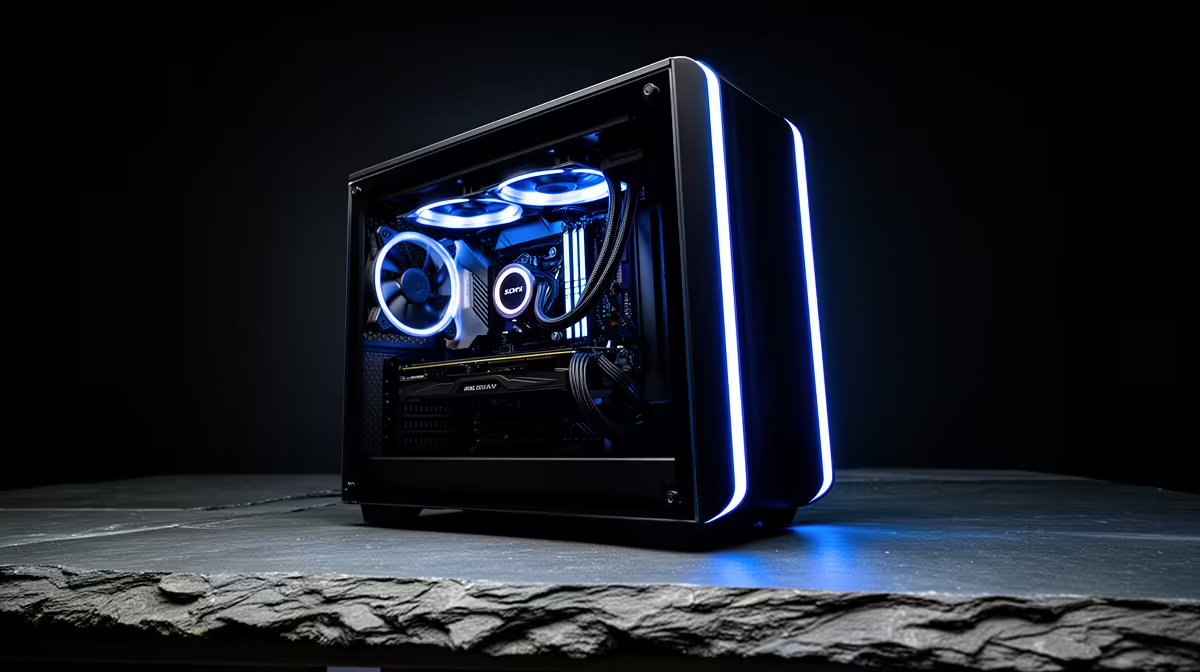
Bottom line: for a Wits Actuarial Science student, the best R15,000 build is a Ryzen 5 7600, RTX 4060 8GB, 16GB DDR5, 1TB NVMe. This spec puts the money where Actuarial Science coursework needs it. Pick parts around the apps you open every day, and the rest sorts itself out.
Building for Actuarial Science, not for marketing
Actuarial work is statistics and data crunching - R, Python, big Excel models and the odd SAS session. None of it touches a graphics card, so spend on cores, RAM and storage. In practice that means R and RStudio, Python with pandas, large Excel models and SAS, all of which lean on CPU single-thread speed, RAM and a fast SSD - and almost no graphics-card load.
What R15,000 buys you
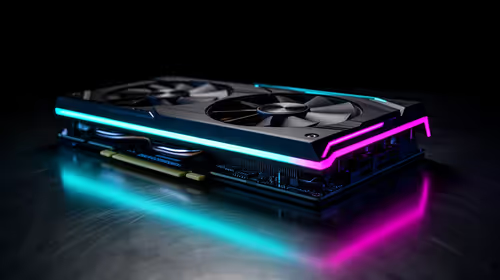
For R15,000 pair a Ryzen 5 7600 with an RTX 4060 8GB, 16GB DDR5 and a 1TB NVMe SSD. It's the first tier with a true gaming-grade graphics card. The 16GB DDR5 keeps it responsive and the 1TB NVMe loads projects fast. 16GB is fine for coursework; 32GB only matters once Monte-Carlo runs and 2-million-row CSVs are routine.
Screen, storage and the gaming question
Because actuarial science doesn't need the GPU, this build runs on RTX 4060 8GB (or RX 7600 8GB). With an RTX 4060 you'll see 90-120 fps at 1080p High in most games and a playable 50-70 fps at 1440p. Go for a 24-27 inch IPS display - 1080p is plenty for study, and a higher refresh helps during long sessions.
Roodepoort buyer notes
Roodepoort is an easy courier run from Evetech's Joburg warehouse (usually next business day), and the trip to Braamfontein is short enough that a full tower at home makes sense. Most homes can get Vumatel or Openserve fibre, and an MTN or Rain 5G router fills any gap. NSFAS pays R5,200 for a device, short of the R8,000 entry laptop - plan to add to it or choose a desktop that holds value across all your study years.
FAQ
Do Actuarial Science students need a gaming graphics card?
Not for study. Actuarial Science runs fine on integrated graphics, so a discrete GPU is optional and only worth it if you also want to game in your downtime.
Is 16GB or 32GB RAM better for Actuarial Science?
16GB handles most modelling; jump to 32GB once you're regularly holding millions of rows in memory at once. DDR5 is standard on current AM5 boards.
Desktop or laptop for Actuarial Science at university?
A desktop gives far more performance per rand at R15,000 and is easy to upgrade later. A cheap laptop for lectures plus a desktop at home is the combination most students settle on.
Confirm the motherboard supports a future CPU upgrade before you buy - it's what lets you drop in a faster chip in third year without a full rebuild.