Quick Answer
At under R10,000, buy a study-first PC with light gaming headroom: AMD Ryzen 5 5600G, 16GB DDR4 and a 500GB NVMe SSD are more realistic than forcing a large GPU into the price. That is enough for Anki, lecture recordings, large PDF packs and a second-screen study workflow, while still handling after-hours gaming sensibly. Expect about 45-60 fps in esports titles at 1080p Low, while heavy AAA games need lower settings, which is a useful target for a South African student setup.
Build Target
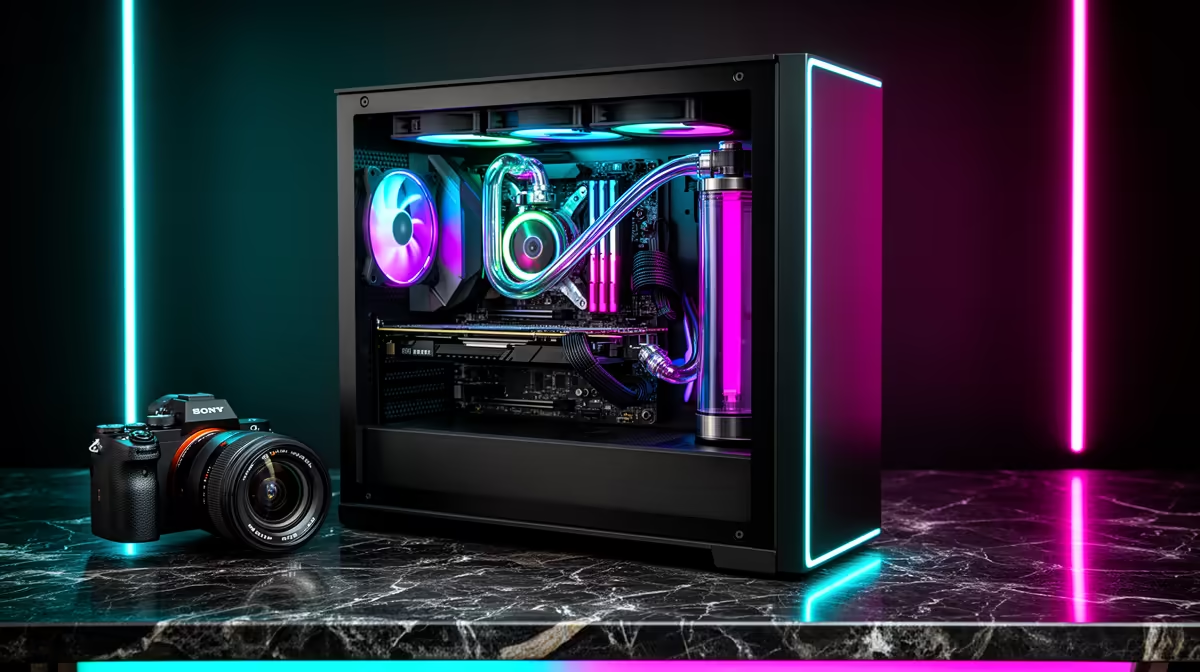
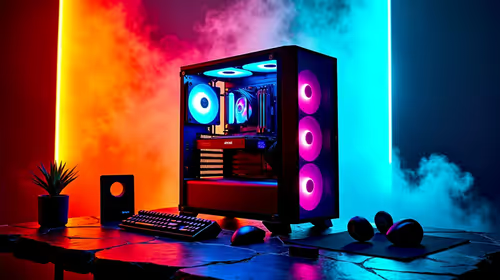
For a Wits Medicine student in Hatfield, the parts should support PDF notes, Anki, lecture recordings, Teams calls and anatomy apps such as Complete Anatomy. The safe shortlist is AMD Ryzen 5 5600G, integrated Radeon graphics, with a GTX 1650 only if a stocked bundle fits, 16GB DDR4 and a 500GB NVMe SSD; if the quoted build drops below 16GB RAM, move on. Keep the tower simple, with a mesh-front case, a branded 500W to 650W PSU and enough USB ports for a webcam, headset and external drive.
Location And Study Fit
Hatfield is a Pretoria base, so treat this as a commute-and-digs setup for Wits rather than a campus-area build. A compact tower, headset and reliable fibre or 5G router matter when lectures, labs and gaming happen in different places. Prioritise a quiet case, 16gb ram and enough ssd space before chasing a bigger gpu. If the desk is small, use existing 1080p screen first and keep the PC on the floor only when airflow is clear.
Where The Money Should Go
Use R9,000 to R10,000 as the practical price band and check what is included before comparing builds. Do not sacrifice the ssd or 16gb ram just to squeeze in a weak gpu. For gaming, the GPU decides frame rate; for coursework, RAM and SSD space decide how smooth the day feels. A cheaper tower with 8GB RAM can look attractive, but it will struggle once lecture notes, Teams, Chrome and a project file are open together.
FAQ
Is 16GB RAM enough for this student build?
Yes, 16GB is the minimum sensible target for this workload. Choose 32GB at R20,000 and above if the student runs VMs, large spreadsheets, anatomy assets or several study apps at once.
Should the budget go to the GPU or the monitor first?
For R10,000 builds, protect RAM and SSD first. From R15,000 upward, a dedicated GPU such as an RX 6600, RTX 3050 or RTX 4060 is worth it if the student also wants 1080p gaming.
What should be checked before ordering in SA?
Confirm the exact CPU, GPU, RAM amount, SSD size, PSU wattage and warranty terms on the quote. Also check delivery timing to Hatfield, because a delayed monitor or Wi-Fi adapter can hold up the whole setup.
Buyer check
Before checkout, compare the quoted GPU, RAM and SSD against the course workload; for this setup, 16GB DDR4 and a 500GB NVMe SSD should not be optional.