Quick Answer
An Intel Arc B580 running too hot is typically caused by insufficient case airflow, a clogged GPU heatsink, or thermal paste degradation. Fixing it involves improving case ventilation, cleaning the heatsink, undervolting the GPU, and in persistent cases, repasting the cooler.
Why the Arc B580 Runs Hot
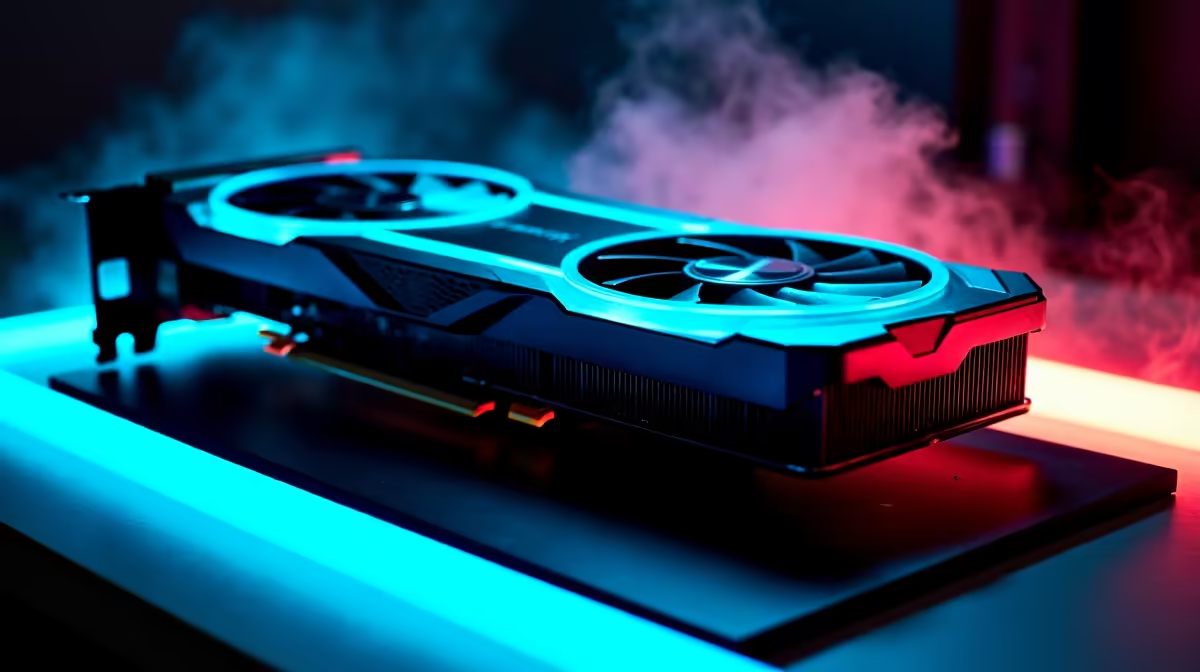
The Arc B580 uses a dual-fan cooler that performs well under normal conditions, but the card is sensitive to case airflow quality. In a case with poor front-to-back airflow or blocked intake vents, the B580 can hit temperatures above 85 degrees Celsius under sustained load, which triggers thermal throttling and drops performance. Dusty environments common in South African homes during the dry winter months can choke GPU heatsink fins quickly, and in compact cases with limited ventilation this problem compounds. The card's TBP sits around 190W, which is manageable for a quality mid-tower with good airflow but becomes problematic in cases with restricted intake or exhaust.
Airflow and Case Configuration Fixes
The first and often most effective fix is correcting your case's airflow setup. Ensure you have at least two intake fans at the front pushing cool air across the GPU, and at least one exhaust fan at the rear pulling hot air out. Positive pressure configurations with slightly more intake than exhaust reduce dust buildup over time, which matters in SA environments with fine dust from summer heat and dry winters. Remove any mesh dust filters that are visibly clogged and clean them thoroughly. If your case lacks adequate fan mounting positions, a side panel with a direct GPU intake fan can provide a significant temperature reduction. GPU temperatures of 75 to 80 degrees under full load are normal and safe for the B580; anything consistently above 90 degrees needs attention.
Undervolting the Arc B580
Undervolting is one of the most effective performance interventions for a hot-running B580. Using Intel's Arc Control software, you can reduce the voltage applied at various frequency points, which lowers heat output without meaningfully reducing gaming performance. A conservative undervolt reducing voltage by 50 to 75mV at the highest performance state typically drops temperatures by 5 to 10 degrees Celsius while maintaining full GPU performance in most gaming scenarios. Start conservatively, test with a GPU stress tool, and incrementally push the undervolt further if stability holds. This approach also reduces power draw, which is useful for SA gamers running their systems on UPS backup during an unexpected outage, as lower GPU power consumption extends how long you can game on battery.
Frequently Asked Questions
What temperature is too high for the Arc B580?
Sustained temperatures above 90 degrees Celsius indicate a cooling problem. The B580 will throttle performance to protect itself above its thermal limit. Target temperatures of 75 to 83 degrees under full gaming load are normal and healthy for this card.
Does undervolting the Arc B580 void the warranty?
Undervolting via software like Intel Arc Control does not void the warranty and does not carry the risks associated with overclocking. It is a safe, reversible adjustment that reduces heat and power consumption without modifying hardware.
How often should I clean my GPU heatsink in South Africa?
In South Africa's dusty climate, cleaning GPU heatsink fins every 3 to 6 months is advisable, particularly for gamers in areas with significant dust exposure. A can of compressed air directed through the heatsink fins removes most buildup without opening the GPU.