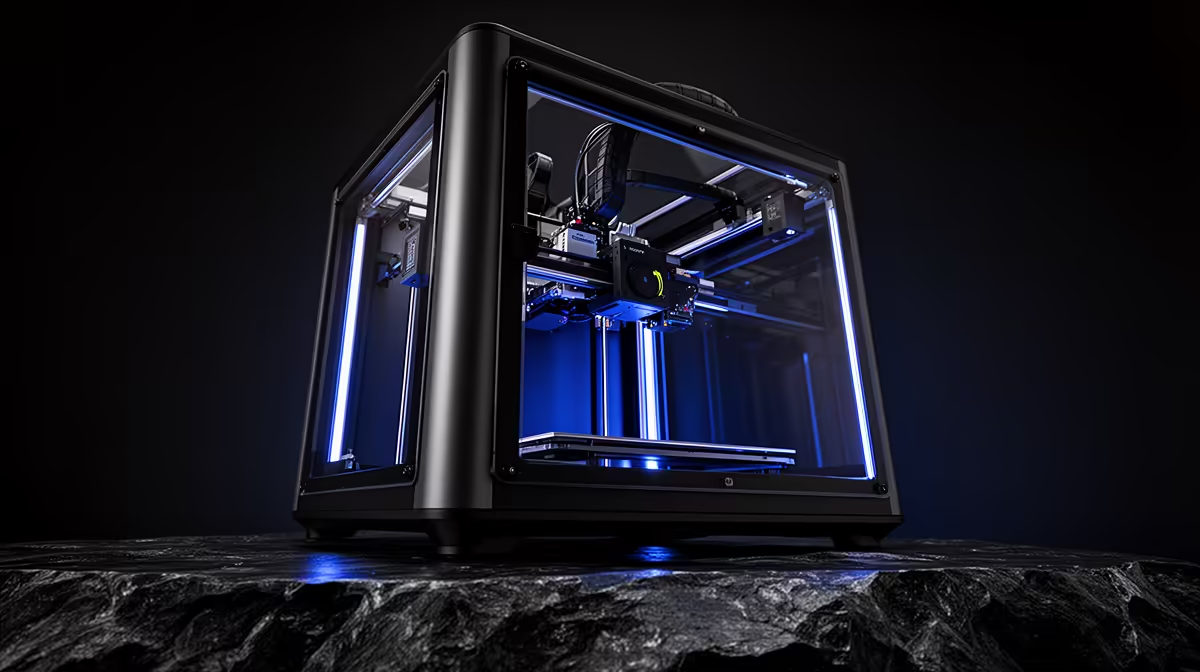
The Bambu Lab H2D is built for the jobs that used to send people toward industrial machines. Its headline numbers, a 350x320x325mm build volume, dual independent nozzles, a 350C hotend and a sealed 65C heated chamber, add up to a printer that handles engineering plastics most desktop units simply cannot keep stable. If you have been splitting big functional parts or watching ABS warp off the bed, this is the spec sheet that changes your options.
Quick Answer
The H2D offers a 350x320x325mm envelope, two independent direct-drive nozzles, a 350C hotend and an actively heated 65C chamber. That combination lets it run PC, PA and carbon-fibre composites with soluble PVA supports, materials that need heat and reach a smaller printer cannot deliver reliably.
What the heated chamber actually unlocks
A 65C chamber is the part that matters most for engineering work. Filaments like polycarbonate and nylon contract sharply as they cool, and on an open printer that contraction lifts corners off the bed and cracks tall walls. Holding the whole enclosure warm keeps the part at an even temperature from first layer to last, so large functional pieces come out dimensionally accurate instead of curled. Pair that with the 350C hotend and you can push the higher print temperatures these plastics demand without the nozzle losing heat under flow.
Dual nozzles change how you design supports
The two independent nozzles are not just for printing in two colours. The real value is loading a model material in one and a soluble support such as PVA in the other. Soluble supports let you build overhangs and internal cavities that would be impossible to remove by hand, then dissolve them away in water and leave a clean surface underneath. For mechanical parts with trapped geometry, gears inside housings, complex brackets, ducting, that capability removes a whole category of design compromise.
Because each nozzle is independent, the idle one lifts clear of the print, so you avoid the oozing and collision problems that plagued earlier single-carriage multi-material designs.
Who the H2D is really for
This is not a first-printer purchase. If you mostly run PLA decorative prints, a simpler machine serves you better and costs far less. The H2D earns its place when you need carbon-fibre composites for stiffness, nylon for wear resistance, or polycarbonate for heat tolerance, and you need those parts to come out accurate the first time. Engineering shops, prototypers and serious makers will find it covers work that previously meant outsourcing. You can see where it sits in the wider 3D printer range at Evetech and plan the consumables and tools you will need around it.
Running advanced filaments also means stocking the right nozzles, plates and finishing gear, so it is worth browsing the printer accessories and spares before your first carbon-fibre job.
Frequently Asked Questions
Why does the H2D need a heated chamber for engineering filaments?
Plastics like PC and nylon shrink as they cool. A 65C chamber keeps the whole part at an even temperature, preventing the warping and layer cracking that ruins large prints on open machines.
What can two independent nozzles do that one cannot?
Beyond multi-colour printing, the second nozzle can lay down soluble PVA support. That lets you print complex overhangs and internal cavities, then dissolve the supports away for a clean finish.
Can the H2D print abrasive carbon-fibre materials?
Yes, the 350C hotend and chamber design are built for composites. Carbon-fibre filaments are abrasive, so plan on hardened nozzles and check your wear parts regularly.
Is the H2D overkill for hobby printing?
For PLA and basic models, yes. Its value lies in engineering plastics and functional parts. Casual hobbyists are better served by a simpler, cheaper machine.
Want a printer that handles engineering-grade filaments without warping? Explore the 3D printer line-up at Evetech and find the machine that matches your most demanding parts.