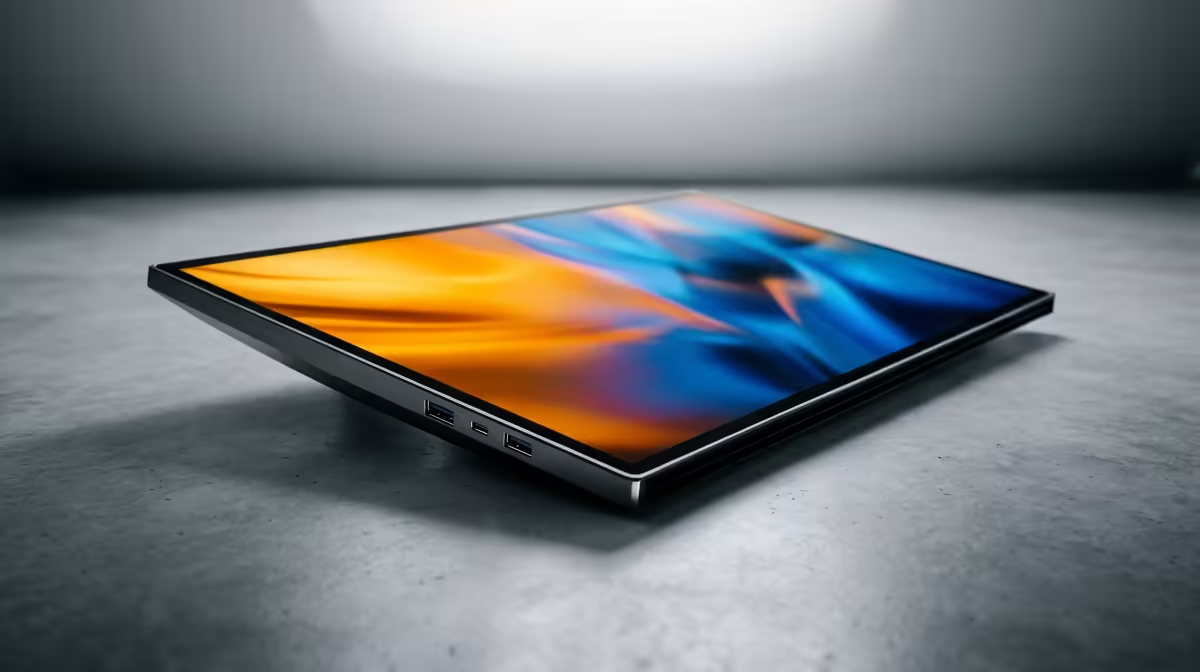
A second screen used to mean a fixed desk and a spare monitor gathering dust, but the portable monitor has quietly become a credible everyday tool rather than a gadget. What changed is the spec sheet: affordable OLED panels, 4K and 144Hz options, and single-cable USB-C power delivery passthrough mean you can now carry a real second display in a laptop bag and run it from one connection. The question is no longer whether the tech is good enough, but whether your way of working actually benefits from it.
Quick Answer
Yes, a portable monitor is worth it in 2026 if you regularly work or study away from a fixed desk. OLED panels, sharper resolutions, and USB-C power passthrough have turned them from novelties into practical second screens. SA students moving between res and campus and hybrid professionals without a set desk get the clearest value.
What Actually Improved
The early portable monitors were dim, low-resolution panels that needed two cables and never quite justified themselves. The current generation is a different product. OLED options bring deep blacks and vivid colour to a screen you can slip into a bag, higher-resolution and high-refresh panels make them usable for detail work and even gaming, and the single-cable design is the real unlock: one USB-C connection now carries video, power, and even charges your laptop through passthrough, so the monitor stops being a tangle of wires.
That combination is what tips the value calculation. A second screen that sets up in seconds from one cable, and looks genuinely good while doing it, earns its place in a way the old models never did. To compare panel types and resolutions across the current range, the portable monitors stocked at Evetech lay out the options side by side.
Who Gets the Most Value
The honest answer is that a portable monitor is brilliant for some people and pointless for others, and it comes down to whether you move around.
SA students living in res or digs and shuttling to campus are a textbook fit. A laptop screen alone is cramped for writing an assignment while referencing a textbook PDF or a lecture recording, and a portable second screen doubles your working space without needing a permanent setup in a shared room. It packs flat into the laptop bag and comes out wherever you study.
Hybrid professionals are the other clear winner. If you split your week between home, the office, and the occasional client site or cafe, you rarely have a fixed dual-monitor desk in all three. A portable monitor gives you the same two-screen workflow everywhere, which matters when the call takes one display and your notes fill the other.
Anyone with a fixed desk and a permanent external monitor, by contrast, gets little from one. A standard desktop monitor is bigger, cheaper per inch, and always there, so the portable version only makes sense once mobility is part of the picture.
The Single-Cable Caveat
The USB-C passthrough that makes these monitors so tidy depends on your laptop having a USB-C port that carries video, and not every machine does. Many recent laptops support video over USB-C, but some offer USB-C for data and charging only, which means you would need an HDMI connection and a separate power source instead. Check your laptop's port specification before assuming the one-cable setup will work, because that single connection is what separates effortless from fiddly.
Is It Worth the Spend in Rand
A portable monitor sits in a sensible price band rather than a frivolous one. For a student or professional whose productivity genuinely improves with a second screen, the time saved not squinting between overlapping windows adds up quickly. The trick is matching the panel to the job: a colour-critical creator benefits from an OLED panel, while someone who just wants more spreadsheet room can spend less on a sharp standard panel. Decide what you actually do on the screen, then buy to that, rather than paying for OLED you will never appreciate. To gauge value against full-size options, it helps to glance at the monitors local buyers choose most often.
The Verdict
A portable monitor in 2026 is worth it when mobility is built into how you work or study, and it is hard to justify when your desk never changes. The technology has caught up: the panels are good, the single cable is real, and the prices are reasonable. Match it to a genuinely mobile routine and it earns its keep. Buy it to sit permanently on a desk and a regular monitor will serve you better for less.
Frequently Asked Questions
Is a portable monitor worth buying in 2026?
Yes, if you work or study away from a fixed desk. OLED panels, higher resolutions, and single-cable USB-C power passthrough have made them practical everyday second screens. If you have a permanent desk with an external monitor, a standard display gives you more for less.
Can a portable monitor run from a single cable?
Often, yes. When the laptop's USB-C port supports video output, one cable handles display, power, and laptop charging through passthrough. Check your port specification first, because some USB-C ports are data and charging only, with no video capability.
Who benefits most from a portable monitor?
Students moving between res and campus, and hybrid professionals who split time across home, office, and other sites. Both gain a consistent two-screen workflow without a fixed dual-monitor desk. People with one permanent desk get little extra value.
Is the OLED option worth the extra cost?
For colour-critical work like photo or video editing, yes, because OLED gives deeper blacks and better colour. For general productivity such as spreadsheets and documents, a sharp standard panel saves money without a meaningful loss for that use.
Can you game on a portable monitor?
You can, especially on higher-refresh models, but the experience depends on the panel and your laptop's output. For casual gaming and indie titles it works well, while competitive high-frame gaming is better served by a dedicated high-refresh display.
Want a second screen that travels with you? Compare the portable monitors at Evetech and pick the panel that fits your study or work routine, with delivery across South Africa.