Quick Answer
Motherboard maintenance is mostly about keeping dust out, ensuring good airflow, keeping BIOS firmware updated, and checking connections periodically. A simple quarterly and annual schedule protects your investment and prevents most common failure scenarios before they become expensive problems.
Your motherboard is the nervous system of your PC - everything runs through it. Yet most people only think about it when something goes wrong. A basic preventive maintenance schedule costs nothing but a little time and can meaningfully extend the life of your board and the components connected to it, especially in South Africa where power fluctuation add extra stress to electronics.
Quarterly Maintenance: The Basics
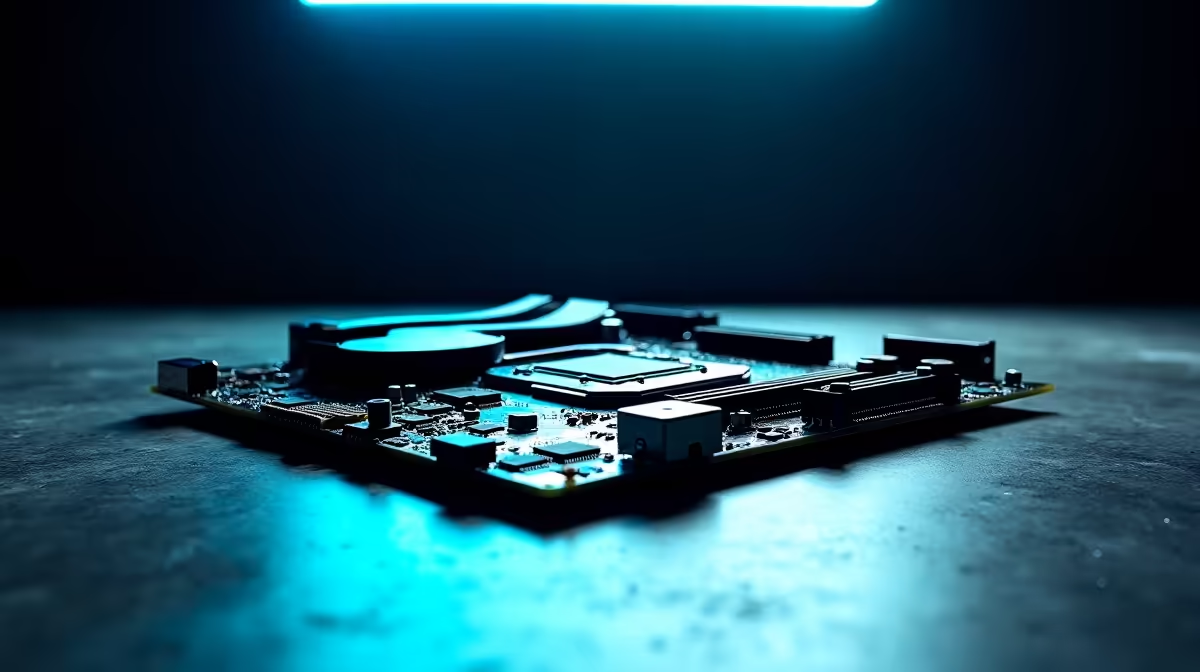
Every three months, power down your PC completely and disconnect it from the wall before opening the case. Use a can of compressed air to blow dust from the motherboard surface, paying close attention to heatsinks over the VRM (voltage regulator modules) and chipset, PCIe slots, and the area around RAM slots. Dust accumulation on VRM heatsinks is a leading cause of motherboard overheating and premature component degradation. While you have the case open, reseat any PCIe cards if the system has been moved recently - vibration during transport can cause subtle contact issues. Check that all fan headers have their cables properly connected. In South African conditions where an unexpected outage means frequent cold starts, connector integrity is more important than in markets with stable power.
Annual Maintenance: Deeper Checks
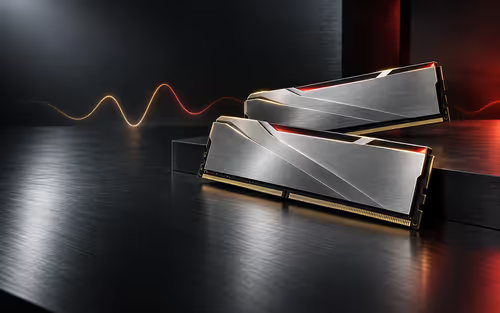
Once a year, go further. Remove your RAM sticks, clean the gold contacts gently with a clean eraser, and reseat them firmly. Do the same with your primary storage if it is on an M.2 slot - remove the drive, clean the contacts, and reseat. Check your BIOS version against the manufacturer''s latest release; BIOS updates often include CPU compatibility improvements, stability fixes, and security patches. Update if a meaningful fix applies to your use case, but avoid updating BIOS purely for the sake of having the latest version if your system is running stably. Inspect the CMOS battery (a flat CR2032 cell on the motherboard) - if your PC is more than four or five years old and is losing time or forgetting BIOS settings, the CMOS battery is the likely culprit and costs under R50 to replace.
PSU and Surge Protection
This is the single most impactful thing you can do for motherboard longevity in South Africa: protect against power surges. An unexpected outage restoration events send voltage spikes through the grid that can damage motherboard components, particularly the VRMs and storage controllers. At minimum, use a quality surge protector. Better still, connect your PC to a UPS - this isolates your system from grid noise entirely and gives you time to shut down gracefully during unexpected power cuts. The cost of a quality UPS is a fraction of what motherboard replacement costs.
Frequently Asked Questions
Q: How often should I update my motherboard BIOS? A: Only update BIOS when a specific update addresses a problem you are experiencing, adds support for a CPU or feature you need, or patches a meaningful security vulnerability. Unnecessary BIOS updates carry a small risk of failed flash, which can brick the board.
Q: Can I clean my motherboard with isopropyl alcohol? A: Yes, 90%+ isopropyl alcohol is safe for cleaning motherboard contacts and removing thermal paste residue. Use a lint-free swab and ensure the board is completely dry before powering on.
Q: What are the early warning signs of a failing motherboard? A: Random crashes or BSODs that are not software-related, USB ports intermittently failing, RAM or storage not being detected consistently, and unusual POST beep codes are all warning signs worth investigating.
Ready to Find Your Perfect Match? Shop motherboards and PC components at Evetech.