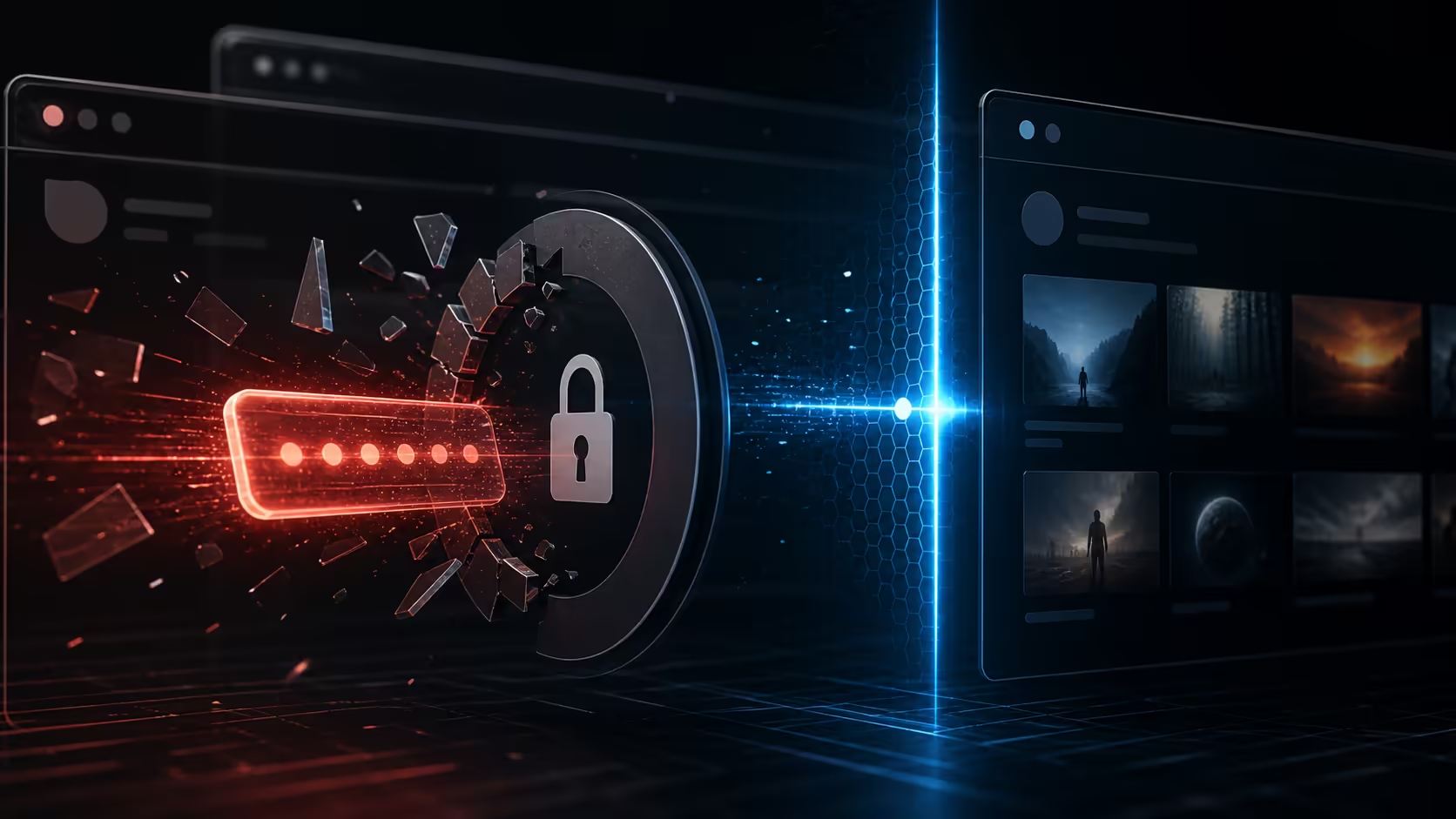
A Netflix account hijacking warning for South Africans is really a device-security warning. Criminals do not always need to guess a password. If infostealer malware captures a valid browser cookie, they may reuse the already-authenticated session. The reported 263 million figure refers to stolen cookies linked to South Africa, not 263 million Netflix accounts.
Quick Answer
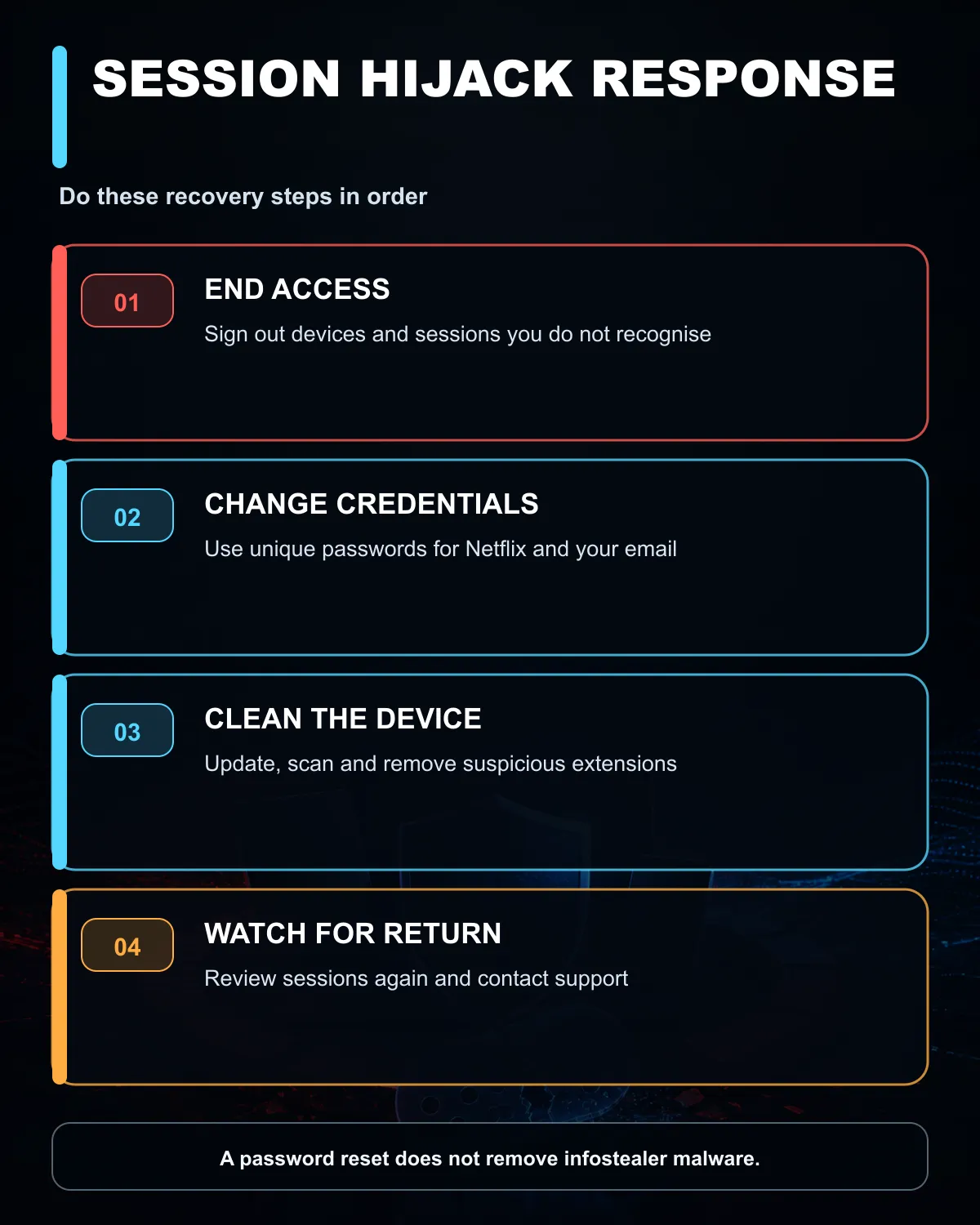
Start with R0 recovery steps: set a unique Netflix password, sign out devices you do not recognise, clear active browser sessions and clean the device that may have leaked the cookie. A password change protects the credential, but it does not remove infostealer malware or guarantee that every stolen session has ended.
🍪 What the South African finding means
The new report says more than 263 million browser cookies from South Africa appeared in infostealer datasets. Cookies are small records that help a site remember a login and other session details. A criminal who steals the right cookie may be able to resume that session without seeing a normal password screen.
That technique is called session hijacking. It can affect streaming, video, social and email accounts. The number should not be repeated as a count of hacked Netflix users. One person can have many cookies across browsers, services and devices, and not every stolen cookie will still be valid.
The important signal is scale. Cookie theft is not a rare browser trick. It is part of malware and phishing campaigns that target the session after the user has already logged in.
🔒 The first 15 minutes after an unknown login
Open the account from a trusted device. Change the password to one that is unique to Netflix, then sign out devices you do not recognise. If the account email, plan or profile details changed, contact Netflix support through the official help route.
Next, secure the email account attached to Netflix. Change that password if it was reused or if the device may be infected. Review its recovery address, recent sign-ins and forwarding rules. An attacker who controls the email account can undo a streaming-password reset.
Then clear browser cookies and saved sessions. Update the browser and operating system. Run a trusted malware scan, remove suspicious extensions and uninstall software that arrived with an unexpected download. If signs of infection remain, back up personal documents and use a clean operating-system reinstall.
💻 Decide whether the device needs repair or replacement
An account takeover does not automatically mean the laptop or router is broken. Start with software recovery and R0 account controls. Hardware replacement is justified only when the device cannot run a supported operating system, storage has failed or another measured fault blocks a clean setup.
A new router also cannot remove infostealer malware from a PC. Use the networking range only when testing shows the existing router is unreliable, unsupported or no longer receiving security updates. Changing Wi-Fi equipment without cleaning the infected device leaves the main problem in place.
If an old computer cannot receive browser or operating-system updates, compare current gaming laptop deals as a replacement path. Do not buy a new machine merely because one account was hijacked. Recovery evidence should drive the decision.
🛡️ Reduce the chance of another stolen session
Use a password manager so Netflix, email and other services have different credentials. Avoid sign-in links sent through unexpected messages. Open the service directly, especially when a message claims urgent account trouble.
Do not leave sensitive sessions signed in on a shared computer. Review account devices periodically and end sessions you no longer use. Delete cookies regularly on machines used for travel, testing or public access.
Treat unusual browser extensions and unofficial downloads as a security decision. A free tool that can read page data may also be able to reach session information. Install software from its official source, keep the system patched and remove extensions that no longer have a clear purpose.
Frequently Asked Questions
Were 263 million Netflix accounts in South Africa hacked?
No. The figure describes browser cookies from South Africa found in infostealer datasets, not a count of Netflix accounts.
Can changing the password end the attack?
It is essential, but also sign out unknown devices and clean the affected computer. Otherwise malware may steal the new session again.
Does session hijacking bypass two-factor authentication?
A stolen authenticated cookie can sometimes bypass the normal sign-in flow, including the step where an extra code would usually be requested.
Should I replace my router?
Not unless the router has a separate fault or lacks security support. A router purchase does not clean malware from a laptop.
What should I do if the account changes continue?
Contact Netflix support, secure the linked email account and stop using the suspected device until it has been cleaned or reinstalled.
Rebuilding a safer home setup? Secure the accounts and clean the affected device first, then compare Evetech networking or laptop options only when a measured hardware gap remains.