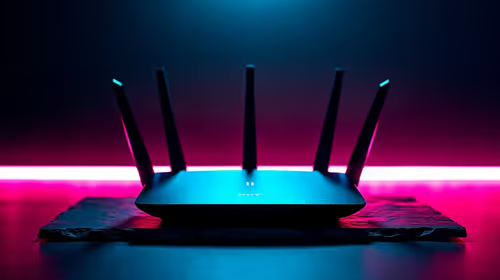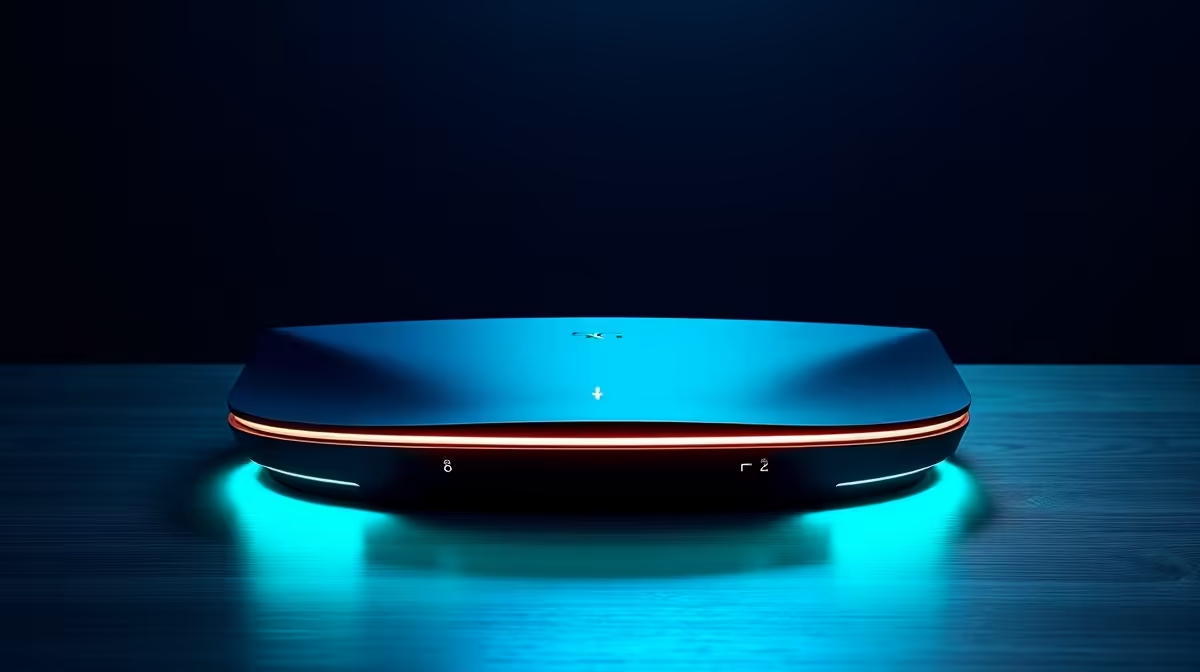
A fresh wave of 5G home routers is reaching South Africa this year, built on newer modem platforms from Qualcomm and MediaTek, including RedCap-ready chipsets aimed squarely at mass-market fixed-wireless internet. For anyone on a fixed-LTE or older 5G box, the upgrade is tempting, but the spec that sells it on the shelf is rarely the spec that fixes your connection. Three features decide whether a new CPE actually improves your day-to-day speed.
Quick Answer
The 5G routers landing in 2026 run on platforms like MediaTek's T-series and Qualcomm's Snapdragon X-series modems. For SA buyers the three features that matter are band-locking (to pin the router to the strongest tower band), external antenna ports (SMA connectors for a signal boost), and Wi-Fi 6 for the local network. Spec sheets that lead with peak speed but skip these are selling you a number you will never see.
Why Band-Locking Is the Feature That Matters Most
A CPE left on automatic will hop between whatever bands it finds, and that often means a congested or weaker band at the wrong moment. Band-locking lets you pin the router to the specific frequency your nearest tower serves best, which on real SA networks is frequently the difference between a stable connection and one that dips every evening when the area gets busy.
This is a software capability, not a hardware one, so check the admin interface before you buy. A router with strong hardware but a locked-down, simplified app may not expose band selection at all, and that quietly removes your single most useful tuning tool.
External Antenna Ports Are Not Optional Out Here
Plenty of homes sit far enough from a tower, or behind enough walls, that the internal antennas alone deliver a weak, fluctuating signal. SMA antenna ports let you connect external or roof-mounted antennas and reclaim that lost signal, which is often the single biggest real-world speed gain available to a fixed-wireless household.
The newer 2026 CPEs increasingly ship with detachable antennas and multiple SMA ports as standard, where older boxes sealed the antennas inside. If your placement options are limited (a flat with one good window, say), prioritise a model with these ports over one chasing a higher headline throughput. You can compare the current lineup in the networking range at Evetech to see which boxes expose antenna connectors.
Wi-Fi 6 for the Side You Actually Touch
The 5G modem pulls the internet in; Wi-Fi pushes it around your home. A router stuck on older Wi-Fi can bottleneck a fast 5G link the moment several phones, a TV and a console all want bandwidth at once. Wi-Fi 6 handles a crowded home far better, holding speeds steadier across many devices rather than choking under load.
Most of the new platforms pair their 5G modem with Wi-Fi 6 or better, but entry models sometimes cut back here to hit a price. Since this is the side every device in your house connects to, it is worth confirming rather than assuming.
What to Skip
Ignore the giant peak-speed figure on the box. Those numbers assume perfect lab conditions you will never meet on a live SA network with a real tower distance. RedCap and similar efficiency features are great for low-power IoT devices but are not the headline for a home router meant to feed a busy household. Focus the budget on band control, antenna expandability and a capable Wi-Fi side, and the everyday experience improves far more than chasing a theoretical maximum. The models people are actually buying show up in the accessories best sellers at Evetech.
Frequently Asked Questions
Do I need a new 5G router if my current one works?
Only if you have a clear problem to solve, like poor signal that antenna ports could fix, or a crowded home network that Wi-Fi 6 would steady. If your current box is stable, a 2026 model's headline specs alone are not a strong reason to switch.
What is band-locking and why does it matter in SA?
Band-locking pins the router to one specific network frequency instead of letting it roam. On busy SA networks this can keep you on the strongest, least congested band, which often stabilises evening speeds more than any other setting.
Will external antennas really improve my speed?
If your signal is weak or fluctuating, often dramatically. Connecting external or roof-mounted antennas through SMA ports is frequently the single biggest real-world gain for a fixed-wireless home, more so than a faster modem.
Is Wi-Fi 6 worth it on a 5G router?
Yes, if multiple devices use the connection at once. Wi-Fi 6 keeps speeds steadier across a crowded home, so a fast 5G link is not bottlenecked the moment phones, a TV and a console all compete.
Shopping for a 5G upgrade that actually fixes your signal? Compare band-locking, antenna ports and Wi-Fi 6 across the networking range at Evetech and pick the box that suits your home, not the one with the biggest number.