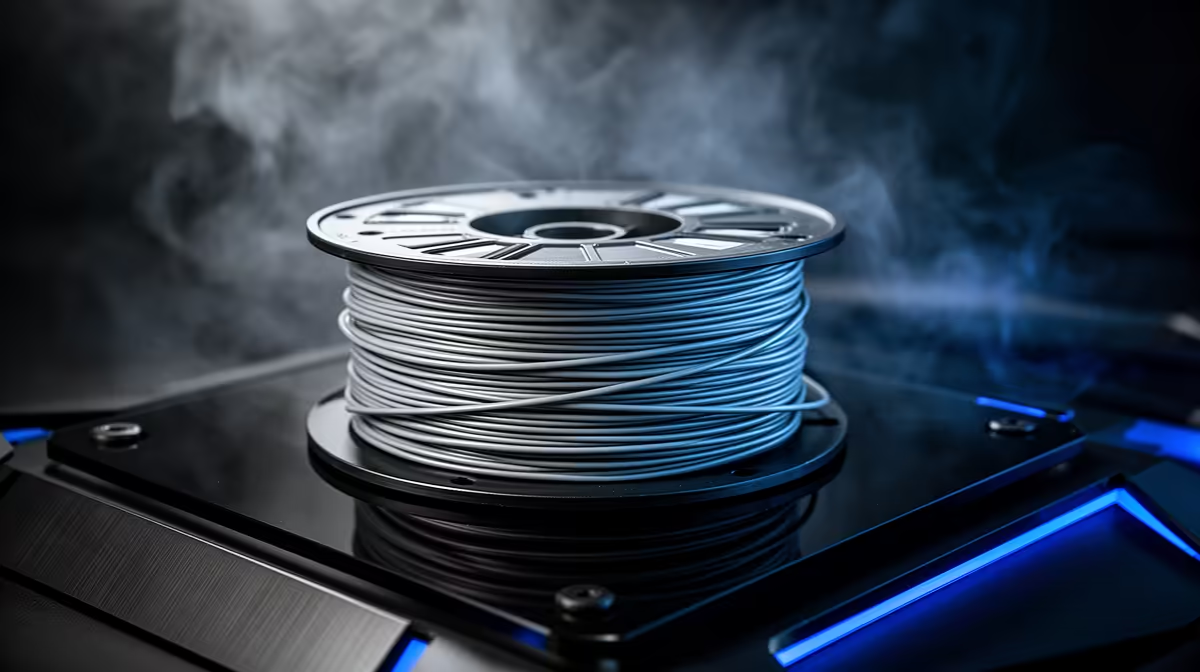
The real test for filament diameter choice is what changes once the gear is used for more than a quick demo. Good FDM results still come from dry filament, the right diameter, a sensible temperature range and a first layer that actually holds for filament diameter choice.
Quick Answer
For filament diameter choice, check the 1.75mm feed path, PLA heat around 190-230 C and the first layer. PLA prints improve when the spool stays dry and the first small test confirms the profile for filament diameter choice.
How To Choose Without Overbuying
The spool and the slicer profile need to agree for filament diameter choice. Confirm 1.75mm diameter, test 190-230 C range and watch bed adhesion before a long print for filament diameter choice. A calibration cube or short sample can expose feeding and cooling issues early for filament diameter choice.
Checks Before You Commit
For filament diameter choice, the right side depends on the use case. Faster glide, faster curing or higher strength is useful only when it improves the actual project, desk layout or room setup for filament diameter choice. Choose by outcome, not by the more impressive label for filament diameter choice.
How To Prevent PLA Frustration
Do not blame the printer first when filament diameter choice goes wrong. Damp material, poor first-layer grip and rushed temperature changes can create rough surfaces or weak parts for filament diameter choice.
Local Buying Notes
For South African makers, filament diameter choice should be planned around material availability, storage and small test runs. Track the feed path and PLA heat around 190-230 C in a simple note so the next print is easier to diagnose for filament diameter choice.
FAQ
Does filament diameter affect print reliability?
The safer choice for 1.75mm Filament versus Other Filament is the one that keeps storage predictable. Bed adhesion and dry storage decide whether it remains useful after setup during real use of 1.75mm filament vs other filament sizes.
What happens if the diameter is wrong?
A stronger option makes sense only when 1.75mm diameter or 190-230 C range removes a real limit in your current setup in this 1.75mm filament vs other filament sizes decision.
Can slicer settings compensate for the wrong size?
Check 1.75mm Filament versus Other Filament against support before changing the rest of the print setup. If bed adhesion is wrong, a more expensive product may still disappoint while judging 1.75mm filament vs other filament sizes.
the exact frustration for filament diameter choice. Confirm the feed path and PLA heat around 190-230 C before extras influence the shortlist.