A colour percentage cannot decide value by itself, and the title's premium threshold is not the product's price. A 125% sRGB monitor worth over R4,000 would need to solve additional needs beyond gamut coverage, because the UPERFECT UFree V already advertises that range for R2,399.
Quick Answer
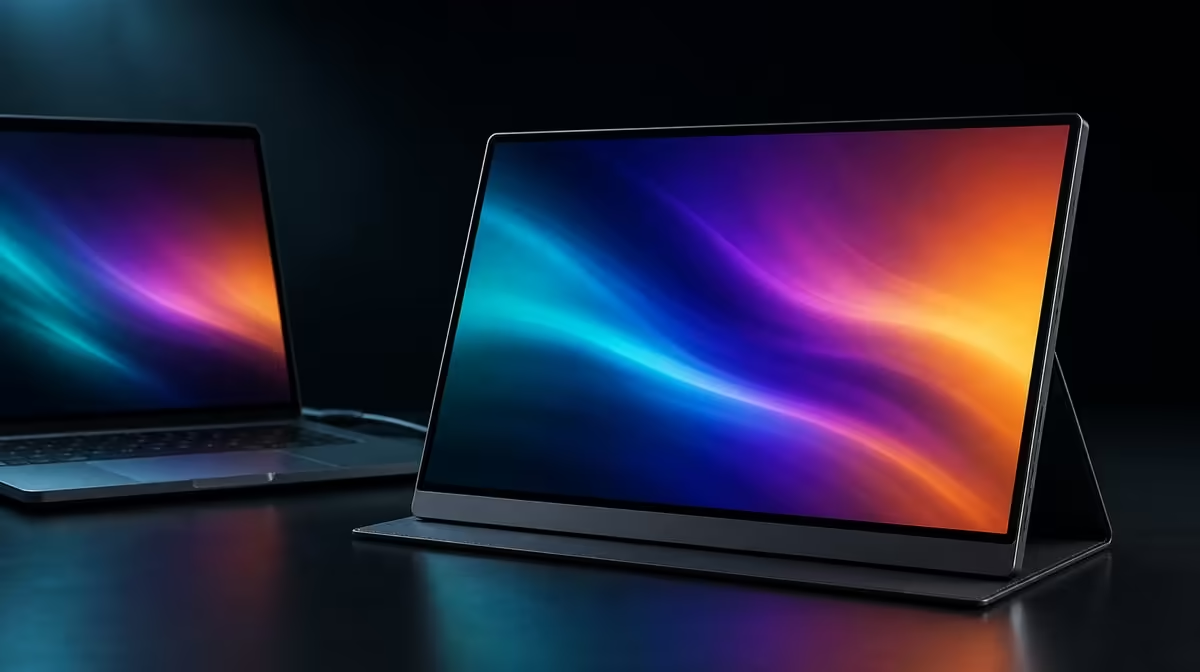
The UFree V costs R2,399, which is R1,601 below R4,000. Its 15.6-inch IPS panel is Full HD with 125% sRGB coverage; it also states 350cd/m2 output and a 1500:1 ratio. Two input routes, desktop support and VESA strengthen the baseline a dearer monitor must beat.
🎨 Understand what 125% sRGB buys
The percentage describes a colour gamut whose area extends beyond the standard sRGB reference. It can give compatible media and creative applications access to a broader range, but it does not mean each colour is 25% more accurate.
Accuracy depends on calibration, colour management and measured error. Value the R2,399 UFree V as a wide-gamut display; colour-critical work still needs a measured and managed workflow.
Unmanaged standard content can appear too vivid on a broad-gamut screen. Begin with a neutral picture mode, native 1920 x 1080 and a colour-aware application where the work requires it.
Display familiar skin tones, neutral greys, gradients and saturated objects. Compare the result at a centred viewing angle and room-matched brightness. The test should expose whether the extra gamut supports the user's files rather than simply making a demo image brighter.
Use Evetech's portable monitor listings to compare gamut claims with the rest of each product's evidence.
💡 Judge the complete R2,399 panel
The UFree V states 350cd/m2 output. This can provide headroom in bright indoor rooms, while direct sunlight remains outside any honest guarantee. Move reflections before pushing the panel to maximum.
Its 1500:1 contrast ratio describes measured bright-to-dark separation. Test near-black and near-white detail in a neutral mode; colour range cannot repair clipped highlights or a glare-washed shadow.
The 178-degree viewing specification can help when another person needs to see the screen, yet straight-on viewing remains the stronger position for colour decisions. Fold the stand into an angle that controls reflections and preserves a comfortable line of sight.
Full HD at 15.6 inches can suit portable documents, media and creative tool panels. A monitor above R4,000 may offer a different resolution or another capability, but that alternative must be assessed from confirmed specifications rather than assumed superiority.
🔌 Make a premium solve a real gap
The baseline already includes USB-C and Mini HDMI. Verify the intended laptop can output video through its chosen port, then prove the cable and power arrangement. A premium connection package earns value only if it supports a device or workflow the UFree V cannot.
The foldable stand covers quick desktop placement. VESA support creates a mounting route, subject to verified pattern, screws and mount compatibility. A costlier model should not receive support credit for an adjustment the buyer will never use.
Plan UFree V sound through the laptop or compatible external audio. Built-in sound can be a meaningful difference on an alternative monitor for a buyer who needs self-contained casual playback.
Verify the UFree V's current weight and calculate the complete carried kit. A lighter alternative can justify part of its premium for a daily commuter when the full travel figures support the difference.
The wider Evetech PC monitor range can frame alternatives when a fixed desk, higher native resolution or another confirmed capability becomes a buyer requirement.
📊 Make R1,601 prove itself
Create equal scorecards for the UFree V and a higher-priced candidate. Use the same source, room, applications and test images. Score connection reliability, useful workspace, colour handling, glare control, support, audio plan and transport.
Hide price during the first pass. Record which screen solves the tasks, then reveal the R2,399 baseline and the R1,601 difference to R4,000. This reduces the tendency to interpret extra spend as extra quality before testing.
Write every premium benefit as a repeated action: sharper detail in a named application, a verified lighter commute, calibrated colour evidence, or a connection the buyer requires. Vague prestige and unused specifications do not belong in the calculation.
Review the decision after a normal week. Broad gamut may remain central to creative work, or it may add little to spreadsheets and communication. The UFree V is not universally better because it is cheaper, and a R4,000-plus screen is not automatically worth more.
The answer becomes yes only when the higher-priced monitor solves an unmet, frequent requirement. Otherwise, R2,399 already brings 125% sRGB and leaves R1,601 below the title's threshold.
Check Evetech's current monitor favourites at purchase time, keeping current availability separate from permanent feature value.
Create an accuracy evidence row before considering the premium. Record whether either screen has a model-specific calibration report, whether the buyer can measure it and which application manages colour. A higher price without stronger evidence does not resolve the accuracy question.
Add a portability row using verified weight, carried cables and protection. Check each monitor's current weight before scoring daily travel.
Use a connection stress test across the buyer's devices. A premium may earn value if it supports an essential source the UFree V cannot, but a port used only in a showroom should not carry R1,601 of credit.
Compare support after a full workday. The folding stand may be enough, while a costlier display could provide another confirmed adjustment. Score the comfort result, not the number of hinges.
For media, plan sound on both sides. If the premium includes confirmed speakers, test whether they replace equipment the buyer already owns. Convenience is real value only when it changes the setup.
At the final review, name the exact reason to cross R4,000 in one sentence. If that sentence cannot identify a repeated task and confirmed benefit, the lower R2,399 wide-gamut baseline remains more defensible.
Revisit the score after a month, because broad gamut and premium extras often receive their highest value during the excitement of setup rather than ordinary work.
Preserve the first blind scores and compare them with the month-later review. A premium feature that remained useful under normal deadlines has stronger evidence than one admired only during the first test.
The final buying note should state both outcomes: why the UFree V covers the baseline at R2,399 and the exact unresolved task, if any, that could justify paying above R4,000.
Frequently Asked Questions
Does this monitor cost more than R4,000?
No. The UFree V costs R2,399, which is R1,601 below R4,000.
What does 125% sRGB describe?
It describes colour-gamut coverage beyond the area of the standard sRGB reference.
Which other display figures come at R2,399?
The FHD IPS panel lists 350cd/m2 output, a 1500:1 ratio and wide 178-degree viewing.
What would justify a higher-priced alternative?
A confirmed resolution, accuracy, connection, support, audio or travel advantage that solves a repeated need.
Can broad gamut benefit creative work?
Yes, when the application and workflow manage colour appropriately.
What physical setup options are included?
The UFree V includes a foldable desktop stand and supports VESA mounting.
Is the below-R4,000 option available?
Use the linked Evetech pages to check current availability at decision time.
Ready to make a R1,601 premium demonstrate a real advantage?
Compare Evetech's portable screens against the UFree V wide-gamut baseline and pay above R4,000 only for a tested workflow gain.