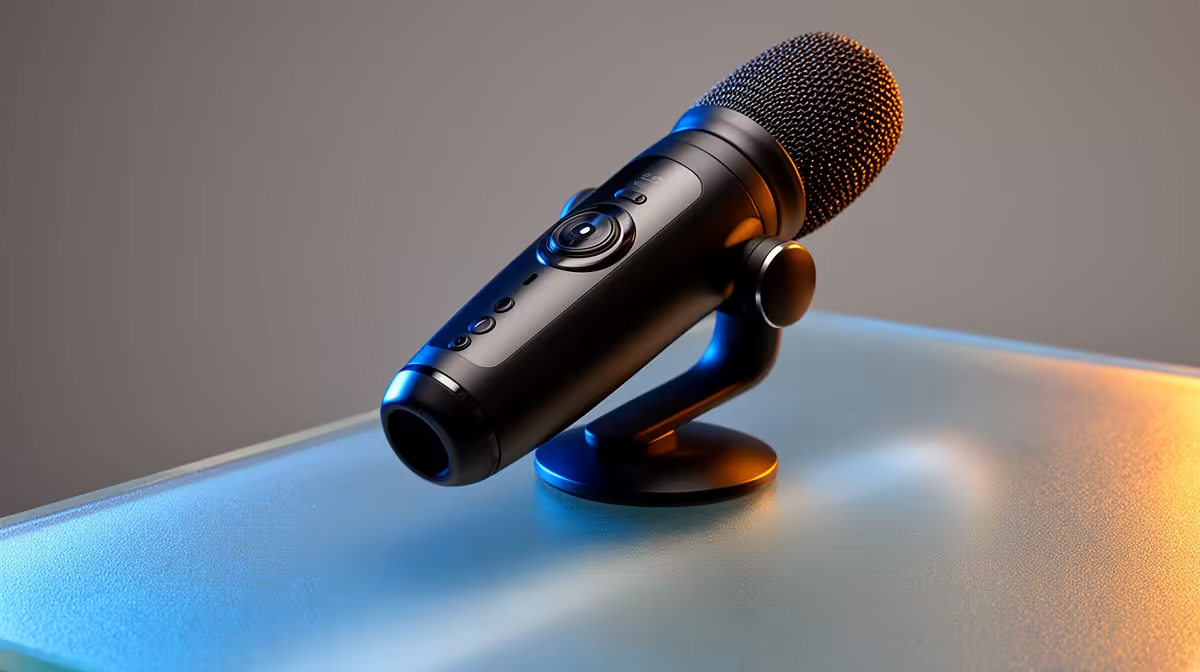
Bluetooth is everywhere, and that familiarity makes it feel like a universal audio solution. But the protocol was designed for short-range personal device pairing, not for the sustained, low-latency, interference-resistant wireless audio that content work demands. 200m dedicated wireless audio technologies operate on an entirely different set of engineering priorities, and the gap between them and a standard Bluetooth microphone becomes obvious the first time you push past 10 metres or need tight lip-sync with a camera.
Quick Answer
Dedicated 200m wireless audio kits use 2.4GHz protocols engineered for low latency and long range, sitting under 20ms of delay with reach up to 200m. Bluetooth targets low-power personal pairing, maxing out near 10m and introducing 100ms to 200ms of codec delay that breaks lip-sync in video.
🔌 Understanding Why Range Differs So Dramatically
Bluetooth's range limitation is not a flaw, it is a design choice. The protocol is built to minimise power consumption for earbuds, watches, and keyboards that run on small batteries for months at a time. Achieving that efficiency means transmitting at very low power levels over very short distances. Most practical Bluetooth implementations stay reliable inside about 10 metres, and obstacles like walls, furniture, or the human body further reduce that working radius.
Dedicated 2.4GHz wireless audio systems have a completely different priority set. Their transmitters push signal strength up significantly, using antenna designs and power levels that would drain an earbud battery in minutes but are entirely reasonable for a lavalier transmitter that charges daily. The result is a link that holds across an open 100 to 200 metre path and degrades far more gracefully as distance increases, rather than dropping abruptly the way a stretched Bluetooth connection does.
True-diversity receiver designs add another layer of reliability. Two separate antennas receive simultaneously, and the receiver selects whichever has the stronger signal at each moment. This antenna switching happens fast enough to be imperceptible to audio, and it handles the micro-interruptions caused by body movement that single-antenna systems occasionally fail to recover from cleanly.
⚡ The Latency Difference and Why It Matters for Video
Bluetooth audio is compressed before transmission. The codec that compresses it, whether SBC, AAC, or the more efficient aptX variants, takes time to encode the audio, transmit it, and decode it at the receiving end. The total round-trip latency of a standard Bluetooth connection sits between 100 and 200 milliseconds depending on the codec. aptX Low Latency reduces this to around 32 to 40ms in ideal conditions, which is still significantly above the threshold where lip-sync problems become visible.
At 100 to 200ms of delay, a person's mouth movement and the audio you hear are visibly mismatched, an effect most viewers recognise even if they cannot immediately identify its source. Correcting this in post editing requires manually slipping the audio track to match the video, which adds time to every edit and is easy to get wrong on multi-angle shoots.
Dedicated wireless kits are engineered specifically to avoid this. They transmit near-uncompressed audio over a proprietary protocol and target latency figures below 20 milliseconds, typically between 5 and 15ms depending on the system. At those figures, the delay is below the threshold of perception for lip-sync purposes, and the audio track aligns naturally with camera footage without any post-production correction.
Audio Quality Beyond Latency
The compression Bluetooth uses to fit audio through its limited bandwidth has a second consequence: it reduces audio fidelity. Bluetooth codecs, particularly the more widely compatible ones, sacrifice fine detail in the audio signal to achieve their compression ratios. Dedicated wireless systems transmit at 24-bit depth with minimal compression, preserving the full vocal detail that a quality microphone capsule captures. For content where audio quality is part of the production value, that difference is audible on a decent monitoring system.
🎯 Interference Resistance in Crowded Environments
Urban South Africa, particularly a conference centre in Sandton or a busy shopping complex in Cape Town, is saturated with 2.4GHz wireless activity. Wifi routers, other Bluetooth devices, and competing wireless audio systems all share the same frequency band. Bluetooth handles this with a basic frequency hopping scheme, but its low power and simple diversity scheme make it vulnerable to being pushed offline in genuinely congested radio environments.
Professional 2.4GHz wireless kits employ frequency agility, the ability to scan the available channels and select the cleanest one, combined with the signal strength to push through interference that overwhelms Bluetooth. The practical outcome is that a dedicated kit continues to deliver clean audio in a packed event venue where Bluetooth microphones would introduce stutters and dropouts.
Pro Tip ⚡
Before a shoot in a venue you have not used before, spend two minutes checking available channels on your wireless receiver. Most receivers display a frequency scan showing which channels are congested. Selecting a clean channel before the subject is mic'd up costs nothing and removes the possibility of interference ruining your first take.
🔧 Connecting a Dedicated Kit to a Smartphone
One practical question that often comes up is whether a 200m wireless kit loses its advantages when connected to a phone rather than a camera. Modern kits address this directly with compact USB-C and Lightning receiver dongles that attach to the phone's charging port and present themselves as a standard audio input. The phone records from the wireless kit exactly as it would from a wired microphone, with no Bluetooth pairing, no codec compression, and no latency overhead.
For a South African creator filming content on an Android phone, this USB-C receiver approach delivers the same long-range, low-latency wireless audio as a camera setup, while keeping the phone as the recording device. It is one of the clearest practical advantages of dedicated wireless over Bluetooth for mobile creators.
Frequently Asked Questions
Why is Bluetooth range limited to roughly 10 metres for microphones?
Bluetooth transmits at very low power levels to conserve battery across devices like earbuds and keyboards. Dedicated wireless audio systems prioritise range and signal strength over power economy, using stronger transmitters that maintain a reliable link at 100 to 200 metres, a trade-off Bluetooth's design does not allow.
How much latency does a Bluetooth microphone actually add?
Standard Bluetooth adds 100 to 200 milliseconds of delay through codec encoding and decoding. At those figures, mouth movement and audio are noticeably mismatched in video. Dedicated wireless kits target under 20 milliseconds, which is below the threshold of visible lip-sync error and requires no timing correction in the edit.
Can dedicated wireless kits compete on audio quality, not just range?
Yes. Dedicated systems transmit near-uncompressed 24-bit audio, preserving the full fidelity of what the mic capsule captures. Bluetooth compresses the signal to fit its bandwidth constraints, reducing the fine detail that is audible on quality monitoring equipment and in professional finished content.
How do dedicated kits handle interference in busy environments?
They combine high transmit power with frequency agility, scanning available channels and selecting the cleanest one, plus true-diversity antenna switching that handles momentary signal interruptions. This makes them substantially more resilient in congested 2.4GHz environments than Bluetooth, which lacks the power and diversity design to compete in heavily saturated locations.
Can I use a dedicated 200m kit with a smartphone instead of a camera?
Yes. Most current kits include compact USB-C or Lightning dongles that connect directly to a phone's port, delivering the full long-range, low-latency wireless audio to the phone as a standard audio input. No Bluetooth pairing is involved, and the phone records at the full quality the system provides.
Ready to record audio that stays in sync and holds its range?
Browse the dedicated wireless microphone range at Evetech and find a kit that leaves Bluetooth's limitations behind for your next shoot.