


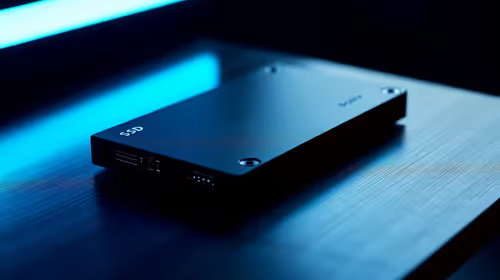
PCIe 5.0 vs PCIe 4.0 for Strategy and Sim Games in SA
PCIe 5.0 and PCIe 4.0 differ most in lane support, compatibility, and upgrade value for strategy and sim games. SA buyers should match the choice to their actual hardware and games.
Read more240mm AIO vs 360mm AIO for couch co-op gaming depends on setup fit more than slogans. Compare case radiator support, CPU heat, fan noise, pump layout, and clearance, then match the choice to your SA build, desk, case, or workload.
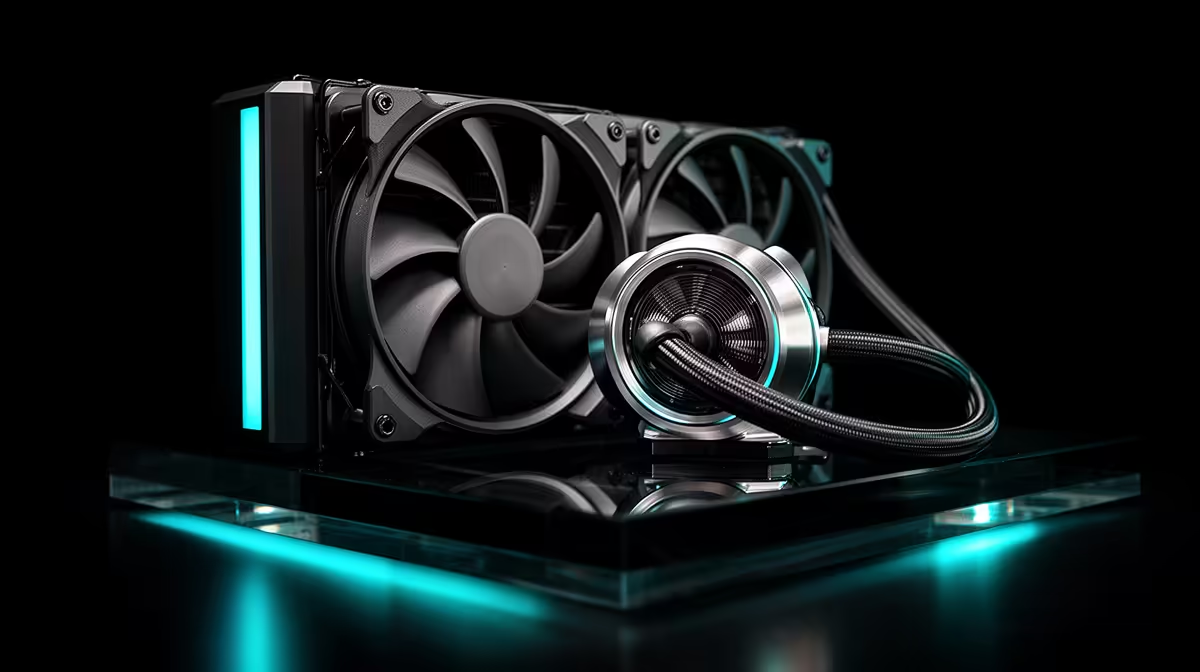
The gap between a 240mm and a 360mm AIO is one extra 120mm of radiator, and whether it earns its place depends on shared-screen sessions and quiet living-room operation. Size it to your case and CPU wattage before anything else.
A 240mm AIO is the value pick for couch co-op gaming and keeps most 65 to 105W CPUs in check; a 360mm is worth it once you run a 170W chip or chase silence, buying about 5C lower load temps for the extra rand.
Confirm your chassis takes a 360mm radiator in the top or front before you spend. Many compact mid-towers only mount a 240mm or 280mm up top, and a 360 in front can clash with tall RAM. Measure the radiator and fan stack of about 52 to 65mm against your case spec.
The third 120mm fan on a 360mm radiator spreads the same heat over more surface, so the loop runs cooler at the same noise. For shared-screen sessions and quiet living-room operation that means steadier boost clocks after the chip has been hot for 20 to 30 minutes. A 240mm rarely bottlenecks a 65 to 120W CPU but asks its fans to work harder.
Solid 240mm AIOs land around R1,500 to R2,800, while quality 360mm units sit closer to R2,600 to R4,500. For most couch co-op gaming the money saved on a 240mm is better spent on the GPU or an extra NVMe drive unless thermals are already the limit.
A 360mm earns its price when your CPU runs above roughly 150W or you want quieter fans, giving about 4 to 7C more headroom. Below that, a 240mm handles shared-screen sessions and quiet living-room operation without throttling, so the saving is better spent elsewhere.
Yes, when tuned well. More radiator surface lets fans spin slower for the same temperature, so a 360mm can be quieter than a 240mm under identical load if you set a gentle fan curve.
It does. A warmer room raises coolant temperature, so the larger radiator keeps more buffer on hot days. Strong case intake airflow narrows the gap, so airflow and AIO size work together.
On install day, mount the radiator so the tubes sit at or below the pump to avoid air noise, then run a 20-minute stress test to confirm load temperatures before you trust the build.
PCIe 5.0 and PCIe 4.0 differ most in lane support, compatibility, and upgrade value for strategy and sim games. SA buyers should match the choice to their actual hardware and games.
Read more
AM5 vs AM4 for video editing in 4K Difference explained is mostly about compatibility, budget, upgrade path, and setup fit. SA buyers should check device support and real needs before expecting a clear win from either option.
Read more
OLED vs QD-OLED for strategy and sim games buyers - what changes is mostly about compatibility, budget, upgrade path, and setup fit. SA buyers should check device support and real needs before expecting a clear win from either option.
Read more
DisplayPort 2.1 and 1.4 differences matter when SA PC builders match GPUs, monitors, and refresh targets. Use this difference between displayport 2 1 and displayport 1 4 explained pc builders guide to avoid mismatched parts.
Read more
Ray tracing vs Path tracing depends on Strategy and sim games needs, platform limits, and budget fit. Compare compatibility, latency, upgrade path, and real setup constraints before choosing for an SA build.
Read more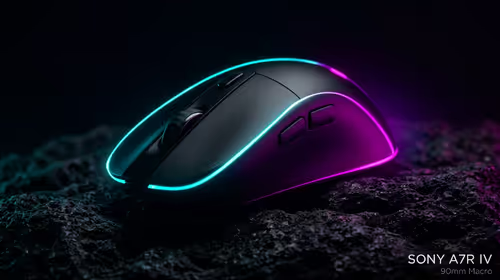
wireless mouse guide for Gqeberha gamers should be shortlisted around the job it must do. South African buyers should compare sensor, shape, weight, and wireless latency, warranty path, and upgrade room before treating any pick as best.
Read more
Windows 11 update KB5121003 is linked to crashes in several multiplayer games on versions 24H2 and 25H2. Check the build, report the fault and avoid risky file or update changes unless the problem is confirmed on your PC.

Sennheiser's Momentum True Wireless 5 adds user-replaceable batteries, 12-hour playback and a $299.95 launch price. There is no confirmed South African date, so compare longevity with live earbuds from R199 to R2,999.

AVerMedia's GC531 and GC535 are professional HDMI capture devices for continuous streaming, with RGB24 capture up to 2K30 and 4K30. South African creators should compare them with live 4K capture cards from R2,099.

From 1 October 2026, WhatsApp Business Platform service replies in South Africa are expected to cost about $0.0076, or 12 cents, per delivered message.
Windows 11 update KB5121003 is linked to crashes in several multiplayer games on versions 24H2 and 25H2. Check the build, report the fault and avoid risky file or update changes unless the problem is confirmed on your PC.

Comsol's standalone 5G network covers about one million Gauteng homes and starts commercial ISP service in September. Early packages range from R275 to R875 a month, but coverage and fair-use rules still decide the real value.
Sennheiser's Momentum True Wireless 5 adds user-replaceable batteries, 12-hour playback and a $299.95 launch price. There is no confirmed South African date, so compare longevity with live earbuds from R199 to R2,999.
AVerMedia's GC531 and GC535 are professional HDMI capture devices for continuous streaming, with RGB24 capture up to 2K30 and 4K30. South African creators should compare them with live 4K capture cards from R2,099.
Windows 11 update KB5121003 is linked to crashes in several multiplayer games on versions 24H2 and 25H2. Check the build, report the fault and avoid risky file or update changes unless the problem is confirmed on your PC.
Comsol's standalone 5G network covers about one million Gauteng homes and starts commercial ISP service in September. Early packages range from R275 to R875 a month, but coverage and fair-use rules still decide the real value.
Sennheiser's Momentum True Wireless 5 adds user-replaceable batteries, 12-hour playback and a $299.95 launch price. There is no confirmed South African date, so compare longevity with live earbuds from R199 to R2,999.
AVerMedia's GC531 and GC535 are professional HDMI capture devices for continuous streaming, with RGB24 capture up to 2K30 and 4K30. South African creators should compare them with live 4K capture cards from R2,099.