80 Plus Bronze vs Gold: What You Actually Get
Quick Answer
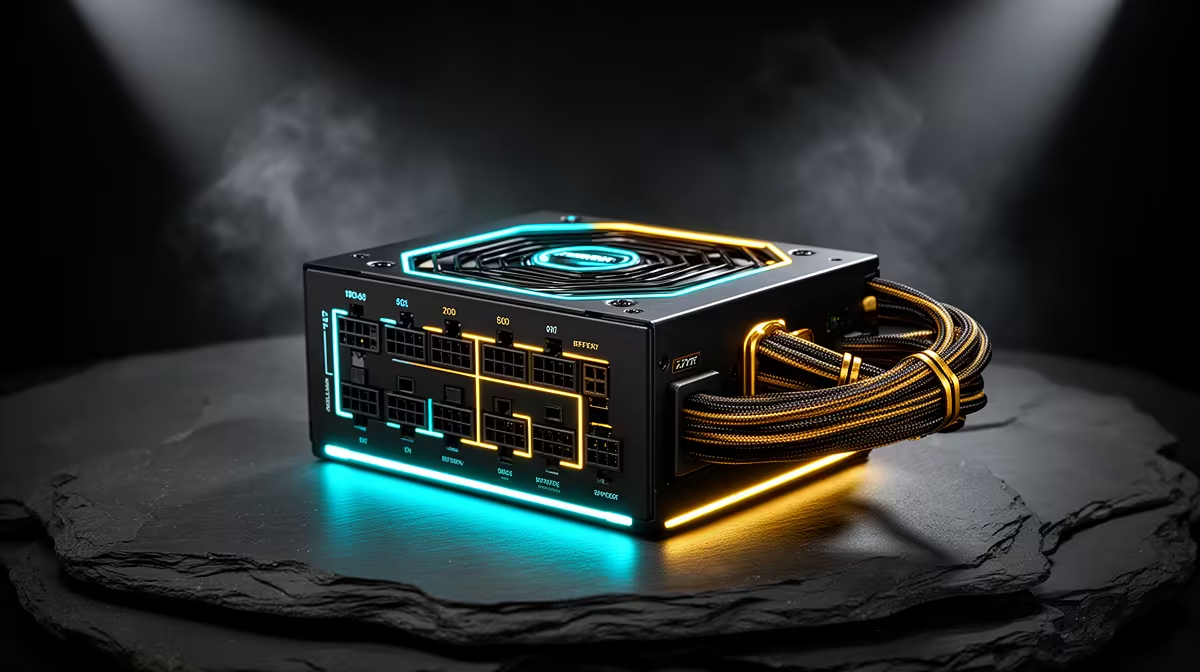
80 Plus Gold requires higher efficiency than Bronze at defined load points under the programme's test conditions. That can reduce AC power drawn and heat created inside the PSU for the same DC component load.
The badge does not certify safety, voltage regulation, protections, noise, transient response or build quality. Compare the exact PSU model after using the efficiency tier as one filter.
Understand the Percentage
Efficiency is DC output divided by AC input. If the PC components need the same DC power, the more efficient PSU draws less from the wall and wastes less as heat.
The difference changes with load and input voltage. Do not use one Bronze-to-Gold percentage for every game and unit.
Check the exact certification record and independent measurements. Regional input voltage and test programme version matter.
Bronze Is Not a Safety Grade
A Bronze unit can have sound protections, regulation and components. A Gold unit can still be a poor fit or weak model.
Safety compliance and electrical quality come from other certifications, design details and testing. Check how the exact model handles excess current, unsafe voltage, shorts, overload and heat.
Do not assume two units share a platform because their brand and efficiency badge match.
Gold Does Not Guarantee Better Parts
Higher efficiency can require a more advanced design, but the badge does not inspect capacitor choice, fan quality or warranty.
Some Gold models are built better than some Bronze models. The reverse can be true for specific comparisons.
Use model-level electrical reviews, operating-temperature rating and warranty. Avoid a broad claim about every tier.
Heat and Fan Noise
Lower conversion loss means less heat for the PSU to remove at the same output. That can help fan behaviour.
Noise still depends on fan curve, fan quality, case airflow and load. A quiet Bronze model can beat a noisy Gold model.
Check exact noise measurements across the load range your PC uses.
Electricity Cost Needs Maths
Find system DC load or compare measured AC draw from both exact units under the same workload. Multiply the watt difference by hours used and divide by 1,000 for kilowatt-hours.
Then apply the current tariff that applies to your household. Tariffs and usage patterns vary, so there is no universal South African monthly saving.
Do not count idle, gaming and sleep hours at one load. Build separate rows.
Match Capacity First
A 750W Gold unit and 650W Bronze unit may sit at different points on their efficiency curves. Compare units that both support the complete system and GPU connector path.
Use the graphics-card whole-system guidance and calculate CPU, drives, fans and powered devices. Leave suitable transient and upgrade headroom.
Oversizing can change low-load operation. More watts do not create more efficiency by themselves.
Check Connectors
Count motherboard, CPU and GPU connectors. Check native 12V-2x6 support where the card requires it.
Use only modular cables approved for the exact PSU model. The same badge and wattage do not make cable pinouts compatible.
Confirm case fit and cable bend room before choosing the higher tier.
Compare Named Models
Open Corsair PSU options and record model, capacity, efficiency tier, standard, dimensions and cable set. Use the PSU best-seller range for a second model.
Add protections, warranty and independent voltage, ripple, transient and noise testing. Mark missing evidence.
The Gold model earns its premium when the complete package improves something you use, not from the badge alone.
Calculate Payback Carefully
Subtract the comparable purchase prices, then divide by the estimated annual electricity saving. Keep the price and tariff date.
If the payback extends beyond the planned life of the PC, choose Gold for other model-level benefits or choose the sound Bronze unit.
Do not assume future tariffs, usage or hardware load will stay fixed. Treat the result as a scenario.
Test the Installed Unit
Use the supplied cables and boot at default settings. Run warmed CPU, GPU and combined workloads.
Measure AC input with a suitable meter if you know how to use it safely. Stop for shutdown, smell, discolouration or unusual heat.
Keep the result with the PSU model. It gives the next upgrade a real baseline.
Check Standby and Light Use
A gaming PC also sleeps, streams video and sits on the desktop. Compare efficiency and fan behaviour at those lower loads where exact data exists.
A high-capacity unit can spend much of the day below the certification's headline test points. This does not make it unsafe, but it changes the electricity and noise comparison.
Use the operating system's sleep features and current platform guidance. A Gold badge cannot fix a PC that is left under game load when nobody uses it.
Include the South African Power Context Carefully
Use the tariff shown on your own current municipal or service bill and the correct block or time treatment where applicable. Do not copy a national average into a household calculation.
Measure hours from the real routine. A weekend player and a workstation running daily will see different payback.
Keep the tariff and measurement date. The result can be updated when rates or the PC change.
Decide From the Complete Model
Give each candidate pass or fail for capacity, GPU connection, protection evidence, regulation, noise, fit and warranty. Compare efficiency only after both pass.
If the Gold model also brings a longer warranty, native cable or lower tested noise, those benefits can justify the premium before electricity payback does.
If the Bronze model passes every need and the Gold difference is only a small efficiency gain, keeping the saving is reasonable.
Do Not Reuse by Badge
Before moving a PSU to a new build, recheck age, condition, cable inventory and the new GPU guidance. Certification does not make service life unlimited.
Keep modular cables labelled with the exact unit. Clean external dust without opening the enclosure.
Replace a damaged or unstable PSU through a qualified route. Never open it because dangerous stored energy can remain.
FAQ
Is Gold safer than Bronze?
The 80 Plus tier does not certify safety. Compare protections, compliance, model design and independent testing.
Will Gold always run quieter?
No. Lower conversion loss can help, while fan curve and cooling design decide actual noise.
Is the premium worth it?
It can be when the exact Gold model offers useful efficiency, noise, warranty or electrical advantages. Compare named units.
Compare one named Bronze and Gold PSU on capacity, cables, protections, noise and measured efficiency, then pay the premium only for differences the build uses.