Quick Answer
420mm radiator support means the case accepts a three-fan 140mm radiator in a designated mount position. It is the largest common AIO size and the preferred choice for high-TDP CPUs and enthusiast custom loops because it provides more surface area and lower fan speeds compared to 360mm or 280mm alternatives.
AIO Cooling and the 420mm Advantage 💧
All-in-one liquid coolers in the 420mm class pair a pump block, tubing, and a 420mm radiator into a sealed, maintenance-free unit. The larger radiator core exchanges heat more efficiently because it offers more aluminium or copper surface area to dissipate into the moving air. For a Ryzen 9 9950X running sustained all-core workloads at around 230W TDP, a 420mm AIO consistently delivers CPU temperatures 5 to 9 degrees Celsius lower than a 360mm AIO under the same load. The practical result is sustained boost clocks without throttling, which matters for both gaming frame rates and long rendering jobs. 420mm AIOs from major brands are available locally in the R4,000 to R7,000 range.
Custom Loop Compatibility and the 420mm Radiator 🔧
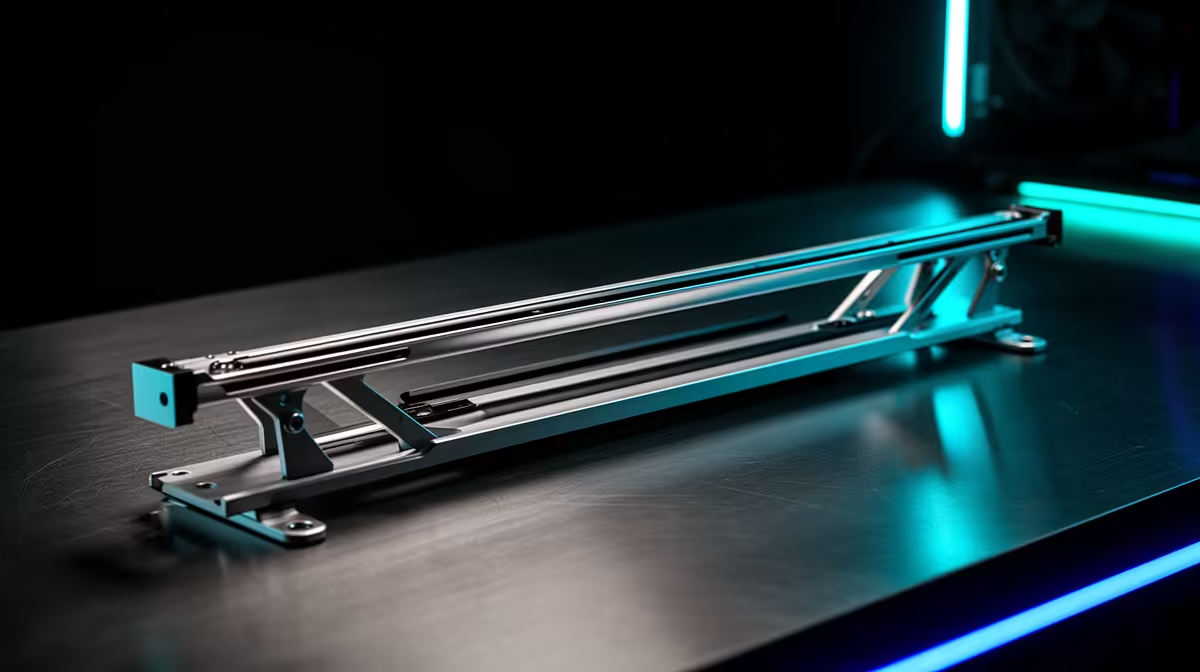
In a custom watercooling loop, 420mm radiators serve as the primary heat rejection point for CPU, GPU, or combined loops. The 420mm form factor fits three G1/4-inch threaded ports for inlet and outlet fittings, compatible with all standard compression fittings used in soft-tube or hard-tube builds. A case advertising 420mm radiator support must have a mount position long enough to clear the 424mm to 430mm physical length of the radiator plus its fan assembly. Verify that the mounting position does not conflict with VRM heatsinks at the top of the board. Cases with a front-mount 420mm position and a secondary top-mount 360mm position are ideal for a full dual-radiator custom loop.
Mounting Positions and Case Compatibility Details 📐
The front panel is the most common 420mm radiator position, placing the radiator's fans directly at the primary intake and drawing cool ambient air through the core before it enters the case. Some full-tower cases also support 420mm at the top, creating a chimney effect where heat rises into the radiator and exits through the top. For standard AIO installations, front-mount is preferred because it keeps pump and hose routing simpler and avoids routing tubing above the motherboard plane.
Check Radiator Thickness Against RAM Height ⚡
A 420mm radiator including fans can be 60mm to 80mm deep. When mounted at the front, confirm that clearance from the front mounting rail to the motherboard I O area is sufficient. Tight cases may require low-profile DDR5 modules under 40mm tall to avoid contact with the radiator fan frame at the top of the mount.
FAQ
Is a 420mm AIO worth it over a 360mm for gaming?
For gaming alone with a mainstream CPU running below 170W TDP, a 360mm AIO is sufficient and costs R1,000 to R1,800 less. The 420mm advantage becomes clear at 200W and above, or when prioritising absolute minimal fan noise.
Can a 420mm radiator fit in a mid-tower case?
Some mid-tower cases advertise 420mm front-mount support, but clearance is tight. Always verify the exact radiator-to-motherboard distance in the case specification. A full-tower case is less likely to have conflicts and gives you room for cable management around the radiator tubing.
Do 420mm AIO pumps fail more often than 240mm units?
Pump failure rate is not correlated with radiator size. All quality AIOs use the same basic centrifugal pump design, and failure risk depends on build quality and operating temperature rather than the radiator format.
Ready to cool your build properly?
Evetech stocks 420mm AIO coolers and full-tower cases with verified 420mm radiator support, so you can plan your liquid cooling setup with confidence.