Quick Answer
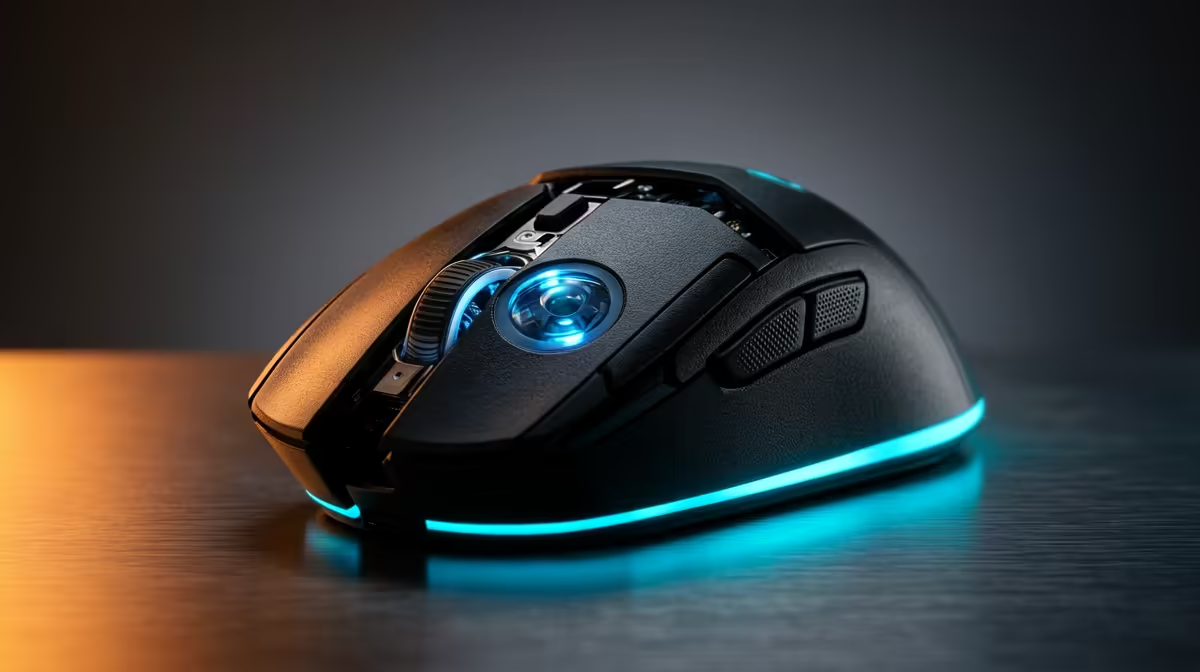
1600 DPI with a blue LED optical sensor is a reliable, cost-effective tracking specification for office and casual gaming use. Blue LED optical sensors produce clean tracking on most desk surfaces at 1600 DPI, though they can exhibit minor tracking inconsistency on very dark or reflective mousepads compared to infrared optical or laser sensors used in high-end gaming mice.
What 1600 DPI Actually Means for Daily Use 🖱️
DPI (dots per inch) describes how far the cursor moves on screen per inch of physical mouse movement. At 1600 DPI on a standard 1080p monitor, moving the mouse 1 inch moves the cursor approximately 1,600 pixels. On a 27-inch 1440p screen running at 2560x1440, 1600 DPI feels slightly faster due to the higher pixel density requiring longer cursor travel. For office tasks like document editing and spreadsheet navigation, 1600 DPI at Windows pointer speed 6/11 is responsive without being twitchy. For FPS gaming, most competitive players drop to 400 to 800 DPI and increase in-game sensitivity, making 1600 DPI the ceiling of the useful range for precision play rather than the floor.
Blue LED Optical Sensors: How They Track and Their Limits 🔵
A blue LED optical sensor captures up to 1,000 frames per second of surface texture images and triangulates movement from frame-to-frame differences. Blue wavelength light reflects well off common surfaces: cloth mousepads, paper, wood desk surfaces, and most vinyl. Where blue LED sensors struggle is on glossy black surfaces or deep red mousepads, where the light wavelength is poorly reflected or absorbed. For most South African home office desks, a standard cloth mousepad or a thin A4 paper surface works perfectly. Infrared (IR) optical sensors used in gaming mice like those with PMW3395 or TrueMove Air sensors track on nearly any surface including glass, but that capability adds cost.
DPI Switching and Sensor Longevity 🔧
Many mice with 1600 DPI blue LED sensors include a DPI switch button that cycles through two or three preset DPI steps. A common preset trio is 800, 1200, 1600 DPI, giving the user low-DPI precision for detailed design work and high-DPI speed for multi-monitor cursor travel. The scroll wheel and buttons on budget optical mice are typically rated for 5 to 10 million click cycles, sufficient for three to five years of daily use. USB cable quality is the more common failure point on wired mice under R300: fraying near the connector is typical after 18 to 24 months of daily use, particularly if the cable is kinked against a desk edge.
Surface Calibration for Blue LED Mice ⚡
If your blue LED mouse produces jerky or erratic tracking on your current surface, try a cloth mousepad rather than bare wood or a glossy desk mat. Cloth surfaces at medium density (2 to 4mm thick) provide optimal texture contrast for blue LED optical sensors and also reduce wrist fatigue compared to hard plastic mousepads during long work or study sessions.
FAQ
Is 1600 DPI enough for gaming in South Africa?
For casual and mid-tier gaming at 1080p or 1440p, 1600 DPI is functional. For competitive FPS titles where tracking precision matters, most players configure sensitivity at 400 to 800 DPI for tighter micro-aim control.
How does a blue LED optical sensor differ from a laser sensor?
Blue LED optical sensors read physical surface texture using reflected visible light and perform consistently on fabric and matte surfaces but can lift-off or stutter on glass. Laser sensors penetrate surface texture more deeply, which can cause over-reading (artificial jitter) at low speeds on fabric.
Do 1600 DPI optical mice need special drivers in South Africa?
Most plug-and-play on Windows 10 and 11 without additional drivers. DPI switching via the onboard button works without software.
Looking for a reliable mouse for work or study?
Evetech stocks wired and wireless optical mice across DPI ranges and sensor types. Browse the full mouse range at Evetech to find the right fit for your desk setup and budget.