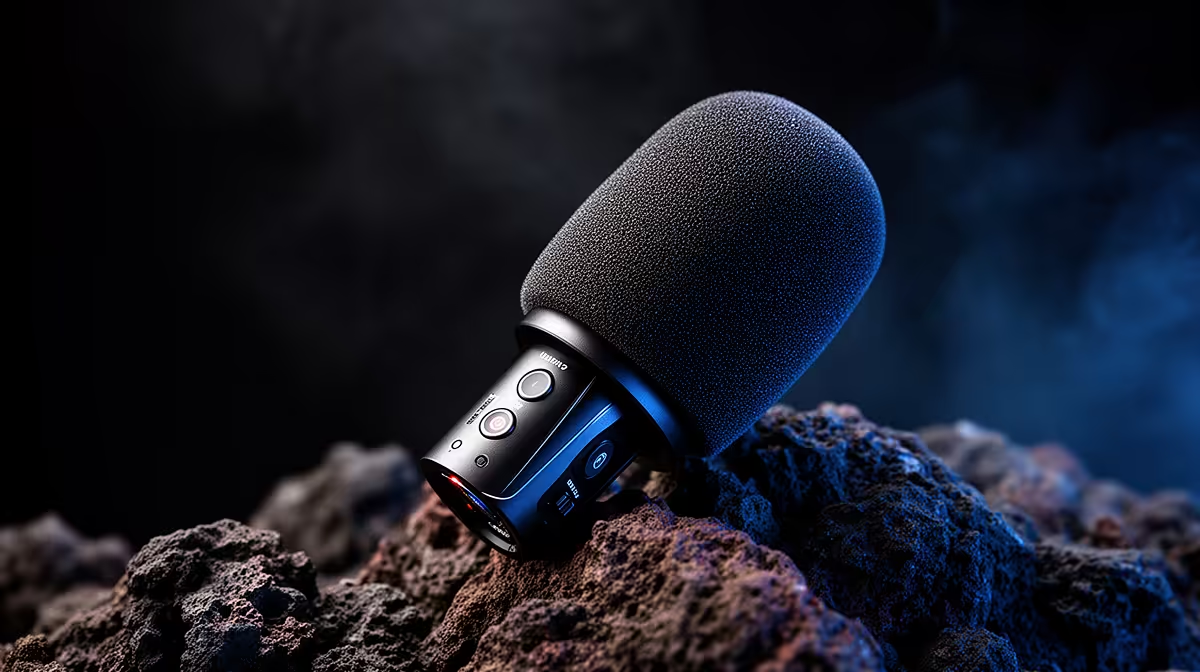
Outdoor audio is a two-problem situation, and the mistake most creators make is treating it as one. Wind and ambient noise look similar on a waveform, but they arrive at the capsule through completely different mechanisms, which is why AI noise canceling and physical wind muffs each handle something the other cannot. The best outdoor rigs use both in combination, each doing its own specific job.
Quick Answer
A furry wind muff blocks physical air turbulence before it reaches the capsule, cutting gusts by 15dB to 20dB. AI noise canceling then cleans up the steady environmental noise that the muff lets through, like traffic and crowd hum. Together they cover what neither handles alone.
🌐 Why Wind Is a Physical Problem, Not a Processing One
When wind flows across a microphone capsule it does not produce a simple loud sound. It creates turbulence, a fast-moving pressure wave that physically overloads the diaphragm before any processing circuitry has a chance to see the signal. The resulting low-frequency roar is not just loud, it is a distortion event, meaning the capsule has already been pushed past its linear range.
This is the fundamental reason AI denoising cannot substitute for a physical wind muff. No matter how capable the model, it receives a distorted signal as its input, and it cannot reconstruct the clean voice that never made it through the capsule intact. The protection has to happen before the capsule, not after it.
A furry deadcat muff works by creating a still-air boundary layer around the microphone. The dense fibres of the fur interrupt the turbulent airflow and force it to slow and scatter before it reaches the capsule surface. Wind speeds that would otherwise generate 20dB to 30dB of roar get reduced to a gentle movement that the capsule reads as near silence. In moderate outdoor conditions a good furry muff can cut wind noise by 15dB to 20dB, enough to bring manageable gusts well below the voice level.
🔧 What AI Noise Canceling Does That a Muff Cannot
Once the muff has handled the physical wind problem, there is still a layer of environmental noise that persists: traffic on a nearby road, a crowd at an event, distant construction, or the ambient hum of a city. These are consistent, broadband noise sources that a furry muff has no mechanism to address. The muff is a physical barrier, not a signal processor.
This is exactly the territory where AI denoising proves its value outdoors. With the wind threat neutralised, the model receives a relatively clean input signal that contains your voice mixed with steady background noise. The trained model identifies the speech component, separates it from the ambient layer, and presents a cleaned output. The same technology that excels at removing aircon hum in an indoor studio performs the same function on traffic noise and crowd murmur outside.
The Stacking Principle
Running both systems simultaneously does not compound any audio loss in a meaningful way. The furry muff trims a small amount of very high frequency content, typically a slight softening above 10kHz, easily addressed with a 2dB to 4dB presence boost in post if the content demands it. The AI model then operates on a clean enough input that it does not have to work hard, which means artefact risk stays low. The combined result is outdoor audio that would otherwise require a controlled environment.
✨ On a Calm Day: Which System Is Doing the Work?
Conditions vary, and understanding when each system is active helps you make better decisions. On a still, sunny afternoon with no wind, the furry muff contributes almost nothing. It sits on the mic doing its job of being ready, but without airflow to block it is essentially idle. In those conditions, AI denoising takes over as the active system, cutting the urban noise floor that South African outdoor shoots routinely deal with, from Joburg street traffic to Cape Town harbour ambient noise.
On a blustery day where gusts are strong, the dynamic reverses. The muff is doing heavy lifting and the AI model benefits from receiving a cleaner base signal to work on. In very strong wind, even a furry muff can be overwhelmed, at which point positioning the mic body to shelter behind the subject becomes the next line of defence.
Pro Tip ⚡
If you notice a slight dullness creeping into your outdoor recordings when using both systems, apply a gentle 2dB shelf boost starting around 8kHz in your editing software. The muff trims a touch of air from the top of the frequency range, and this single adjustment brings the voice back to its natural brightness without any aggressive EQ.
🔆 Foam Cap vs Furry Deadcat: Knowing When to Upgrade
Microphone accessories often include a foam windscreen rather than a furry muff, and foam is a reasonable starting point for indoor use. A foam cap handles the plosive air bursts from speech, stops light breezes in a gentle outdoor environment, and protects the capsule from dust. For most indoor shoots it is sufficient.
The limit arrives in genuine outdoor conditions. Once you are dealing with anything more than a light breeze, foam saturates and the turbulence breaks through. A furry deadcat muff maintains its still-air boundary layer under moderate gusts that foam cannot resist. If your shooting locations regularly include open fields, rooftops, or coastal spots around Durban or Cape Town where sea breezes are a constant, a proper furry muff is not optional equipment.
Frequently Asked Questions
Why can't AI denoise just handle wind noise without a physical muff?
Wind creates a distortion event at the capsule, pushing the diaphragm past its linear range before the signal even reaches processing circuitry. AI models receive that already-distorted input and cannot reconstruct the speech underneath it. The muff must block the wind at source, before capsule overload occurs.
Does a wind muff help with street traffic or crowd noise on its own?
Not directly. The muff's mechanism is physical air interruption, which targets turbulent airflow across the capsule. Steady ambient noise like traffic and crowd hum travels as pressure waves through the air and passes through the muff fibres without being affected. AI denoising is the tool for that category of outdoor noise.
Does combining both systems cause any audible quality loss?
The impact is minimal. A furry muff trims a slight amount of the highest frequencies, which can be restored with a small presence boost in editing. The AI denoising then works on a cleaner signal, which actually reduces its artefact risk compared to running it on a wind-heavy input. The combination causes no meaningful quality penalty.
Does a furry muff drain battery or affect the wireless connection?
No. A wind muff is a passive acoustic accessory with no electronic components. It does not interact with the transmitter circuitry, draw power, or interfere with the 2.4GHz wireless signal in any way. It is purely a physical barrier between moving air and the capsule.
Which matters more on a completely still day outdoors?
AI denoising becomes the primary active system when there is no wind. The muff sits ready but idle, while the model works on the steady urban ambient noise, distant traffic, air handling systems, and the general low-frequency city hum that a calm outdoor environment still contains in abundance.
Ready to get clean audio on your next outdoor shoot?
Browse the wireless microphone accessories at Evetech, including furry wind muffs and kits with built-in AI noise canceling, and kit out your rig for whatever the South African weather brings.