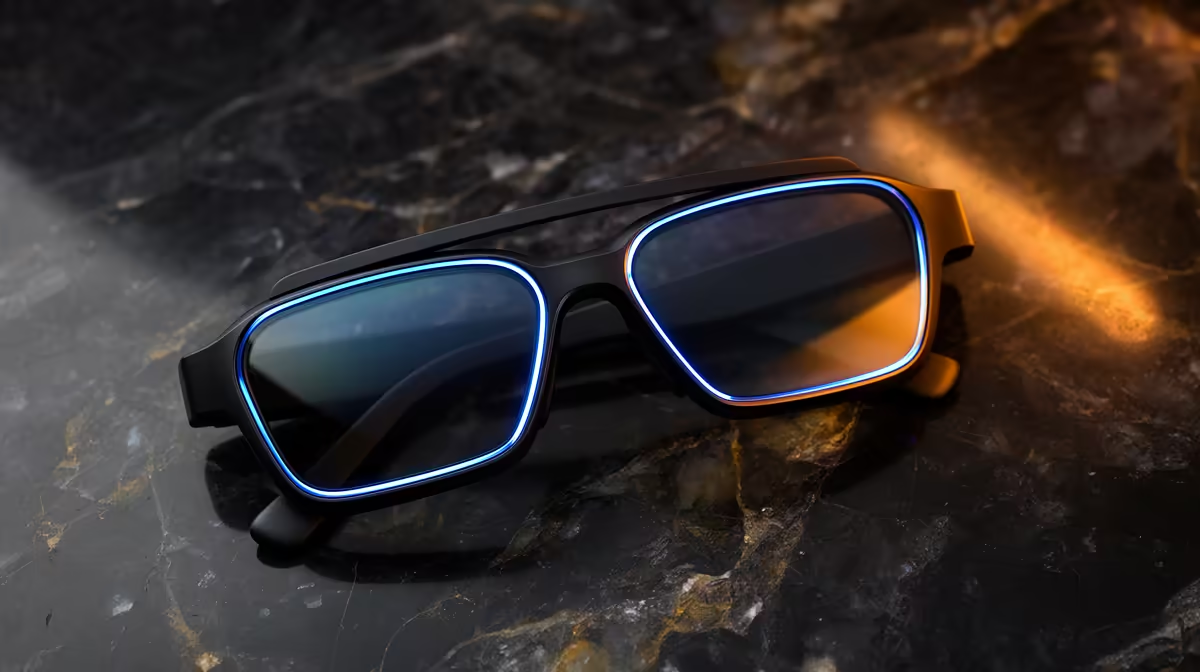
The glasses on a colleague's face that quietly take photos, pipe directions into their ears and answer a spoken question are no longer a concept reel. AI smart glasses have become a real product category, and the numbers behind the surge are striking: global sales are forecast to climb from around 6 million units in 2025 to roughly 20 million in 2026. For South African buyers, that growth raises practical questions about what these frames actually do, what they cost in Rand, and whether they are worth strapping a camera and microphone to your face.
Quick Answer
AI smart glasses are everyday eyewear with a built-in camera, open-ear speakers and a voice-driven AI assistant, letting you take photos, listen to audio, get directions and ask questions hands-free. The category is growing fast, with sales forecast to jump from about 6 million units in 2025 to roughly 20 million in 2026. In South Africa, expect to budget from the mid-thousands of Rand upward depending on features.
What AI Smart Glasses Actually Do
Strip away the hype and the useful functions are concrete and few.
The camera is the headline. A small lens mounted in the temple captures point-of-view photos and short clips hands-free, which works well for cooking, cycling, travel and moments where pulling out a phone would break the flow.
Open-ear audio comes next. Tiny speakers near your temples play music, podcasts and call audio without blocking your ears, so you stay aware of traffic and surroundings. It is closer to a discreet pair of earbuds built into the arms than a set of headphones.
The AI assistant ties it together. You speak a question and the glasses answer through the speakers, identify what the camera sees, translate a sign, or set a reminder. This is the feature improving fastest, and it is what separates "AI" smart glasses from older camera-only frames.
For the broader category of wearable visual tech, the AR and smart glasses range at Evetech brings current options together so you can compare them directly.
Smart Glasses vs AR Glasses: Not the Same Thing
The terms get mixed up constantly, and the difference matters before you spend.
Smart Glasses (Audio and Camera)
Most products selling today, including the popular camera-and-audio frames, are "smart glasses". They do not project images into your vision. They capture, play audio and run an assistant, and they look like ordinary sunglasses or spectacles. They are lighter, cheaper and have far better battery life.
True AR Glasses (Display in the Lens)
AR glasses add a display that overlays graphics onto what you see, floating navigation arrows or notifications in your field of view. The technology is heavier, pricier and battery-hungry, and genuinely useful all-day AR is still maturing. For most buyers in 2026, the camera-and-audio smart glasses are the practical, affordable choice; full AR is the more expensive frontier.
What to Look For Before Buying
A few specifications separate a frame you wear daily from one that lives in a drawer.
Battery life is the dealbreaker. Look for all-day standby with a few hours of active use, and a charging case that tops the glasses up like wireless earbuds.
Camera quality varies widely. Check the resolution and whether it shoots usable video, not just stills, if point-of-view capture is your reason for buying.
Comfort and looks matter more here than with most tech, because you wear these on your face in public. Weight, fit and whether they pass for normal glasses decide whether you actually use them.
Prescription support is the quiet detail many forget. Confirm whether a frame can take prescription lenses if you need them, since some models support it and some do not.
The South African Reality
Three local factors shape the decision in South Africa.
Privacy and etiquette come first. A face-mounted camera makes people around you uneasy, and most glasses include a recording light, but be considerate about filming others in shops, gyms and public spaces. The social rules are still being written.
Voice assistant performance is the second. The AI features lean on a data connection and on the assistant understanding you clearly, so test how well a model handles a South African accent and whether key features work without constant connectivity before committing.
Sun and outdoor use is the third, and it is a quiet advantage. Many smart glasses ship as sunglasses, which suits the South African climate well for outdoor walking, driving and sport. If you spend time outside, that tinted-lens default is genuinely useful rather than a gimmick.
To round out a wearable setup, charging cases, cables and protective pouches are available through the Evetech accessories best sellers, so the glasses themselves are not the only thing to budget for.
Who Should Buy AI Smart Glasses Now
They make most sense for hands-free creators capturing point-of-view content, cyclists and walkers who want audio and an assistant without blocking their ears, frequent travellers using live translation and navigation, and early adopters comfortable being on the front edge of a fast-moving category.
They make less sense if you want true AR overlays in your vision, since that is a different and pricier class of device, or if you are uneasy wearing a camera in public, in which case audio-only smart glasses without a lens are the calmer option.
Frequently Asked Questions
Are AI smart glasses the same as AR glasses?
No. Most smart glasses selling today add a camera, audio and a voice assistant but do not put a display in front of your eyes. AR glasses project graphics into your vision and are heavier, more expensive and less mature.
How much do AI smart glasses cost in South Africa?
Pricing depends heavily on features, but plan for the mid-thousands of Rand and upward for a current camera-and-audio model. Check what is currently stocked at Evetech for accurate local pricing rather than relying on overseas figures.
Do AI smart glasses work with a South African accent?
The leading assistants handle a range of accents, but performance varies by model and improves with software updates. Test the voice features yourself before buying if hands-free questions and dictation are central to how you will use them.
Can I get smart glasses with prescription lenses?
Some models support prescription lenses and some do not, so confirm this for the specific frame before purchasing. It is one of the most overlooked details for buyers who normally wear glasses.
Is the camera always recording?
No. The camera records only when you trigger it, and most glasses show a visible light while filming so people nearby know. Even so, be considerate about recording others in private or sensitive settings.
Curious whether AI smart glasses fit your day? Browse what is currently stocked in wearable eyewear at Evetech to compare cameras, audio and battery life, and check the accessories best sellers for charging cases and protective pouches to keep them safe.