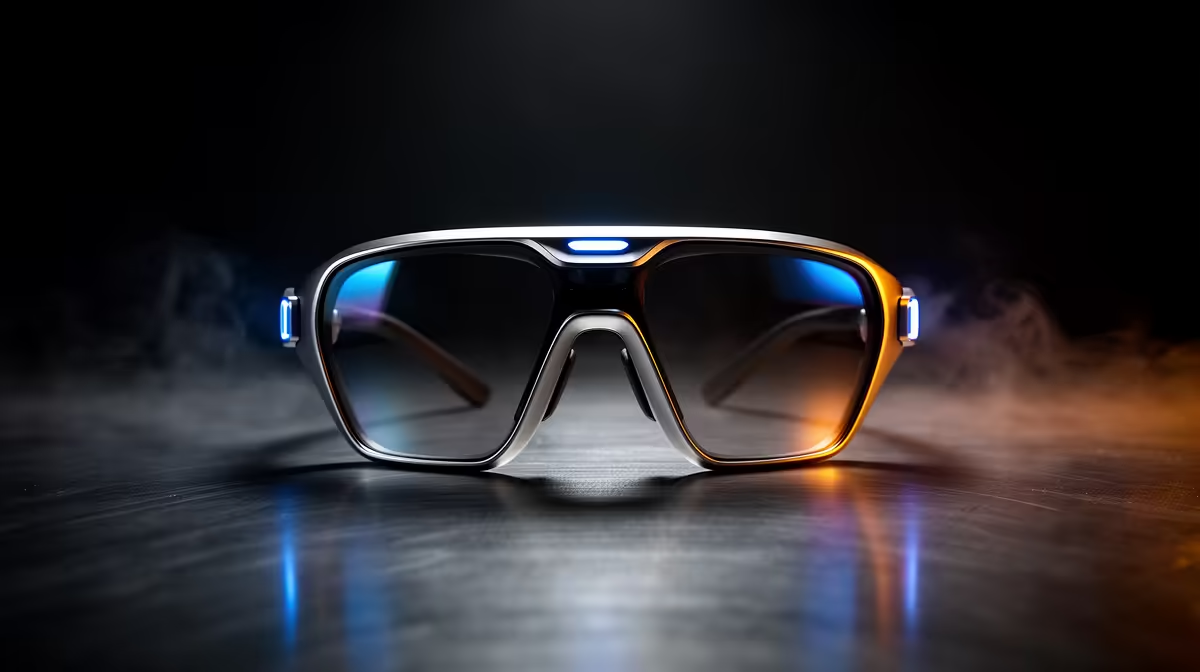
Meta and EssilorLuxottica sold over seven million smart glasses in 2025, roughly tripling the combined total of every year before it, and the category is still climbing fast. That growth is the headline, but it does not answer the question a buyer actually has. AI smart glasses are genuinely useful for a narrow set of hands-free tasks today, and whether they are worth your money depends entirely on whether those tasks match how you live.
Quick Answer
For most people in 2026, AI smart glasses are worth it only if you specifically want hands-free photos, audio, calls and quick AI queries from your face. The Ray-Ban Meta line starts around the 499 US dollar mark internationally, with display models near 800 dollars, so this is a considered purchase. The technology is real and improving, but it is a convenience layer, not a phone replacement.
What the current generation actually does
Strip away the marketing and the core feature set is consistent across the lineup: a camera for first-person photos and clips, open-ear speakers for audio and calls, microphones for voice, and an AI assistant you talk to. Meta has been steadily adding to that through 2026, including hands-free meal logging by voice or quick photo, WhatsApp message summaries and a recall feature in its early-access programme. The higher-end Display model introduces a small monocular screen inside one lens, paired with a neural input wristband, pushing toward genuinely new interaction rather than just a better camera.
None of this is transformative on its own. It is a set of conveniences that remove the friction of pulling out your phone. For people who already wear glasses, the appeal grows, which is why Meta has leaned into prescription-ready frames. To see the current local options, browse the AR glasses at Evetech for a full picture of what is currently stocked and priced locally.
The case for buying now
The strongest argument is hands-free capture. If you cycle, hike, cook, parent young children or work with your hands, lifting a phone to take a photo means missing the moment. Glasses that shoot from your eyeline catch it. The same logic applies to calls and audio: open-ear sound that leaves you aware of your surroundings suits a walk through a busy Cape Town street far better than sealed earbuds.
The AI assistant adds a second layer. Asking a question, getting a translation or logging a meal without touching anything is the kind of small convenience that adds up over a day. For early adopters who value being first and who already live inside the relevant apps, the proposition holds up.
The five-microphone array and audio clarity
The Ray-Ban Meta Gen 2 uses a five-microphone array, which is worth noting beyond voice commands. It captures spoken content for creators who narrate while they record, handles wind and ambient noise better than a single mic, and manages calls clearly in moderately noisy environments. That array is what separates these from a camera on a hat, because the audio quality is genuinely useful rather than a side feature.
The case for waiting
The honest counterweight is that the everyday value still rests on those few features rather than anything you cannot do another way. Battery life is measured in hours, not days. The non-display models give you no screen, so the AI is voice-only. Privacy etiquette around a face-worn camera is still settling. And at this price, the glasses sit alongside a phone you already own that does most of the same things.
Who should hold off
If your main interest is the in-lens display and richer AR, the technology is clearly heading somewhere better. Each generation narrows the gap, and a buyer with no urgent need loses little by letting one more cycle pass. For pure audio or photography, dedicated kit still does each job better for the money.
How the market has split in 2026
Two distinct product camps have emerged. Audio-first glasses, like the Gen 2, deliver camera, speakers and the assistant without any visual interface, keeping the form light and the price manageable. Display-equipped glasses, like the Ray-Ban Display, add an in-lens screen that lets you read rather than only listen: messages, captions, navigation prompts. The display camp costs roughly double, weighs meaningfully more, and drains battery faster, but opens the category to people who need to see information rather than hear it. Knowing which camp matches your needs is the real decision before you spend.
How to decide
Be concrete about the moments you would actually use them. If you can name several real situations each week where hands-free capture or audio genuinely beats your phone, the convenience justifies the spend. If you are mostly drawn to the novelty, that wears off faster than the battery. Either way, weigh them against the broader accessories selling fastest at Evetech, where a good pair of earbuds or an action camera may serve a single purpose better and cheaper.
Frequently Asked Questions
Are AI smart glasses worth it for everyday use?
For most people, only if hands-free photos, audio, calls and AI queries match real moments in your week. They are a convenience layer over your phone, useful for capture on the move but not essential. If you cannot name specific use cases, the novelty fades quickly.
How much do current smart glasses cost?
The Ray-Ban Meta line starts around 499 US dollars internationally, with display-equipped models near 800 dollars. Local Rand pricing varies with import and availability, so check the AR glasses range at Evetech for current figures rather than converting directly.
Do smart glasses replace my phone?
No. They offload a handful of tasks, hands-free capture, audio, voice AI, but rely on a paired phone and offer far less than one. Treat them as a companion device, not a standalone replacement.
Are they a good choice if I already wear prescription glasses?
The value rises noticeably. Meta has pushed prescription-ready frames precisely because glasses-wearers get a device they would wear anyway, with the smart features added on top rather than as a second thing to carry.
Is it better to wait for the next generation?
If you mainly want the in-lens display and AR, waiting is reasonable since each generation improves meaningfully. If you want today's hands-free capture and audio, the current line already does that well and there is little reason to delay.
What languages does the live translation feature support?
The translation feature on Ray-Ban Meta currently supports English, French, Italian, and Spanish. That covers a large part of European travel, but buyers who need other languages should treat the translation feature as a bonus rather than the primary reason to buy.
Are privacy concerns a real issue with face-worn cameras?
Yes, and they are worth acknowledging. A face-worn camera records without obvious social cues like a raised phone. Meta includes a recording indicator light, but etiquette around the device is still settling socially. Being transparent about wearing them in close-contact settings is good practice.
AI smart glasses earn their price only when their few strengths match how you live. Compare the AR glasses range at Evetech against your real day-to-day needs before you decide, and check the alternatives if a single-purpose device would serve you better.