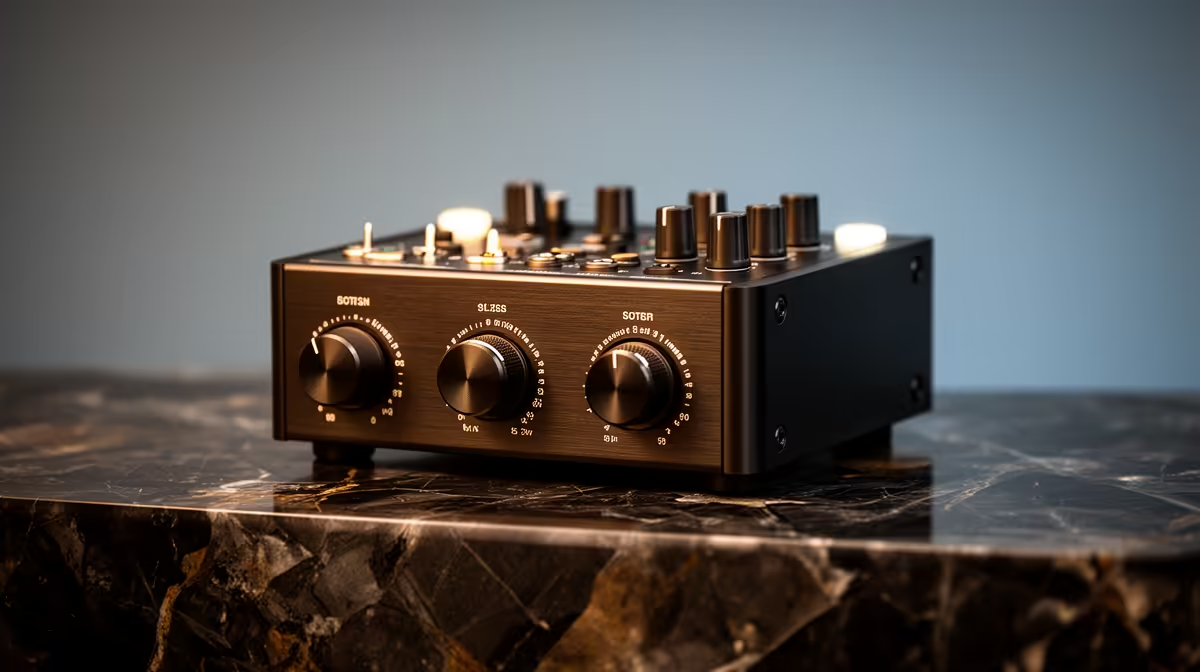
The preamp sitting between your microphone and everything that follows it determines whether all that recording effort pays off. Get the gain stage right and even an affordable dynamic microphone sounds controlled, clean, and ready. Get it wrong and the hiss you are fighting in the mix is baked in from the first centimetre of signal chain. Ultra-low-noise high-gain preamps in compact mixers solve both problems together: enough clean amplification to drive a quiet mic to full level, and a low enough noise floor that the gain itself adds nothing audible.
Quick Answer
Ultra-low-noise compact mixer preamps deliver around 60 to 70dB of gain with an Equivalent Input Noise figure near -128dB. That combination drives quiet dynamic microphones to full recording level without the audible hiss that cheaper gain stages introduce. In practice, a -128dB EIN compact preamp rivals rack-mounted studio gear on noise performance.
🔧 Understanding Gain Range and Why 60dB Matters
Gain is the amplification a preamp adds to the raw mic signal. A condenser microphone produces a relatively healthy output voltage because its powered capsule does most of the work. A passive dynamic microphone is quieter, and a broadcast-style dynamic like the kind popular with podcasters can be very quiet indeed, needing 60dB or more of gain to reach a usable recording level.
A preamp that tops out at 45 or 50dB will push a quiet dynamic to its maximum and still leave the signal short of optimal level. The usual workaround is to turn gain up further, but if the stage's own electronics start adding noise at that point the result is a recording floor that hisses audibly. This is how budget mixers trap users: they advertise high gain figures that become unusable because the noise travels with them.
A 60 to 70dB range with genuine low-noise performance means you can dial into the middle of the range with a quiet mic and land at the recording level you need with headroom to spare.
What EIN Actually Measures
EIN stands for Equivalent Input Noise. It describes the noise a preamp would need to receive at its input to produce the noise it actually adds internally. A lower number means the preamp is quieter. The unit is dBu referenced to a source impedance, usually 150 ohms.
An EIN of -128dBu or lower represents a genuinely quiet gain stage. Anything above around -120dBu starts to become audible when you push the gain hard. The difference between -120 and -128 is not subtle: eight dB of noise reduction is significant in a recording that will be compressed for streaming, where the compressor lifts everything including the background.
⚡ Compact vs Rack: Where the Real Difference Lies
A common assumption is that a sub-1kg compact mixer must be making compromises that a half-rack preamp does not. On noise performance, the best compact units genuinely close that gap. A -128dB EIN compact stage achieves what many rack units deliver, using surface-mount components, careful PCB layout, and low-noise operational amplifiers that fit in a palm-sized chassis.
Where rack gear still has an edge is channel count, metering quality, and the physical knob feel that comes from large potentiometers. A four-channel rack preamp gives more real estate per channel and better individual metering. For a two-host podcast or a solo creator, neither of those advantages is worth the cost or desk space.
The compact preamp does make one relevant engineering trade-off. Heat management in a sealed enclosure is tighter than in a vented rack unit, and some compact designs run their gain transistors slightly warmer. In a normally ventilated home environment this is not a problem, but leaving a compact mixer in direct sunlight or inside a drawer while recording is worth avoiding.
Pro Tip ⚡
Set gain in stages. With a quiet dynamic, start the trim at 50 percent and speak at normal volume while watching the level indicator. Nudge gain upward until the meter peaks around -12dB on loud syllables. Stop there and avoid chasing the last few dB, since that is where the noise floor starts to matter more.
🎯 Noise Floor and Streaming Compression
Why does a -128dB EIN matter more for streamers than for studio recording engineers? The answer is encoding. A streaming platform receives your audio and compresses it using codecs like AAC or Opus, which reduce file size by removing low-energy content. Unfortunately, constant low-level noise is interpreted as audio to preserve, not silence to discard.
A preamp with a noise floor at -128dB produces so little self-noise that the encoder has nothing to accidentally preserve. The gaps between your words are genuinely quiet, which helps the codec allocate its bits to your actual voice. A noisier preamp gives the codec a constant hiss signal to work around, and the result is a hazy background that survives through to the listener.
This means the EIN of the preamp is audible to your audience even if you never notice it in headphones during a stream. Streamer-specific content demands lower noise, not higher, because the encoding stage amplifies any mistakes in the source.
🔥 When Compact Preamps Fall Short
Compact mixers with ultra-low-noise stages perform well for one or two dynamic or condenser microphones. They start to stretch when you run two large-diaphragm condensers simultaneously and both need 48V phantom power at full draw. A marginal power supply in a compact unit droops under that combined load, which lifts the noise floor on both channels slightly. Quality compact mixers hold the phantom rail stable, but it is worth verifying that a specific model has been tested with two condensers before assuming it handles dual phantom without noise.
The second limitation is headroom on transients. Compact units typically offer less analogue headroom than rack preamplifiers. For capturing loud acoustic instruments close-mic'd, that headroom limits how hot you can push the signal before clipping. For voice recording at normal distances, available headroom is ample and this is not a practical constraint.
Frequently Asked Questions
How much gain do compact mixer preamps typically offer?
The best compact units deliver 60 to 70dB of clean gain. That is sufficient to bring a quiet broadcast-style dynamic microphone, which might output as little as -56dBV sensitivity, up to a healthy recording level. Anything below 55dB of maximum gain will push quiet dynamics to the limit and leave little room to compensate for a quieter-than-usual speaker.
What EIN figure means a preamp is genuinely low-noise?
Around -128dBu EIN or lower marks a quality stage. At that level, the preamp's self-noise is inaudible even when full gain is applied, provided the microphone signal is reasonable. Above about -120dBu the noise becomes perceptible at high gain settings and starts to survive stream encoding.
Can a compact mixer really match a studio rack preamp on noise?
On noise performance, yes. A -128dBu EIN compact stage achieves what most mid-tier rack units deliver. What it does not replicate is channel count, metering resolution, and the physical robustness of rack components. For one or two voices in a home studio, the noise difference is negligible, and the desk space saved is real.
Why does EIN matter more than just having high maximum gain?
High gain with high noise is a problem. A preamp that offers 70dB of gain but adds 15dB of self-noise at maximum gain produces a hissy recording at full reach. The EIN figure tells you whether the gain is clean throughout its range. A 65dB gain stage at -128dBu EIN is more useful than a 70dB stage at -118dBu, because the extra quiet reach is actually usable.
Are compact preamps good enough for recording music, not just speech?
Yes. A -128dBu EIN stage with 60dB of gain handles acoustic instruments and clean electric guitar as well as it handles podcasting. The frequency response and dynamic range are sufficient for music capture. The main constraint is channel count: compact units typically offer two channels, so larger sessions need a dedicated interface rather than a compact mixer.
Ready to get clean gain from a compact unit that fits your desk without fighting hiss?
Browse the USB audio mixer range at Evetech and find a model with ultra-low-noise preamps that drives your dynamic mic to full level without the background noise budget stages add.