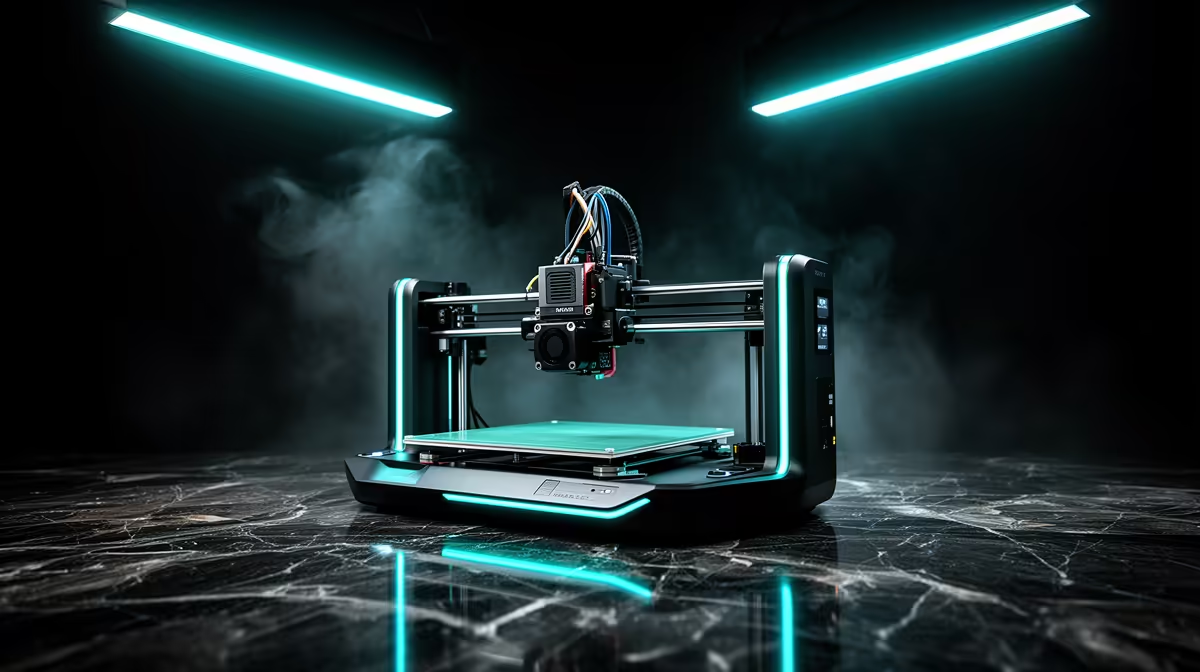
The Bambu P1S vs P2S decision lands on a single number for most SA makers: R2,500. That is the gap between the P1S at R12,495 and the P2S at R14,999, and the question is whether the newer enclosed CoreXY earns the premium or just charges more for the same job. Both are properly enclosed printers built for ABS, ASA and clean PLA work, and both are stocked locally, so this is a real choice you can make today rather than an import gamble.
Quick Answer
The P2S at R14,999 is worth the R2,500 over the P1S if you print PLA often or run long high-speed jobs. It hits 600 mm/s versus the P1S 500 mm/s and adds Adaptive Airflow, which vents heat so PLA does not soften inside the sealed chamber. If you mostly print ABS and ASA, the P1S at R12,495 does the same work for less.
What actually separates the two
Both printers share the core Bambu formula: a rigid CoreXY motion system, a fully enclosed chamber, automatic bed levelling and the AMS multi-colour option. The chassis, the build volume of 256 x 256 x 256 mm and the general print quality are close enough that side-by-side prints from the same file are hard to tell apart. The differences sit in two areas that matter more the more you print.
Speed is the obvious one. The P1S tops out at 500 mm/s of toolhead movement, the P2S at 600 mm/s. On a small calibration cube that gap is seconds. On a full plate of brackets or a tall cosplay piece, the 20 percent headroom shaves real time off an overnight run and lets you fit a second job into a working day.
If you want to see where these sit against the rest of the enclosed and open-frame field, the 3D printer range at Evetech lays the current local lineup out with pricing so you can place the P1S and P2S against cheaper bed-slingers and pricier multi-material rigs.
Adaptive Airflow and why PLA is the real story
The feature that justifies the P2S premium for a lot of makers is Adaptive Airflow. An enclosed chamber is a gift for ABS and ASA, which warp and crack when they cool too fast. PLA has the opposite problem. It softens at a low temperature, and in a sealed box that traps heat, tall PLA prints can sag, lose detail at overhangs, or jam in the hotend area as the filament heats before it reaches the nozzle.
On the P1S the standard fix is to crack the front door open for PLA, which works but partly defeats the point of an enclosure and lets dust and draughts back in. The P2S manages chamber temperature actively, venting when it climbs, so you can run PLA sealed and walk away. For a maker who prints PLA prototypes by day and ABS functional parts by night, that single feature removes a daily babysitting chore.
Who should take the P1S
If your filament shelf is mostly ABS, ASA, PETG and the occasional PLA print you can supervise, the P1S is the smarter spend. You keep the enclosure benefits where they matter, you save R2,500, and the 500 mm/s ceiling is still faster than most printers in its class will ever be asked to run reliably. Put the saved money toward filament, a spare nozzle set, or the AMS unit for multi-colour work.
Who should take the P2S
The P2S suits high-volume PLA users, small Etsy-style shops batching parts, and anyone who hates checking on a print. The combination of 600 mm/s and sealed PLA printing means more jobs finished per day with less intervention. If 3D printing is part of how you earn, the R2,500 buys back time, and that maths usually favours the newer machine.
Print quality, materials and the day-to-day
Speed numbers grab attention, but they only matter if quality holds up at pace, and here the two are closely matched. Both run the same class of direct-drive extruder and the same automatic calibration routines, so a model sliced for one prints almost identically on the other. The honest takeaway is that you are not buying sharper prints with the P2S, you are buying the ability to get those prints faster and to run a wider range of filaments without fuss.
Materials are where the enclosure pays off on both machines. ABS and ASA, the tough filaments people reach for when a part has to survive a hot car or outdoor use, need the warm, draught-free chamber an enclosure provides. PETG sits comfortably on either printer too. The split only appears with PLA and the heat-sensitive blends: the P1S handles them with a little airflow management from you, the P2S handles them on its own. If your work leans toward functional parts in engineering plastics, both serve you well and the P1S saving makes sense. If your work mixes PLA prototypes and ABS production through the same week, the P2S removes the one repetitive annoyance in that routine.
Noise, footprint and where it lives
Neither printer is silent, but both are quiet enough for a home office or a corner of a bedroom, and the enclosure muffles fan and motion noise compared with an open frame. They occupy a similar desk footprint, so the choice between them does not change where the machine sits or how much room it claims. Leave clearance at the back and sides for cable movement and airflow, and keep them off a wobbly surface, because faster toolhead moves on the P2S put more demand on a stable base to avoid ringing in the finish.
Total cost beyond the sticker price
The R12,495 and R14,999 figures are the start, not the whole spend. Plan for filament from day one, a few spare nozzles since they wear with abrasive or high-volume printing, replacement build plates, and a dry storage box for filament that draws moisture. If multi-colour work appeals, the AMS unit is an added cost on either printer and attaches to both the same way. Factoring these in, the R2,500 gap between the printers becomes a smaller slice of your real first-year outlay, which is worth remembering if the P2S features genuinely suit your work.
Running either one in South Africa
Both printers want a stable surface, a bit of ventilation for the ABS and ASA fumes, and a steady filament supply. Keep PLA and PETG in a dry box during humid Cape Town or coastal Durban weeks, because damp filament ruins surface finish regardless of which printer you own. Budget for consumables from the start: nozzles wear, build plates scratch, and a stock of the right glue stick or plate cleaner keeps adhesion consistent. A quick scan through the accessories best sellers is a sensible way to line up the spares and add-ons that keep either machine running between projects.
Frequently Asked Questions
Is the P2S worth R2,500 more than the P1S?
It is if you print PLA frequently or run long high-speed batches. Adaptive Airflow lets the P2S print PLA sealed, and the higher 600 mm/s ceiling saves time on big jobs. For ABS and ASA work the P1S delivers nearly the same result for less.
Can the P1S print PLA at all?
Yes. The P1S prints PLA well, but tall or detailed PLA jobs often run best with the front door cracked open so trapped heat can escape. The P2S removes that step with active airflow management.
Do both printers support multi-colour printing?
Yes. Both the P1S and P2S work with the AMS system for multi-colour and multi-material printing, sold separately. The AMS attaches to either printer the same way.
Are these printers available in South Africa?
Both the P1S and P2S are stocked locally at Evetech, so there is no need to import or wait on overseas shipping. Pricing quoted here reflects current local listings.
How big a difference is 500 mm/s versus 600 mm/s in practice?
On small prints the difference is minor. On large plates or tall models the extra speed compounds, trimming meaningful time off overnight and full-day jobs and letting you queue more work in a day.
Still weighing the enclosed CoreXY choice? Compare the P1S, the P2S and the rest of the locally stocked field in the 3D printer range at Evetech, check live pricing, and pick the machine that matches how you actually print.