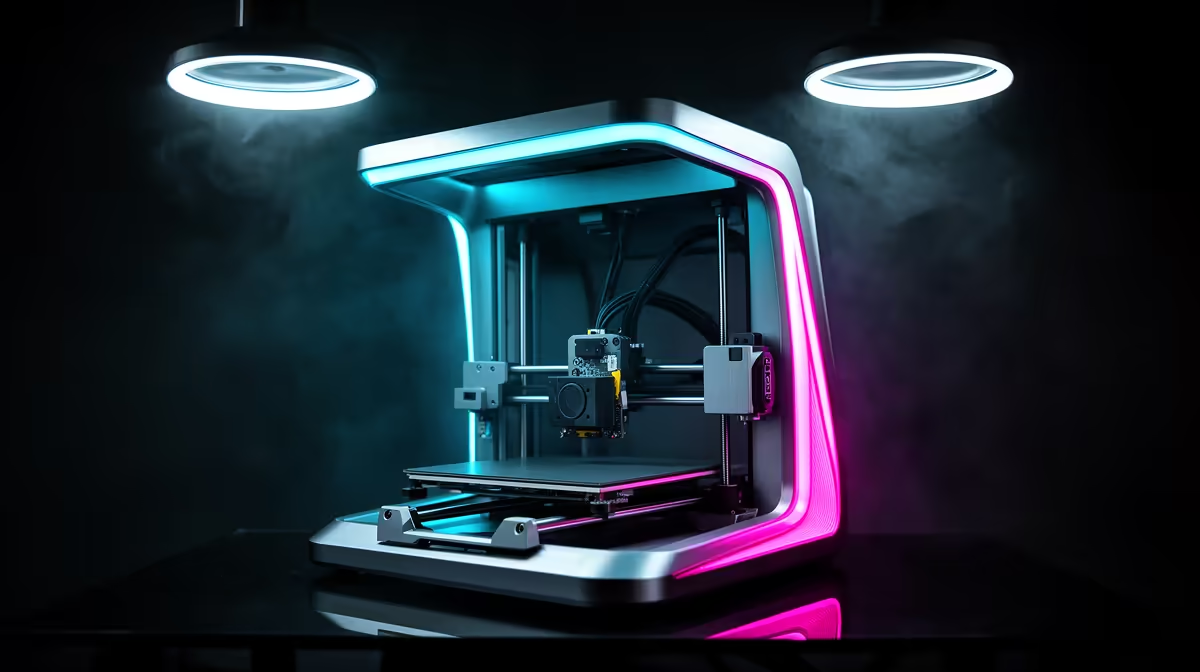
The price tag separating these two printers buys a different class of machine entirely. The Bambu X2D vs H2S decision turns on roughly R13,500: the X2D sits at R16,499 as a polished prosumer CoreXY, while the H2S starts near R29,999 and is built for sustained workshop output. Both land in South Africa without you chasing import logistics, which is half the reason this comparison matters at all.
Quick Answer
The H2S is worth the R13,500+ premium only if you print for hours every day or run a small production line. At R29,999+ it offers higher flow rates, a larger build volume and the headroom to push abrasive and engineering filaments hard. For hobby and prosumer work, the R16,499 X2D does almost everything most people need without the extra spend.
Where the R13,500 actually goes
The gap is not marketing. The H2S is a high-flow machine, meaning its hotend can melt and lay down plastic faster without the extrusion stuttering that ruins a print at speed. That matters when you are running long jobs back to back and every saved minute compounds across a working week.
The X2D, by contrast, is tuned for clean results at sensible speeds rather than raw throughput. It is quieter, it sips less power and it suits a desk in a study or a corner of a workshop. If your printer spends more time idle than running, the H2S headroom is capacity you are paying for and not using.
You can see how both slot into the broader lineup on the 3D printer range at Evetech, which is the easiest way to sanity-check current pricing before committing.
Throughput: who needs the extra speed
A high-flow hotend changes the maths on a production schedule. If you sell printed parts, run prototyping for a small business or churn through prints for a maker community, the H2S earns its keep by finishing more parts per day. Over a month of steady use, that throughput difference can be the gap between keeping up with orders and falling behind.
The prosumer case for the X2D
Most South African buyers are not running a print farm. They are making brackets, miniatures, replacement parts, enclosures and the occasional gift. For that rhythm, the X2D is the smarter buy. You get refined CoreVXY motion, reliable results and a price that leaves budget for filament, spare nozzles and a decent enclosure ventilation setup.
The production case for the H2S
If your printer is effectively a tool that pays for itself, the H2S is the one to stretch for. The larger build volume means fewer parts split across multiple prints, and the higher flow means those larger parts still finish in reasonable time. For a workshop, that combination is the difference between a printer that keeps pace and one that becomes the bottleneck.
Build size and material range
Build volume is the quiet decider. A bigger bed lets you print a single large part in one go rather than slicing it into sections and gluing them, which is both slower and weaker at the joins. The H2S gives you more room here, and for functional parts that is a genuine advantage.
Material range matters too. High-flow machines handle demanding filaments more gracefully because they can keep extrusion consistent under load. If you plan to print engineering-grade materials regularly, the H2S has the thermal and mechanical headroom to do it without constant babysitting. The X2D can run many of the same materials, but you will be working closer to its comfortable limit on the hardest ones.
Running costs and day-to-day ownership
The purchase price is only part of the picture. A production machine like the H2S will chew through more filament, more nozzles and more bed wear simply because it runs more often. If you are costing out a small print business, factor those consumables into the monthly figure, not just the once-off R29,999. The good news is that high-flow hardware tends to be built for that wear, so the components are designed to be swapped rather than babied.
The X2D, running fewer hours, spreads its wear over a longer calendar. For a prosumer printing a few times a week, consumable costs stay modest and a single set of spares lasts a good while. That gentler duty cycle is part of why the X2D suits anyone who wants a capable printer without it becoming a recurring line item.
Noise and placement deserve a mention too. The X2D is the easier machine to live with in a shared space or a home study, where a loud, fast printer running for hours would wear thin. The H2S is happiest in a workshop or garage where its pace is an asset and the sound is not a problem.
The South African value angle
Local stock is the part that quietly tips the scales. Buying either printer from Evetech means no customs surprises, no multi-week shipping wait and no fighting with a courier over a damaged crate from overseas. For a workshop that depends on uptime, that reliability is worth real money on its own.
It also means spares and support sit in the same country as you. If a nozzle or hotend needs replacing, you are sourcing it locally rather than waiting on an international order. That turnaround time is easy to overlook until the day your only printer is down and a job is due. For accessories, nozzles and consumables to keep either machine running, the best-selling 3D printing accessories are a practical starting point.
So which one should you buy
Run the honest test: how many hours a week will the printer actually run? If the answer is under ten and your parts fit a standard bed, the X2D at R16,499 is the right call and the R13,500 saving is better spent elsewhere. If the printer is a production tool that runs daily and you regularly print large or demanding parts, the H2S justifies its R29,999+ price by simply keeping up.
There is no wrong answer here, only a mismatched one. Pay for the H2S capacity only if you will use it.
Frequently Asked Questions
Is the Bambu H2S worth R13,500 more than the X2D?
Only for high-volume or production use. The H2S delivers higher flow rates, a larger build volume and more material headroom, which pays off if you print daily. For hobby and prosumer work, the X2D covers the same ground for far less.
What is the price difference between the X2D and H2S?
The X2D is R16,499 and the H2S starts at R29,999, a gap of roughly R13,500. Both are stocked locally at Evetech, so the prices you see are landed South African pricing with no import costs to add.
Which Bambu printer is better for a small business?
The H2S, in most cases. Its high-flow hotend and larger bed let you finish more parts and bigger parts per day, which matters when output directly affects what you can sell or deliver.
Can the X2D print engineering-grade filaments?
It can handle many demanding materials, but it works closer to its limit on the hardest ones. The H2S has more thermal and mechanical headroom for sustained printing in tough filaments.
Why buy a Bambu printer locally instead of importing?
Local stock means no customs delays, no shipping damage risk and spares sourced in the same country. For a workshop that depends on uptime, that turnaround speed is worth more than a small import saving.