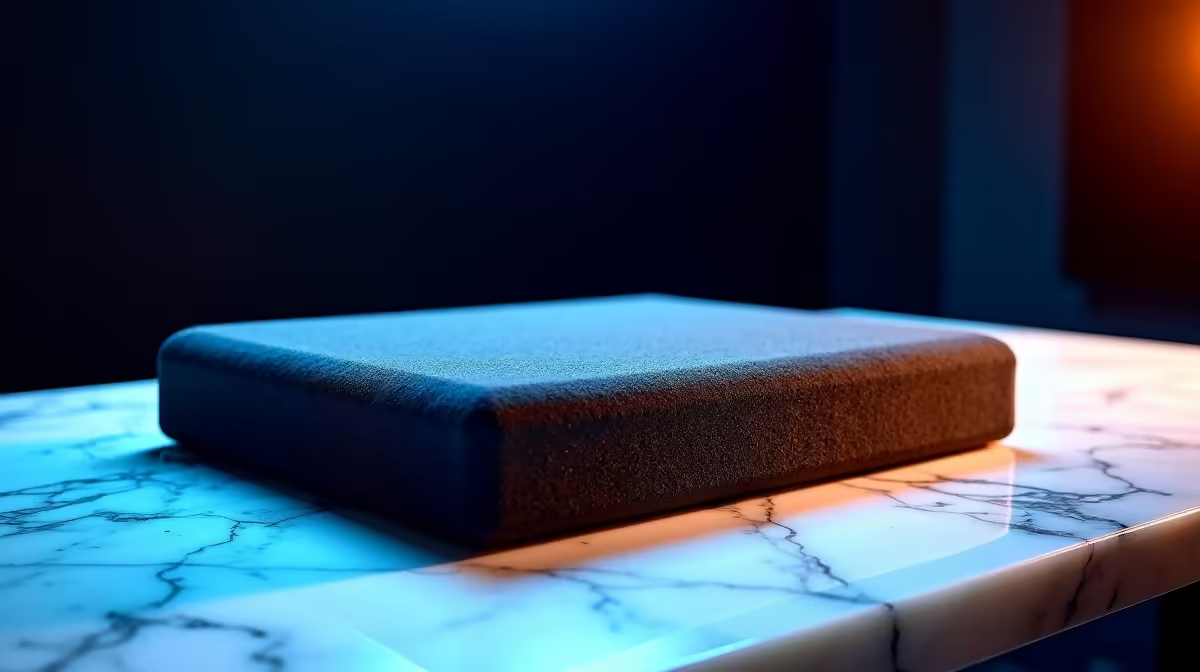
A bare room with hard walls and a tiled or laminate floor turns your voice into a wash of echo by the time it reaches the mic. Acoustic panels fix that, but only if you put the right type in the right place. The job is not to deaden the room into a dead box, it is to absorb the reflections that smear your recording and to tame the boomy low end that builds up in corners.
Quick Answer
The best treatment for a recording or streaming room is porous absorption panels at the first reflection points, paired with thicker bass traps in the corners. Panel thickness sets how low you can treat: thinner panels around 50mm handle the higher frequencies, while 100mm panels reach lower into the mids and toward the bass. Start at first reflections and corners, not by covering every wall.
What acoustic panels actually do
Hard surfaces bounce sound. Those reflections arrive at your mic and your ears slightly after the direct sound, blurring clarity and adding that hollow, roomy character that screams untreated space. Porous absorption panels convert that sound energy into a tiny amount of heat inside the material, so the reflection is soaked up rather than bounced back. The result is a tighter, drier, more intelligible recording. They do not block sound from leaving or entering the room, which is a separate problem, they clean up the sound inside it.
First reflection points come first
The highest-value panels go at the first reflection points on the side walls, at roughly ear level when you are seated in your normal position. These are the spots where sound from your speakers or your voice bounces off the wall and straight back to your ears or mic. Treat those, plus the wall behind you and often a panel on the ceiling above, and you remove the reflections that do the most damage. This handful of well-placed panels does more than a wall plastered edge to edge with foam.
Finding the reflection point
The classic trick is the mirror test. Sit in your usual position, have someone slide a mirror along the side wall, and wherever you can see your speaker or mic in it from your seat is a first reflection point. That is where a panel belongs.
Bass traps belong in the corners
Low frequencies behave differently. They build up and linger in the corners of a room where walls meet, creating a boomy, uneven low end that masks detail. That is the job of bass traps, thicker absorbers placed in the corners. A bass trap placed in a corner can be three to four times more effective than the same panel mounted flat against a wall, because the corner is exactly where that low-frequency pressure concentrates. Around 100mm of material in the corners is a sensible target for a home setup, since the thicker the absorber the lower the frequency it can control. Skipping corner treatment is the most common reason a room with plenty of wall panels still sounds muddy on playback.
Thickness sets the lowest treated frequency
This is the rule that ties it together: a panel can only absorb effectively down to a frequency set by its thickness. A thin 50mm panel does a good job on the higher frequencies but runs out of effect as you go down. A 100mm panel reaches noticeably lower, into the mids and toward the upper bass. Bass traps typically want 250mm or more to address the lowest frequencies effectively, which is why the common advice is to fill corners floor to ceiling if budget and space allow. That is why corners get the thick traps and why simply hanging thin foam everywhere leaves the low end untouched. Match the thickness to the range you need to control.
Material: rockwool versus acoustic foam
The material inside the panel changes what it costs and how deep it treats. Acoustic foam is the easiest to buy and install, handles high-frequency echo well, and suits a streaming or voiceover room on a budget. Dense mineral wool, often sold as rockwool or glasswool at 40 to 80kg per cubic metre, absorbs lower into the frequency range and does more at the same thickness, which is why it is the preferred fill for DIY bass traps. The outer fabric wrap is cosmetic once the fill is right; what matters is the density and depth of the absorbing material inside.
How much treatment is enough
Aiming for roughly 40 to 60 percent of wall surface covered with treatment is a reasonable target for a recording or streaming room. Below that and reflections still smear the sound; above it and the room can feel uncomfortably dead, lacking the subtle liveliness that makes a recording sound natural. Start with corners and first reflections, listen, then add panels incrementally until the clarity lands where you want it rather than covering every wall from the start.
What panels will not do
Be clear about the limits. Acoustic panels treat the sound inside the room, they do not soundproof it, so they will not stop your stream being heard down the hall or block traffic noise coming in. They also will not rescue a recording made with a poor mic placed badly, treatment improves a good signal rather than fixing a broken one. Used correctly though, they are the single biggest upgrade to how your room sounds on a recording or stream. Good closed-back monitoring helps you hear the improvement, and you will find suitable cans in the headphone and headset range at Evetech, with the headset best sellers showing what other SA creators are using to check their audio.
Frequently Asked Questions
Where should my first panels go?
The first reflection points on the side walls at seated ear level, found with the mirror test, plus the wall behind you. These positions remove the reflections that most degrade clarity, so they earn their place before any other panel.
Do I need bass traps as well as panels?
Yes, if you want a clean low end. Wall panels handle mids and highs, but low frequencies pile up in corners and need thicker bass traps there. A room with only thin wall panels often still sounds boomy.
Will acoustic panels soundproof my room?
No. Panels absorb reflections inside the room to improve how it sounds on a recording. They do not stop sound passing through walls in either direction, which is a separate and much harder problem.
How thick should my panels be?
Around 50mm handles the higher frequencies well, while 100mm reaches lower into the mids and toward the bass. Use thicker material in corners as bass traps, and thinner panels at reflection points if budget is tight.
Is acoustic foam as good as proper panels?
Foam is fine for basic echo reduction and high-frequency absorption in a streaming or voiceover space. Denser porous panels and proper bass traps go lower and do more, so foam is the budget starting point rather than the full solution.
Treat your reflections and corners and your recordings get cleaner overnight. Check your results with proper monitoring from the headphone and headset range at Evetech and hear exactly what your room is doing.