Quick Answer
Prioritise TDP headroom above your CPU's sustained power draw, PWM fan control, a universally compatible mounting system, and a quiet pump for streaming and creative work. For pure gaming, thermal mass and a quiet idle profile matter most because gaming workloads are bursty rather than sustained.
TDP Headroom: Your Most Critical Specification 🔧
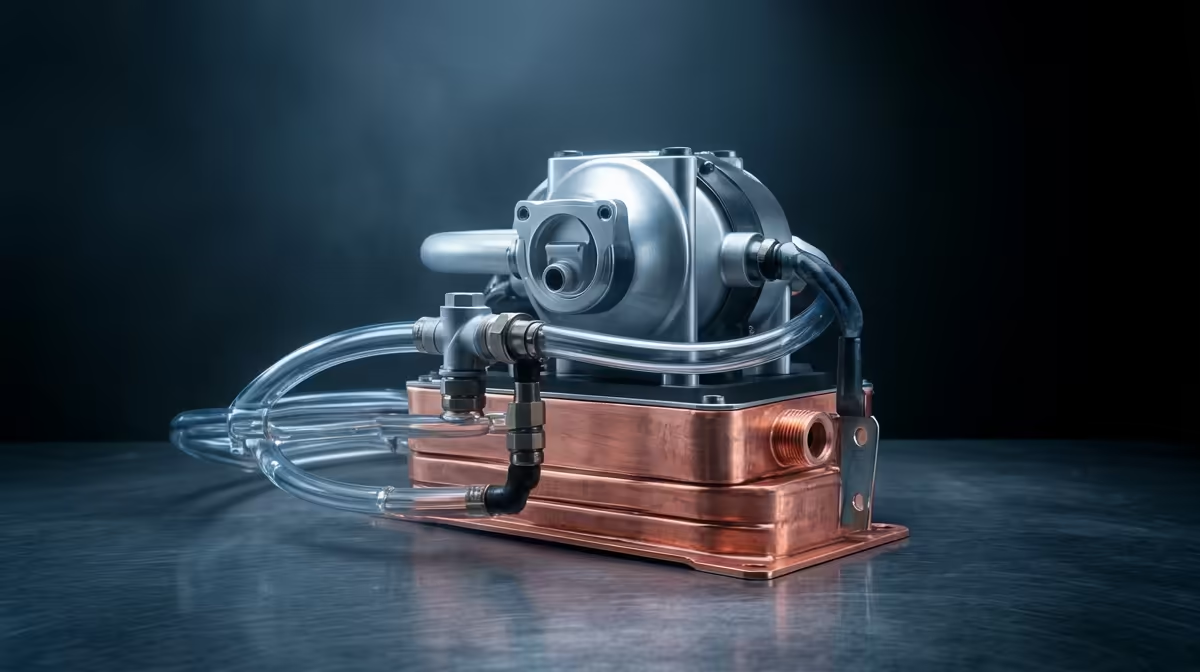
A cooler rated at exactly your CPU's TDP will run at full fan speed constantly to maintain safe temperatures. Choosing a cooler with 20 to 30% more TDP capacity than your processor's sustained power draw gives the fan curve room to breathe, keeping the system quiet during light gaming while having reserves for a Ryzen 9 9900X or Core i9-14900K running a simultaneous stream and game session. For content creators running DaVinci Resolve renders alongside OBS encoding, the CPU can draw close to its full TDP for hours, meaning a 360mm AIO or a high-end dual-tower cooler rated at 250W or more is a practical necessity rather than an indulgence.
PWM Control and Fan Curve Flexibility 🎮
PWM (pulse-width modulation) fan headers allow the motherboard or cooler software to vary fan speed precisely, rather than relying on voltage reduction that causes motors to stall at low speeds. Every cooler shortlisted for a gaming or streaming build should include four-pin PWM fans rather than three-pin DC fans. For streamers who value near-silent audio on their microphone feed, a cooler that can hold temperatures at 75 degrees Celsius with fans spinning at 800 to 900 RPM is worth targeting; this is achievable on quality 360mm AIOs from brands stocked at Evetech and on dual-tower air coolers with high-surface-area fin stacks.
Display, Software and Build Integration 💡
For creative workstations and streaming setups where system status is professionally relevant, an AIO with an LCD pump head display showing CPU temperature and load percentage is a practical monitoring tool rather than just an aesthetic feature. Coolers with robust software ecosystems, such as those integrated with ASUS Armoury Crate or Corsair iCUE, allow setting automated fan profiles that switch between a quiet creative mode and a full-performance gaming mode based on CPU temperature thresholds.
Set a Separate Profile for Streaming Sessions ⚡
Create a dedicated fan profile in your cooler's software that targets a slightly higher temperature ceiling (80 degrees Celsius rather than 75 degrees) but caps fan speed at 70% to keep your microphone feed clean. Most streaming sessions do not need maximum CPU performance, and a cooler fan ramp mid-stream is audibly picked up by sensitive condenser microphones.
FAQ
Is RGB lighting worth paying extra for on a CPU cooler?
RGB adds aesthetic value but zero thermal performance. If the RGB version of a cooler costs R200 to R400 more than the non-RGB variant with identical specs, spend that difference on a higher-quality thermal compound or an additional case fan instead, unless the aesthetic matters to you personally.
Do I need a specific cooler for a simultaneous gaming and streaming build?
Not a specific model, but you do need a cooler with at least 20% TDP headroom above your CPU's combined sustained gaming-plus-encoding power draw. A Ryzen 9 9900X running a game and a 1080p60 stream simultaneously can draw 130 to 150W sustained, so a cooler rated at 180W or above is appropriate.
How important is the pump head size for a creative workstation build?
Pump head footprint matters mainly for motherboard compatibility. A large LCD pump head on a full ATX board with standard RAM slot positioning causes no issues, but on a compact board or with tall DDR5 heatspreaders it can restrict DIMM access. Verify physical clearance against your specific board layout before purchasing.
Want to match the right cooler to your gaming, streaming or creative build?
Explore the full CPU cooler range at Evetech to find options spec-matched to your processor and workload.