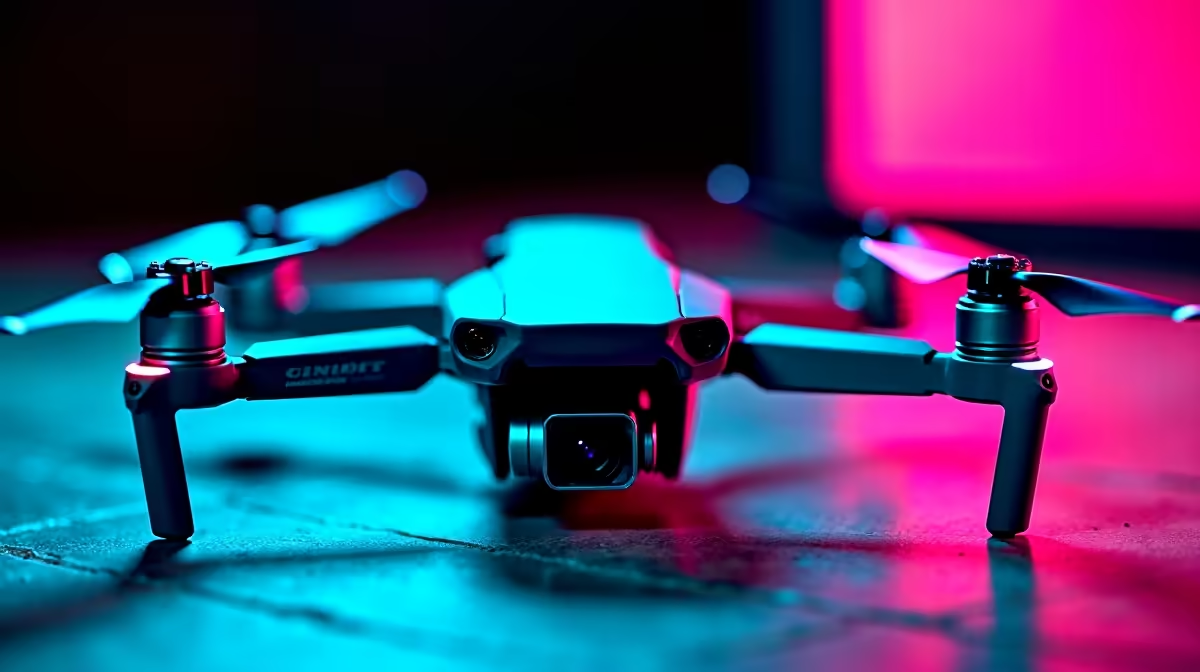
Aerial shots used to be the thing that separated a hobby channel from a professional one. Now a single folding drone can deliver footage that holds up against far pricier gear. The best drone for a content creator or YouTuber at the top of the range is the DJI Mavic 4 Pro, built around a 100MP Hasselblad main sensor, a 360-degree Infinity Gimbal, and an optional 512GB built-in SSD that swallows high-bitrate footage without forcing a card swap mid-shoot. SA creators have one extra box to tick before they fly for views, and it is an important one.
Quick Answer
For serious content creators, the DJI Mavic 4 Pro is the pick: a 100MP Hasselblad main camera, a 360-degree Infinity Gimbal for free-rotating shots, and up to 512GB of internal SSD storage for long high-bitrate sessions. South African creators monetising drone footage should note that paid or commercial work requires SACAA approval, not just a hobby flight.
Why the Mavic 4 Pro leads for video
A content drone lives or dies on three things: sensor quality, gimbal control, and how much footage it can capture before you have to stop. The Mavic 4 Pro is strong on all three.
The 100MP Hasselblad main sensor pulls in detail and dynamic range that survives aggressive colour grading, which is where amateur footage usually falls apart. The adjustable aperture on the main lens adds the kind of exposure control that gives the footage a proper photographic look rather than a flat auto-exposed result. The 360-degree Infinity Gimbal is the standout, letting the camera rotate fully and even shoot vertically for the upright format that short-form platforms demand, all without remounting anything. And the optional 512GB internal SSD in the Creator Combo means a creator can shoot long, high-bitrate clips without pausing to swap or offload memory cards in the field.
What the Creator Combo adds
The standard Mavic 4 Pro ships with 64GB of internal storage, which is workable but fills fast at high bitrates. The Creator Combo steps that up to 512GB and unlocks ALL-I 4:2:2 encoding, a professional codec that records every frame independently rather than predicting motion between frames. The result is footage that cuts and grades more cleanly in post, particularly on fast movement and high-contrast scenes. If you are editing professionally or delivering work to clients, that codec difference is real and worth paying for.
The Mavic 4 Pro also features a 6K/60fps HDR recording mode on the main sensor, a step up that gives post-production room to reframe without losing resolution, and a 0.1-lux low-light capability backed by an omnidirectional obstacle avoidance system with front LiDAR. A realistic flight time of up to 51 minutes per battery pack means a single charge covers a typical shoot without mid-session battery swaps.
Matching the drone to your channel
The pro tier
If drone footage is central to your channel and you grade everything in post, the Mavic 4 Pro is the tool. The sensor, gimbal and storage together give you flexibility on a shoot and latitude in the edit that lesser drones cannot match.
The serious enthusiast tier
If you want broadcast-quality footage without the flagship price, the step-down Air-class DJI drones deliver excellent stabilised 4K, strong obstacle sensing and a lighter body. For most growing channels this tier is the value sweet spot, covering the great majority of shots a flagship would, at a friendlier cost.
The starter tier
For creators just adding aerial b-roll, a compact sub-250-gram drone is the smart entry. The lighter weight also eases some of the regulatory burden for casual flying, though, as below, monetised work is a different matter regardless of drone weight. The broader smart home and connected device lineup is a good place to see where camera drones sit alongside the rest of a creator's kit.
The SACAA reality every SA creator must know
This is the part international guides skip and it matters enormously here. In South Africa, flying a drone for any commercial purpose, and earning money from YouTube footage counts, is regulated by the South African Civil Aviation Authority. Hobby flying for your own enjoyment is far less restricted, but the moment your footage is monetised or you fly for a client, you move into commercial territory.
Commercial drone operation in SA requires a Remote Pilot Licence and operating under an approved operator, which is a real process, not a formality. Plenty of creators have been caught out treating a paid drone shoot like a casual hobby flight. Before you build a channel around aerial content, factor the licensing path into your plans. It protects you legally and it is simply the correct way to operate.
Beyond the regulations, fly responsibly: respect no-fly zones around airports and sensitive sites, keep clear of people and private property, and check local rules for the area you are filming.
Storage, batteries and the kit around the drone
A drone alone is not a production setup. Plan for spare batteries, since a single flight time is short and a shoot day burns through several. Plan for fast, high-capacity storage if your drone records to cards rather than internal SSD, because high-bitrate 4K and above fills cards quickly. And budget for ND filters, which control motion blur and exposure for that smooth cinematic look. The current accessories best sellers are a useful guide to which spare batteries, cards and filters other creators restock most.
Frequently Asked Questions
Do I need a licence to use a drone for YouTube in South Africa?
If you monetise the footage or fly for a client, yes. SACAA treats that as commercial operation, which requires a Remote Pilot Licence and an approved operator. Pure hobby flying for your own enjoyment is far less restricted.
Why is the Mavic 4 Pro the top content-creation drone?
It combines a 100MP Hasselblad main sensor for grade-friendly detail, a 360-degree Infinity Gimbal that rotates fully and shoots vertical, and an optional 512GB internal SSD for long high-bitrate sessions without card swaps. The ALL-I 4:2:2 codec in the Creator Combo adds professional-grade post-production quality.
What is the Infinity Gimbal good for?
Its full 360-degree rotation lets the camera capture angles and movements a normal gimbal cannot, including vertical footage for short-form platforms, without remounting the camera. That flexibility opens up creative shots in a single flight.
Do I need a flagship drone to start a channel?
No. A serious enthusiast Air-class drone delivers excellent stabilised 4K at a lower price and covers most shots a flagship would. A compact sub-250-gram drone is a fine entry point for occasional aerial b-roll.
What accessories should I budget for?
Spare batteries are essential because flight times are short and a shoot uses several. Add fast high-capacity storage if your drone records to cards, and ND filters for smooth, cinematic motion and exposure control.