Quick Answer
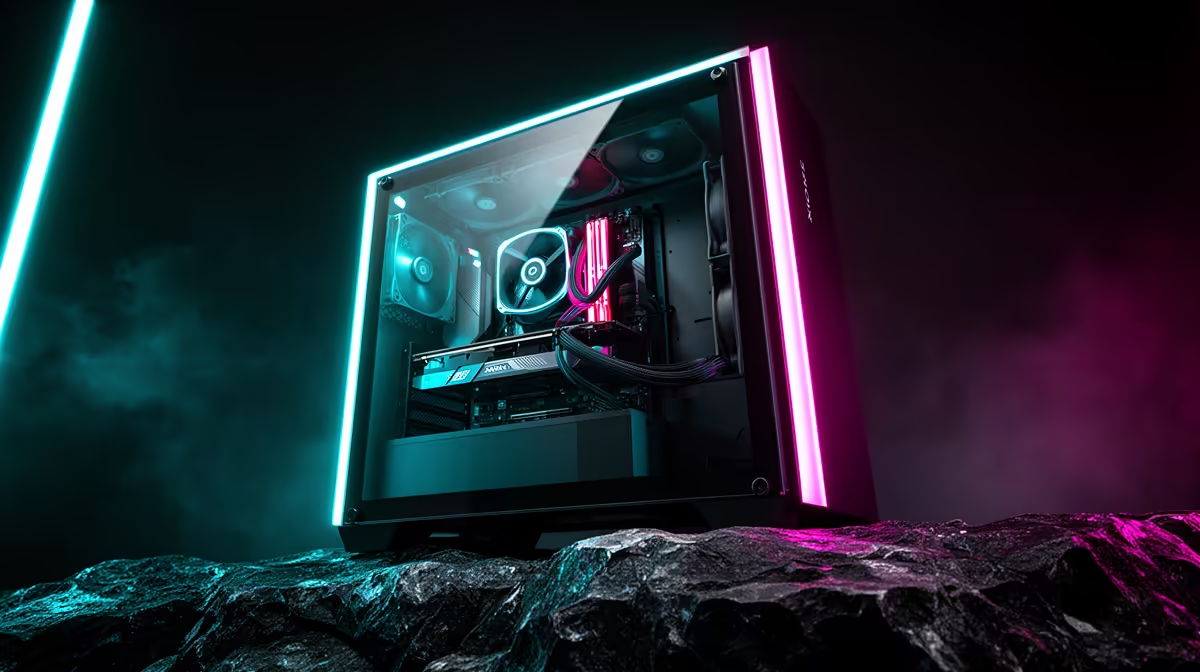
For rand-conscious builders who want both display and cooling space, prioritise a mesh-front mid-tower with tempered glass on the side panel, support for at least a 360mm radiator, and 300mm-plus GPU clearance. Cases in the R1,200 to R2,500 range locally hit this sweet spot without padding the bill with unnecessary RGB controllers or proprietary components.
What "Display" Actually Means in a Case Spec 🖥️
When builders say they want a display case, they mean a large tempered glass side panel that shows off RGB RAM, cable routing, and the GPU shroud. The quality difference between 3mm and 4mm tempered glass is real: thinner panels flex and rattle at fan vibration frequencies, while thicker panels sit flush and stay silent. A tinted versus clear glass panel is a style choice, but clear panels photograph better for social media builds, which matters if you are active in SA PC build communities. Look for hinged or latch-released side panels over thumb-screw designs for easier access when you upgrade components later.
Cooling Specs That Do Not Drain the Budget 🌬️
A mesh-front panel improves GPU temperature by 5 to 10 degrees Celsius compared to solid plastic panels, and it costs the manufacturer nothing extra, so you should not pay a premium for it. Look for cases listing 360mm top-radiator and 360mm front-radiator support simultaneously; this means the internal structure has room for both without the GPU bracket interfering. The RTX 5070 runs warm at stock boost settings and a well-ventilated case adds 5 to 10 percent sustained performance at identical fan speeds versus a restricted design. Three pre-installed fans (typically 120mm) are common in the R1,500 to R2,000 price bracket, which cuts your total build cost versus buying case plus fans separately.
Storage and Cable Management for the Money 💰
Display builds fail visually when cables run visible from the glass panel. A deep cable management channel behind the motherboard tray (at least 20mm of depth) lets you route power cables cleanly. Also check how many 2.5-inch and 3.5-inch drive bays are included: a two-bay SSD mount and one HDD cage covers most gaming builds pairing an NVMe boot drive with a secondary SATA SSD for game storage. Builders targeting a mid-range Ryzen 7000 or Intel Core Ultra 200-series build should not need to spend more than R2,200 on a case to get all these features in the South African retail market.
Check Front I/O Before You Buy ⚡
A case in the R1,500 range that only includes USB 2.0 front ports is not a good investment for modern builds. Look for at least one USB 3.2 Gen 1 Type-A and one USB-C front port so you can plug in external drives and charge devices at full speed without reaching around to your PC's rear panel.
FAQ
Does a tempered glass side panel affect cooling?
A glass panel on the side has negligible effect on internal temperatures because most heat exits through the top and rear exhaust. What matters far more is the front panel material: mesh allows intake airflow, while solid plastic can restrict it and raise temps by up to 10 degrees Celsius under load.
What GPU clearance is enough for a rand-conscious build?
Most current-gen GPUs in the mid-range sit between 270mm and 320mm in length. A case with 300mm clearance covers the majority of cards available locally, including the RX 9060 XT and RTX 5060 Ti, leaving enough margin for a cable connector at the back of the card.
Are cases with pre-installed fans worth it at this price point?
Yes, when the fans are 120mm or 140mm PWM units rather than 3-pin non-addressable models. PWM fans let your motherboard dynamically lower speeds under light loads, reducing noise when you are not gaming and extending fan bearing lifespan.
Want a display-worthy case that does not stretch your rand?
Explore Evetech's full gaming case lineup and filter by price to find a mesh-front, glass-panel case that fits your build budget.