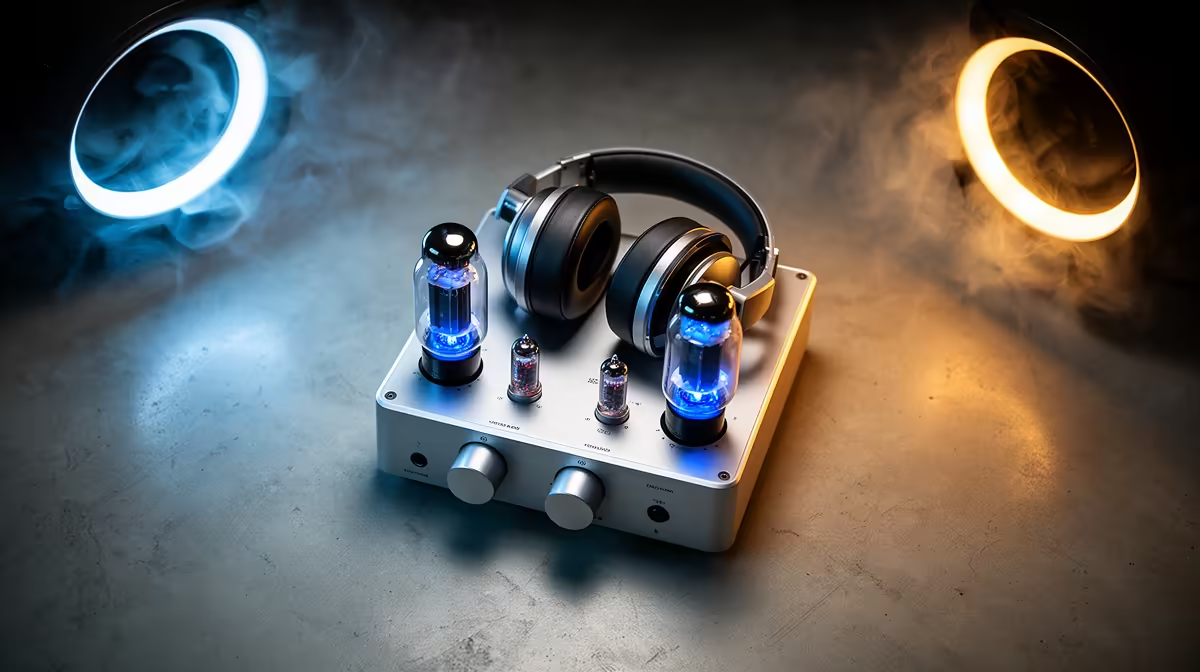
High-impedance headphones do not need a louder amp, they need one that can swing enough voltage. A 250 ohm Beyerdynamic or a 300 ohm Sennheiser was engineered for high-voltage outputs, the kind that lived in studio mixing desks, not the current-focused headphone jacks built into phones and laptops. That mismatch is why your HD 600 sounds thin and limp straight from a laptop. The best headphone amp for high-impedance headphones is the one that delivers the voltage those drivers were designed around.
Quick Answer
For 250 ohm and 300 ohm headphones, prioritise voltage swing, not power ratings or fancy features. A capable desktop amp like the Topping L30II delivers around 37 volts peak-to-peak, which is exactly what high-impedance cans need. Budget roughly R1,500 to R4,000 for a desktop amp that drives them properly.
Why impedance changes everything
Impedance is how much a headphone resists the electrical signal driving it. Low-impedance headphones, 16 to 32 ohm, are easy to push and run fine off a phone. As impedance climbs to 250 or 300 ohm, the driver needs more voltage to reach the same loudness. Phone and laptop outputs are tuned to deliver current into easy loads, so they run out of voltage headroom and the sound goes quiet, soft and lifeless, with weak bass and no dynamic punch.
A proper desktop amp solves this by providing a large voltage swing. That is the single specification that matters most for high-impedance cans. Everything else, the casework, the inputs, the volume knob feel, is secondary to whether the amp can put enough voltage across the drivers.
Matching the amp to your headphones
80 to 150 ohm
This middle tier is forgiving. Most affordable desktop amps and even some better dongle DACs will drive a 150 ohm headphone to satisfying levels. You still benefit from a dedicated amp for cleaner dynamics, but you are not yet in the territory where voltage swing makes or breaks the listen.
250 to 300 ohm
This is where a desktop amp stops being optional. A 250 ohm Beyerdynamic DT 990 or a 300 ohm Sennheiser HD 650 or HD 600 wants real voltage. An amp delivering in the region of 37 volts peak-to-peak on high gain has the headroom to make these headphones open up, with proper bass weight and effortless dynamics. A useful gain switch helps here too: low gain for sensitive in-ears that would otherwise hiss, high gain for the demanding 300 ohm sets.
600 ohm and above
The most demanding cans, like a 600 ohm Beyerdynamic, need even more. If you own or plan to own headphones at this level, step up to a more powerful amplifier rather than the entry desktop models, because the voltage requirement keeps climbing with impedance.
What to look for beyond voltage
A clean, low-noise output keeps the background black so quiet passages stay quiet. A balanced output is a bonus on some amps and can offer more drive, but for most listeners a strong single-ended output is enough. Pairing the amp with a decent DAC matters for source quality, and many desktop units combine both in one box to save space and cabling. Browse the headphones and headsets range at Evetech to match a high-impedance pair to an amp that can actually drive it.
Gain switches and multi-headphone households
A two-position gain switch is genuinely useful if you own more than one type of headphone. High-impedance cans need high gain to reach proper listening levels, but sensitive in-ears on high gain produce hiss at almost any volume. A gain switch lets you run the same amp with both: low gain for IEMs and sensitive earphones, high gain for the 250 or 300 ohm models. Without it you are either fighting noise on sensitive headphones or volume on demanding ones. Most dedicated desktop amps at this level include the switch as standard, and it is worth confirming its presence before buying.
SA pricing context
Budget roughly R1,500 to R4,000 for a desktop amp that handles high-impedance headphones properly. An amp at the bottom of that band like the Topping L30 II covers the 37 volts peak-to-peak that 250 to 300 ohm headphones need, with enough clean headroom to drive 600 ohm models at a pinch. Moving higher in the range brings better component quality and lower distortion figures, but the voltage requirement does not change: if the spec sheet confirms adequate voltage swing, the headphones will open up. Spending beyond R4,000 is about refinement rather than fundamental compatibility.
Putting it together
The honest shortcut for high-impedance headphones is to stop chasing watts and start reading the voltage figure. An amp built for high-impedance loads, with a generous voltage swing and a sensible gain switch, transforms a 250 or 300 ohm headphone from a disappointment into the dynamic, detailed listen it was designed to be. If you are not sure which combination to start with, the best-selling headsets and headphones at Evetech show what other South African listeners are pairing together.
Frequently Asked Questions
Why does my 250 ohm headphone sound weak from my laptop?
Laptop outputs deliver plenty of current but limited voltage. A 250 ohm driver needs voltage swing to reach proper loudness and dynamics, so off a laptop it sounds quiet, thin and bass-light no matter how high you turn it.
What specification matters most for a high-impedance amp?
Voltage swing, usually quoted in volts peak-to-peak. A figure around 37 volts peak-to-peak is what 250 to 300 ohm headphones were engineered to run on, and it matters far more than raw power claims.
Do I need a separate DAC as well as an amp?
You need a DAC somewhere in the chain to convert digital audio. Many desktop amps include one in the same unit, which is convenient. If you already have a quality DAC, a standalone amp is fine.
Will a high-power amp damage sensitive in-ears?
Only if you run it on high gain with the volume up. A gain switch fixes this: set low gain for in-ears to keep noise and volume in check, and high gain for demanding high-impedance headphones.
Is balanced output worth it for high-impedance headphones?
It can offer extra drive and lower noise on amps that support it, but a strong single-ended output is enough for most 250 to 300 ohm headphones. Prioritise voltage swing first.