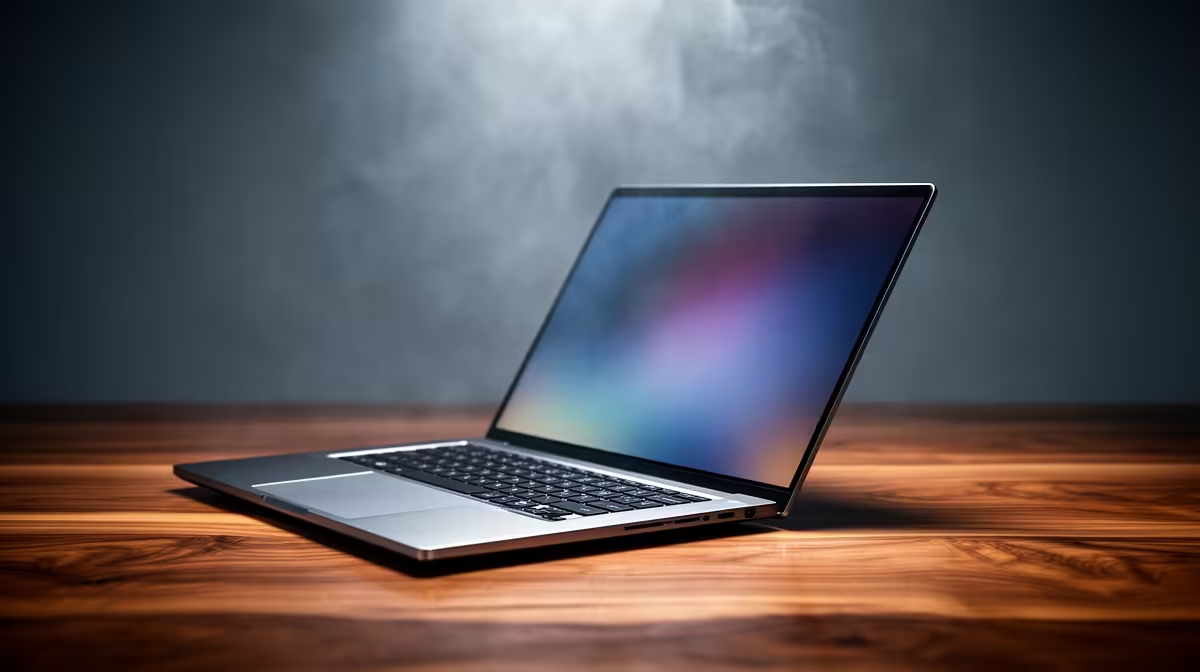
A lightweight laptop earns its place on the commute when the charger, hinge and battery are as practical as the number on the scale. Under 1.5kg is a useful target for South African students and mobile workers, but screen size, repairability and performance decide whether the machine stays useful once it reaches the desk.
Quick Answer
Choose a sub-1.5kg laptop when you carry it most days and your work fits an efficient processor with integrated graphics. Compare the complete travel weight, measured battery life, screen visibility and chassis strength. Move to a heavier performance model when sustained creative work, discrete graphics or more cooling saves enough time to justify the bag weight.
Count the charger and sleeve
Manufacturers publish the laptop mass, while your shoulder carries the adapter, cable and protective sleeve too. A compact USB-C charger can keep the total low when the laptop accepts the right power profile. A gaming or workstation model may need a larger main adapter.
Weigh the whole daily kit. A 1.35kg machine paired with a heavy brick can lose much of its advantage over a 1.55kg laptop that uses a small charger.
Check whether one charger can cover the laptop and phone. Use a rated cable and confirm the laptop's accepted USB-C input rather than assuming every USB-C port can charge it.
Screen size changes portability
A 13- or 14-inch panel fits cramped lecture desks and smaller bags. A 15-inch screen gives more room for timelines and spreadsheets but increases the footprint even when weight stays low.
Aspect ratio matters. A taller 16:10 panel shows more document or web content without adding much width. Resolution improves text and workspace, while very high pixel counts can use more power and make little difference at normal viewing distance.
Browse laptops buyers currently favour and the gaming notebook selection, checking the exact mass and display configuration.
Battery claims need a test method
A full workday means different things in a lecture hall and a video-call schedule. Compare reviews that state brightness, refresh rate, wireless use and workload. A large battery can still run short behind a bright high-resolution display.
Hybrid graphics should let a discrete GPU sleep during office work, but a background app or external screen can keep it active. For the lightest models, integrated graphics can simplify power management and cooling.
Create an unplugged profile with moderate brightness, 60 Hz where suitable and a balanced power mode. Pause large updates before leaving.
Thin chassis still need strong hinges
Lift the lid from the centre and watch whether the base rises or the screen twists. A small amount of flex is not an automatic failure, but uneven hinge resistance can become annoying on a moving bus or narrow desk.
Check the palm rest and keyboard deck while typing. Carbon fibre, magnesium, aluminium and plastic can all produce a good chassis when engineered well. Material names do not replace an exact-model durability test.
Use a fitted sleeve in a backpack and keep heavy books away from the lid. Water bottles belong in a separate sealed compartment.
Keyboard and trackpad deserve a real page
Thin laptops can shorten key travel. Type for fifteen minutes and check the right Shift, arrows, function row and power-button position. A poor layout costs time every day.
The trackpad should handle gestures without a loose click or missed palm rejection. Students who write equations may prefer a touchscreen or active pen, but those features can add glass, reflections and weight.
Ports decide what stays in the bag
Count USB-A, USB-C, display output, audio and card-reader needs. A thin laptop with two USB-C ports may require a dock for an older projector or flash drive. Add that adapter to travel weight and cost.
Check port functions individually. One USB-C socket may support display and charging while another carries data only. Thunderbolt or USB4 can make one-cable desk use easier when the dock and laptop support the same features.
Performance needs sustained testing
An efficient mobile processor can handle documents, coding, browsing and light creative work. Thin cooling has less room for long renders, compiling or gaming. Compare sustained results after the laptop warms, not one short burst.
Integrated graphics shares system memory. Sixteen gigabytes is a comfortable starting point for a mobile work machine, especially when memory is soldered. Buy 32GB when large projects or virtual machines show the need.
An SSD keeps startup and file work responsive. Check capacity and whether a second slot or replacement drive is possible. A light laptop becomes awkward when its fixed small drive fills in the first year.
Webcam and audio support mobile work
Video calls need a camera that handles indoor light, a microphone that rejects fan and keyboard noise, and speakers clear enough for voices. Test a recording rather than relying on a resolution label.
A physical camera shutter and biometric login can make daily travel more comfortable. Use full-disk encryption and a strong account password because a commuter laptop faces a higher loss risk.
Repair and support belong in the choice
Lightweight construction can make batteries, memory or storage harder to access. Read the service manual and South African warranty route before purchase. Soldered memory fixes the capacity; a glued battery can change future repair cost.
Keep proof of purchase and the serial number in a secure account, not only in the laptop bag. Back up class notes or work through a method you have tested.
A commuter scorecard
Score complete bag weight, measured battery, keyboard, screen, ports and support. Then add performance for the heaviest weekly task. A machine that saves 300g but doubles export time may be the wrong trade for a creator.
Take the laptop through a normal day during the initial return period where applicable. Use the bus, lecture desk, meeting room and home dock. Real movement exposes reflections, charger bulk and hinge behaviour that a specification sheet hides.
Frequently Asked Questions
Is under 1.5kg light enough for daily travel?
It is a useful target for many people. Include the charger and sleeve, then decide from the full bag.
Do lightweight laptops have poor battery life?
No. Efficient processors can run well, but screen, battery size and workload decide the measured result.
Can a lightweight laptop handle gaming?
Light games can run on capable integrated graphics. Demanding titles need more GPU and cooling, which often adds mass.
Compare lightweight laptops by complete carry weight, measured battery life and the sustained performance your South African commute or study day needs.