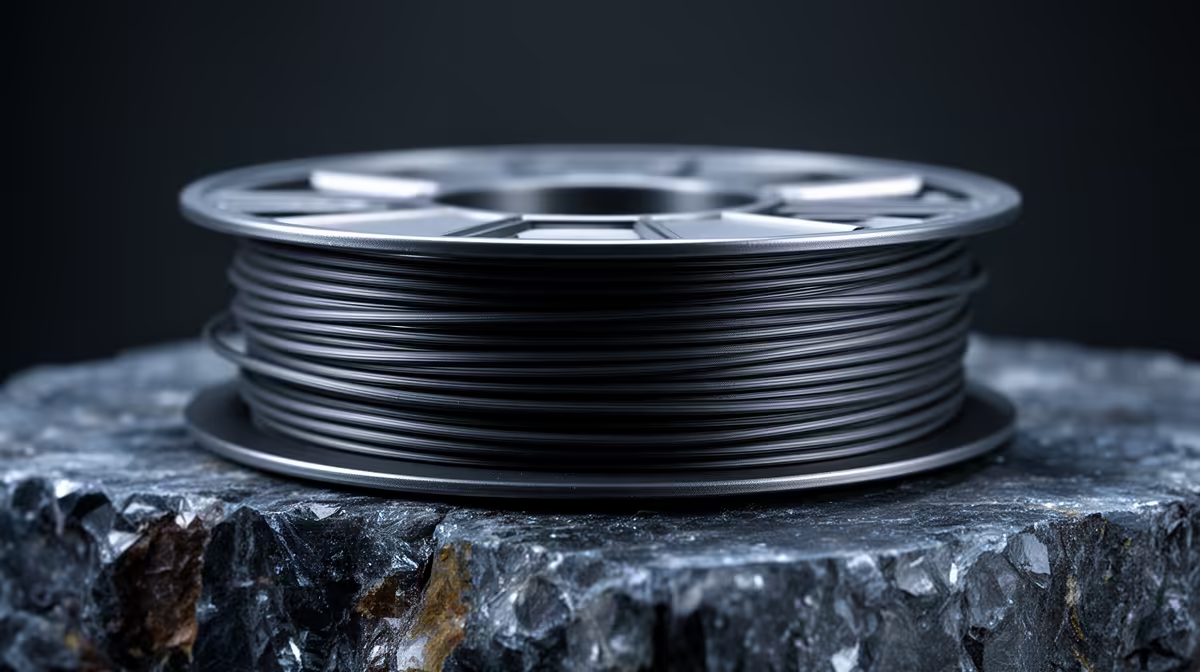
Print a 28mm warband captain in glossy PLA and the first thing your eye finds is the staircase of layer lines running up the cloak. Switch to matte filament and those same lines mostly vanish, because a flat surface scatters light instead of bouncing it back in sharp highlights. For miniatures and cosplay props that get painted, that single property changes how much sanding you do and how cleanly the first coat of primer grips.
Quick Answer
Matte PLA is the better choice for painted minis and props. Its porous, light-scattering surface hides layer lines that gloss exaggerates, and it grips primer and acrylic immediately, so most painters skip sanding entirely and go straight to a base coat.
Why a flat finish hides layer lines
Layer lines are physically there on every FDM print regardless of filament. What changes is how visible they are. A glossy surface acts like a row of tiny mirrors: each ridge catches a hard specular highlight, and your brain reads that repeating pattern as a striped, stepped look. Matte PLA contains a fine matting additive that breaks the surface into thousands of micro-facets. Light hits those facets and scatters in every direction, so no single ridge throws a bright highlight. The lines are still there under a loupe, but at arm's length the model reads as smooth.
This is why painters describe matte PLA as behaving like a built-in primer coat. The same micro-texture that diffuses light also gives paint something to key into.
Paint adhesion: where matte earns its place
Acrylic paint and spray primer need a slightly toothy surface to bond. Glossy PLA is sealed and smooth, so primer can bead, pool in the recesses, or peel at the edges when you handle the piece. Matte PLA's porous flat surface does the opposite: primer and acrylic wash both grab on the first pass, base coats go down evenly, and washes settle into recesses the way they should rather than crawling across a slick surface.
For tabletop gaming pieces that get picked up, knocked over, and repainted, that durable paint key matters more than any other single property. You spend your time on the brushwork, not on prepping the surface.
Matte versus standard and silk PLA
Standard PLA sits in the middle: semi-gloss, layer lines more visible than matte, paint adhesion acceptable but not as forgiving. Silk PLA is the opposite extreme, deliberately shiny and reflective, which is lovely for a display piece you never paint but the worst possible base for a painted mini because it amplifies every layer line and resists primer. If the model is going under a brush, matte wins. If it is going on a shelf unpainted as a chrome-look trophy, silk has its place.
Settings that get the most from matte filament
The filament does a lot, but slicing helps. For miniatures, smaller layer heights of 0.08mm to 0.12mm capture fine detail and shrink the already-faint lines further. A slightly slower outer-wall speed keeps detail crisp on overhangs like cloaks and weapon edges. Matte PLA prints at roughly the same temperatures as standard PLA, so you rarely need an exotic profile, but do a quick temperature tower with a new spool because matting additives shift the ideal band slightly between brands.
For larger cosplay props printed in sections, matte still helps, though props usually get filler, sanding, and primer anyway. The win there is that primer grips the raw print better, so your filler-and-sand cycles start from a more cooperative surface.
Does the colour you choose matter?
It does, more than most people expect. On a painted mini the base filament colour barely shows once primer goes down, so a neutral grey is the pragmatic default because it reveals detail clearly under raw-print inspection and primes evenly. Grey is the reason so many miniature painters keep a spool of matte grey as their standard working filament.
If you intend to leave a print partly unpainted, or you zenithal-prime and then glaze thin colours over the top, a lighter matte filament gives you a brighter starting canvas, while a dark matte hides imperfections but eats light from thin paints. For props that get a single solid colour and a wash rather than a full paint job, matching the filament roughly to the final colour saves a coat or two. None of this changes the layer-line or adhesion behaviour, which is purely about the matte surface, but it does affect how much paint you end up applying.
Sealing and protecting the finish
A painted mini or prop benefits from a matte varnish at the end, and matte PLA plays nicely with it. The same flat, slightly porous surface that gripped your primer also helps a sealing coat key on evenly, so the final varnish protects the paint without going blotchy. For handled gaming pieces, that seal is what keeps base coats and washes from rubbing off during play. A matte topcoat also preserves the non-reflective look you chose the filament for in the first place, rather than reintroducing the gloss you were avoiding.
Choosing a printer and filament together
A resin printer will always out-detail FDM on tiny faces, but FDM in matte PLA is the practical, low-mess route for most hobbyists and the only sane option for large props. If you are building a setup from scratch, look at the current crop of fast bed-slinger and CoreXY machines in the 3D printer range at Evetech and match the build volume to whether you mostly print 28mm minis or full-scale helmets and pauldrons.
Keep a couple of accessories on hand too. Nippers, a hobby knife for cleaning supports, and fine sanding sticks for the rare seam are the unglamorous tools that make the difference, and you will find the usual culprits among the accessories that move fastest with Evetech buyers.
Frequently Asked Questions
Does matte PLA print harder than normal PLA?
No. It runs on essentially the same temperature and speed profile as standard PLA, so it is beginner-friendly. The only habit worth keeping is a fresh temperature tower per brand, because the matting additive nudges the ideal nozzle temperature a little either way.
Can I leave a matte mini unpainted?
You can, and it looks tidier than gloss because the flat finish hides layer lines on its own. Most colours read as a clean, chalky solid. That said, matte's real strength is as a paint base, so unpainted is leaving value on the table for a gaming piece.
Is matte PLA strong enough for cosplay props?
For most props, yes. PLA is rigid and holds detail well. For parts that flex or take impact, many builders move to PLA+ or PETG for the structural pieces and keep matte PLA for the visible, paintable surfaces.
Why does primer peel off my glossy prints?
Glossy PLA has a sealed, smooth surface with little tooth for primer to bond to, so it can bead or peel at edges. Matte PLA's micro-textured surface gives primer a mechanical key, which is the main reason painters prefer it.
What layer height should I use for minis?
A range of 0.08mm to 0.12mm captures fine facial and armour detail while keeping the already-subtle matte layer lines low. Going finer increases print time sharply for little visible gain once matte filament is doing its light-scattering job.
Planning a print-and-paint setup for minis or props? Compare build volumes and detail across the current machines in the 3D printer range at Evetech and pick the one that fits your scale.