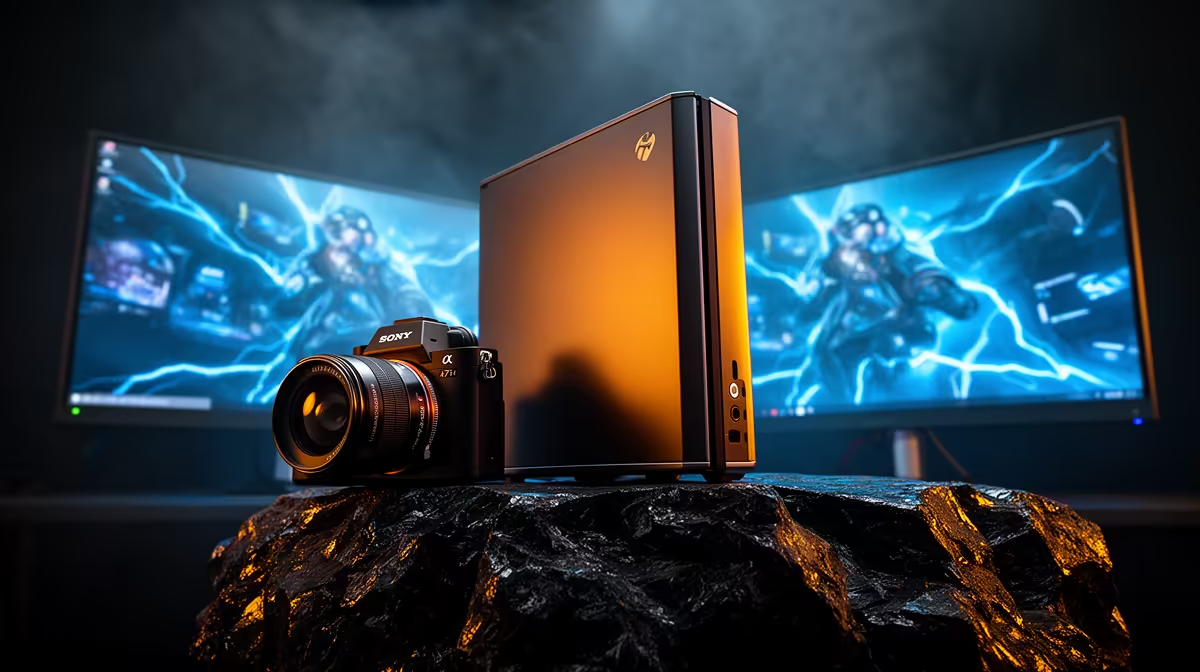
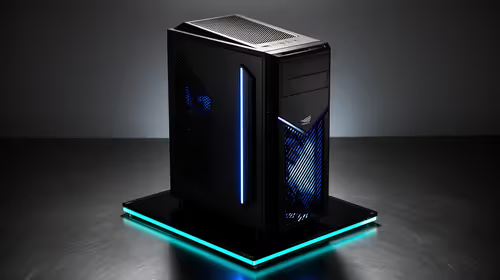
A full tower under the desk is overkill for spreadsheets, browser tabs and a video call, yet that is the work most South African offices actually do. A mini PC drives a clean two- or three-screen setup from a box the size of a paperback, and for productivity it gives up almost nothing that matters.
Quick Answer
Most mini PCs run a dual-monitor setup straight from their built-in HDMI, DisplayPort and USB-C outputs, with no add-in graphics card needed. For SA office, study and home-productivity use that means two or three displays driven from a palm-sized box, far less desk bulk than a tower for the same everyday work.
Why a mini PC handles multiple monitors
The output is built into the processor. Modern integrated graphics include a display engine that can drive two or three screens by itself, which is why a mini PC needs no dedicated GPU to run a multi-monitor desk. The ports on the back are what set the ceiling: a typical mini PC offers some mix of HDMI, DisplayPort and USB-C, and each of those can feed a separate display.
For office and study work, integrated graphics are more than enough. Spreadsheets, documents, dozens of browser tabs, video calls and media playback do not need a graphics card. They need outputs, RAM and a responsive processor, all of which a well-specced mini PC delivers.
Counting the outputs before you buy
This is the spec that decides everything, so check it first. The number of monitors a mini PC can drive equals the number of usable display outputs it exposes, not a guess based on size. Look at the rear panel listing: an HDMI plus a DisplayPort plus a USB-C with DisplayPort Alt Mode means three potential screens.
HDMI, DisplayPort and USB-C, what each gives you
HDMI is the universal connector almost every monitor accepts, ideal for your main display. DisplayPort handles higher resolutions and refresh rates cleanly and is the better choice for a sharp second screen. USB-C with video support is the flexible one: it can carry a display signal and, on many mini PCs, also connect a USB-C monitor with a single cable. Match the mini PC's outputs to the inputs your monitors already have so you are not hunting for adapters later. The full mini PC range at Evetech lists the port layout for each model, which is the detail to compare.
USB-C and the single-cable desk
On a USB-C-equipped mini PC, the right monitor can take video over one cable, which keeps the desk tidy. It is worth confirming the USB-C port actually carries video, because not every USB-C port does, before you plan a setup around it.
Matching the mini PC to the work
For two screens of office productivity, a mini PC with a capable integrated graphics chip, enough RAM for heavy tab use, and at least two display outputs covers it comfortably. Push to three monitors and you simply want a third output and a touch more RAM headroom. The thing you are buying back is desk space and quiet: no tower, far less noise, and a footprint that hides behind a screen. To see which compact builds SA buyers reach for, the most popular PC picks right now are a useful sense check before you commit.
Monitor Resolution and Refresh Rates
For everyday office and study work, two 1080p screens driven over HDMI and DisplayPort cover the practical needs of most South African desk setups without asking much of the integrated graphics. If you want 1440p or 4K on either display, check the specific model's output spec: modern mini PCs with Intel Core or AMD Ryzen integrated graphics can drive 4K at 60Hz on their primary output, but confirm the secondary port also supports your target resolution before buying.
Refresh rate is less critical for productivity, where 60Hz is perfectly smooth for documents and web content. If one of your screens doubles for casual gaming or fast video, 75Hz or 90Hz over DisplayPort is within the capability of mid-range integrated graphics without adding a GPU to the equation.
RAM Makes More Difference Than the Chip
For a dual-monitor, multi-app workflow, RAM is the single most practical spec to prioritise. Integrated graphics pull from system memory, so with two displays and a busy browser running simultaneously, 16GB is a more comfortable floor than 8GB. The machine will stay responsive with many tabs open, a video call in one corner and a spreadsheet on the other screen. Skimp on memory and even a capable chip will feel sluggish under that everyday load.
Who a dual-monitor mini PC suits
It is the natural fit for accountants, admin teams, students, customer-support desks and home offices, anyone whose day is documents, mail and the browser rather than gaming or video rendering. If your workload includes serious 3D, heavy video editing or modern gaming, a tower with a dedicated GPU is still the right call. For everything else, a mini PC running two or three monitors is the smarter, smaller choice.
Frequently Asked Questions
How many monitors can a mini PC actually drive?
It depends on the display outputs on the back. Most mini PCs handle two or three screens from a mix of HDMI, DisplayPort and USB-C, with no separate graphics card required.
Do I need a graphics card for a dual-monitor mini PC?
No. Integrated graphics drive multiple monitors on their own for office and productivity work. A dedicated card only matters for gaming, 3D or heavy video editing.
Can a mini PC power a USB-C monitor with one cable?
Often yes, if the USB-C port carries a video signal. Check the spec for DisplayPort Alt Mode on that port before planning a single-cable setup around it.
Will a mini PC keep up with heavy multitasking?
For documents, spreadsheets, many browser tabs and video calls, a mini PC with enough RAM and a capable processor handles it comfortably. Spec the RAM generously if you keep dozens of tabs open.
Is a mini PC worth it over a full tower for office use?
For everyday productivity, yes. You get the same usable performance with far less desk bulk, less noise and a footprint that hides behind a monitor. Towers only pull ahead for GPU-heavy work.
Want a tidy two- or three-screen desk without a tower? Compare port layouts in the mini PC range at Evetech and pick a model with the display outputs to match your monitors.