

Back-to-School Parent Guide: GPUs in SA
Back-to-School Parent Guide: GPUs. Everything you need to know with SA pricing, step-by-step instructions & expert recommendations.
Read moreDiscover the best mini PCs for software developers and coders. 🔍 We break down key features and performance metrics. 💻 Desktop-level power in compact form.
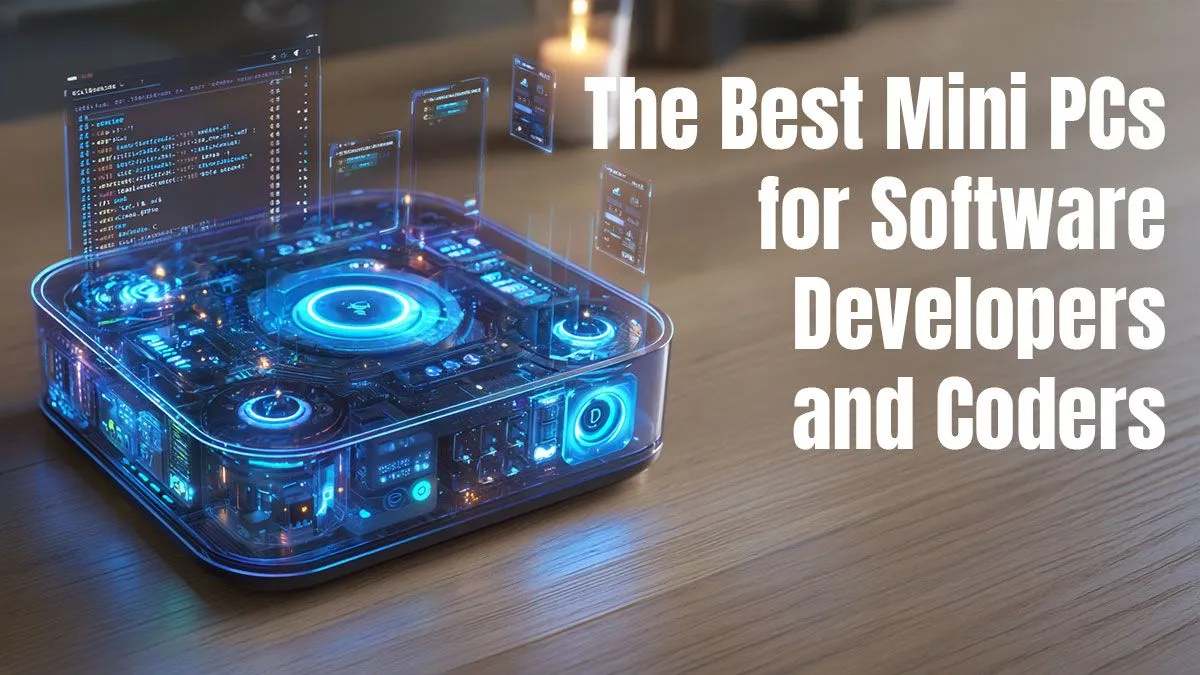
Tired of that massive tower hogging your desk space? As a South African developer, your workspace is your command centre. You need power for compiling code, running virtual machines, and juggling multiple apps… but you don't need the bulk. What if you could get desktop-grade performance in a box that fits in your hand? Enter the mini PC, the compact powerhouse that’s changing the game for coders across Mzansi. 💻
For years, the thinking was simple: more power means a bigger box. That's no longer true. The latest generation of powerful mini PCs packs a serious punch, making them one of the best choices for software developers and coders who value efficiency and a clean setup.
Here’s why they work so well:
Choosing the best mini PC for software development isn't just about picking the smallest one. You need to focus on the components that directly impact your workflow. A sluggish machine can kill your productivity, so getting this right is crucial.
Your Central Processing Unit (CPU) is the heart of your development machine. When you're compiling large projects, running tests, or working with complex applications, a powerful multi-core CPU is non-negotiable. Look for modern Intel Core i5/i7 or AMD Ryzen 5/7 processors with at least 6 cores to ensure smooth performance.
Are you constantly running Docker containers, virtual machines (VMs), multiple IDE windows, and a dozen browser tabs? That’s where RAM comes in. 16GB is the absolute minimum for a modern developer, but 32GB is the real sweet spot. It allows you to run all your tools without your system slowing to a crawl.
Running Docker, a local server, and multiple IDEs? Don't skimp on RAM. 32GB is the new sweet spot for developers, ensuring smooth multitasking without hitting swap memory. It’s a small investment for a massive productivity boost.
A slow hard drive is a developer's worst enemy. An NVMe (Non-Volatile Memory Express) SSD is essential. The near-instant load times for your OS, applications, and projects will dramatically speed up your entire workflow. Look for at least a 512GB NVMe SSD, and consider 1TB if you work with large datasets or projects. You can browse our full range of mini PCs to compare storage and RAM configurations.
While there are many great options, some brands consistently deliver the performance and reliability that developers need. Brands like Minisforum have become incredibly popular for offering an excellent balance of power, ports, and price.
Many of these compact coding PCs come with robust cooling systems, multiple display outputs (perfect for multi-monitor setups), and the latest connectivity like Wi-Fi 6 and Thunderbolt. When looking for the best mini PC for your developer needs, exploring specialised brands can lead you to a machine perfectly tailored to your workflow. The performance packed into Minisforum Mini PCs, for example, is truly impressive for their size.
Ready to Reclaim Your Desk? Find the perfect compact powerhouse for your coding needs. Explore our full range of Mini PCs and start building a smarter, more efficient workspace today.
A developer-friendly mini PC needs at least an Intel i5 or Ryzen 5 processor, 16GB RAM, and SSD storage for coding efficiency.
Look for models with robust processors and dedicated GPUs, like the Intel NUC or ASUS PN51 for optimal gaming and coding performance.
Yes, high-performance mini PCs with strong CPUs and sufficient RAM run complex IDEs like Visual Studio and Android Studio smoothly.
Mini PCs offer desktop-level power in compact form, providing portability and space-saving advantages without compromising performance for developers.
Many modern mini PCs feature multiple video outputs, supporting multi-monitor setups for enhanced productivity in coding and development environments.
Most mini PCs support popular OS choices like Windows, Linux, and macOS, offering flexibility for developers working in different environments.
Absolutely! Compact PCs with scalable performance, such as the ASUS PN51 or Intel NUC, handle full-stack development dependencies seamlessly.
Back-to-School Parent Guide: GPUs. Everything you need to know with SA pricing, step-by-step instructions & expert recommendations.
Read more
Pre-Buy Checklist: 10 Things to Verify Before. Comprehensive checklist covering every spec and feature you should verify before buying in SA.
Read more
Fortnite Max Settings on RTX 4080. Tested & verified settings for best FPS and visual quality on SA hardware budgets.
Read more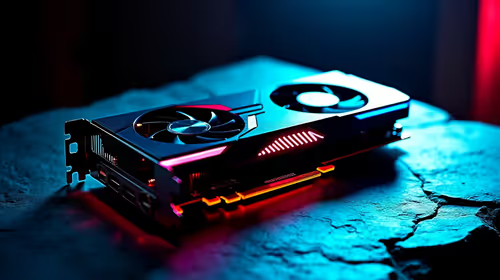
RTX 4070 Ti Super Throttling Under Load. Everything you need to know with SA pricing, step-by-step instructions & expert recommendations.
Read more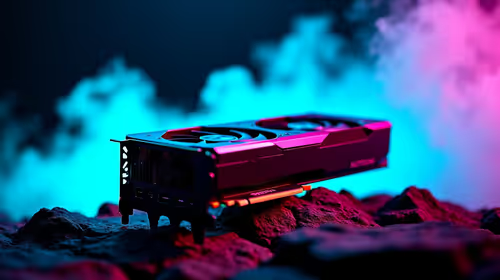
Easter GPU Buying Guide. Hand-picked gift ideas at every budget tier. SA pricing & Evetech availability included.
Read more
Valorant Max Settings on RTX 4080. Tested & verified settings for best FPS and visual quality on SA hardware budgets.
Read more
Snapdragon X2 NPU Explained: How 80 TOPS Changes. Plain-English explanation of what it means, why it matters & how it affects your buying decisions in SA.
HBM? High Bandwidth Memory Used in GPUs and AI. Plain-English explanation of what it means, why it matters & how it affects your buying decisions in SA.
How much should you spend on sim racing accessories in South Africa for a realistic setup? We break down budgets by quality tiers, so you buy smart gear and avoid overspending 🎮💸
G-Sync and FreeSync? Variable Refresh Rate. Plain-English explanation of what it means, why it matters & how it affects your buying decisions in SA.
AMD Laptop: Value. SA-focused analysis with local pricing data, real-world insights & actionable buying advice.
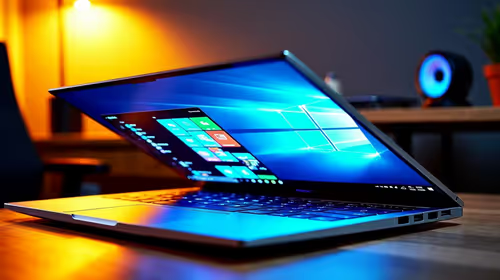
How MacBook Neo Handles 30+ Chrome Tabs with Only. SA-focused analysis with local pricing data, real-world insights & actionable buying advice.

Why Apple Put 8GB RAM in MacBook Neo: The A18 Pro. SA-focused analysis with local pricing data, real-world insights & actionable buying advice.
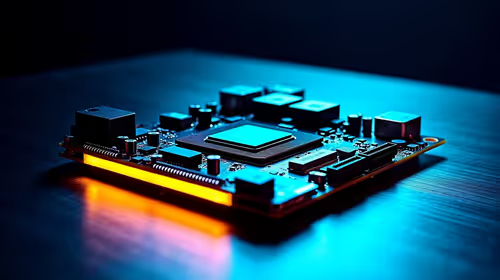
Upgrade your work laptop with a New Motherboard. Step-by-step instructions with SA-specific tips, common pitfalls to avoid & expert recommendations.
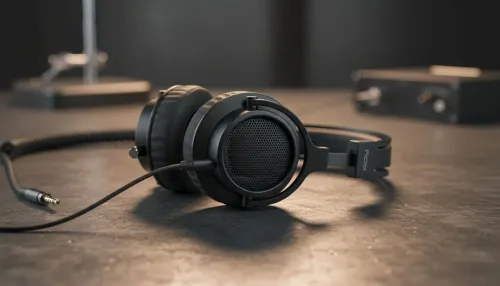
Maintain wired headset — Checklist: • inspect cables • clean earpads • store properly 🔧🎧 Practical steps to preserve sound quality and avoid premature replacements.
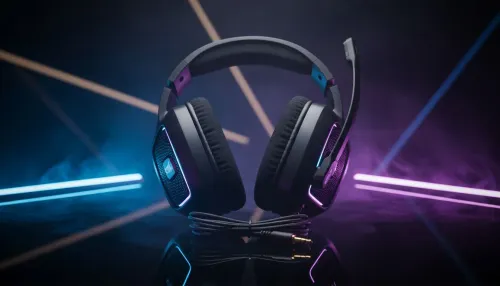
Fix crackling headset fast: step-by-step checks for cables, connectors, drivers, and settings to remove static or distorted audio on wired headsets 🎧⚙️
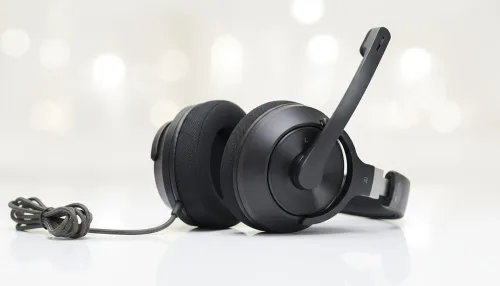
Stereo vs mono headsets: learn which delivers clearer calls, better spatial music, or simpler mono voice performance — pick the right headset for meetings, music, or gaming 🎧💬
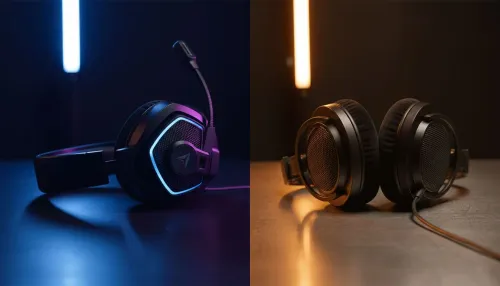
- Compare gaming headset vs studio headphones; - Assess comfort, mic and sound; - Recommend best daily picks. Gaming headset vs studio headphones: learn which suits work, music and casual gaming. 🎧⚖️