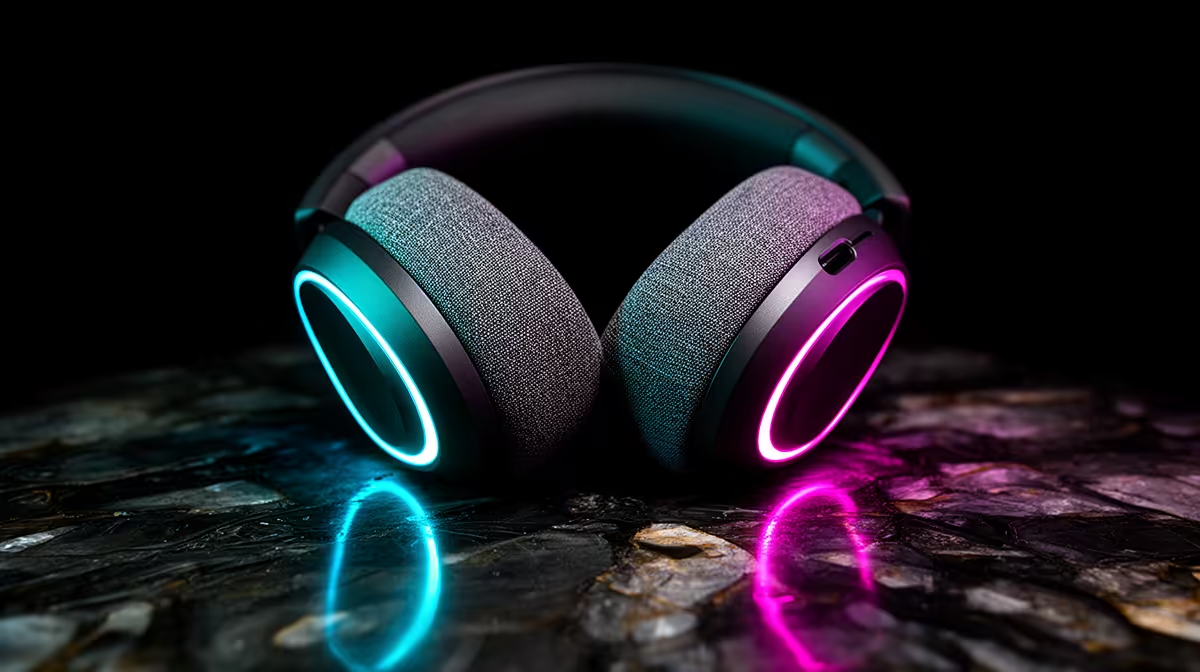
Active noise cancellation can make a shared room feel calmer, but gaming headsets still need clear positional audio, a usable microphone and comfortable clamping force. The best choice blocks the low hum around you without hiding important in-game detail or making your own voice sound unnatural.
Quick Answer
Choose an ANC gaming headset for constant background noise such as fans, traffic or conversation through a wall. Closed-back isolation handles voices and sudden sounds better than ANC alone. Test comfort, microphone quality, wireless latency and how the headset sounds with cancellation on and off.
ANC and passive isolation solve different noise
Active cancellation uses microphones and processing to reduce steady external sound. It tends to work best on low-frequency hum from air conditioners, engines and fans. Irregular voices and keyboard clatter are harder to cancel.
Closed earcups and well-sealed pads provide passive isolation. The pad material, clamp and fit around glasses affect the seal. A loose cup can weaken bass and let room noise in.
Strong cancellation can create a pressure sensation for some users. Others hear a hiss in a quiet room. Try the exact model if possible, and check whether the ANC level can be adjusted.
Browse the gaming headset selection and headsets buyers currently favour. Compare the full acoustic and microphone design rather than treating noise cancellation as the only premium feature.
Positional audio needs a clean tuning
Footsteps and directional cues live across the frequency range. Too much bass can mask detail, while an aggressive treble peak can become tiring. A balanced headset with consistent imaging is easier to use than one tuned for explosions.
Virtual surround is a preference. Some games already process headphone spatial audio, and adding another layer can blur direction. Test stereo and one spatial mode in the same training area.
EQ can tame a bass-heavy headset. Make small changes and keep a default profile. The goal is clear cues without making music and voices thin.
ANC processing can change the sound. Compare tonal balance with it enabled, because that is the mode used in the busy room.
Wireless features need a gaming check
A dedicated low-latency wireless link usually suits gaming better than a basic Bluetooth connection. Bluetooth can be useful for a phone, though microphone modes may reduce audio quality on some devices.
Dual-device mixing is convenient for calls and game audio. Check whether it mixes sources or switches between them, and whether microphone support changes.
Battery figures depend on ANC, lighting and volume. Look for tests with cancellation enabled. Confirm whether the headset works through a cable after the battery is empty.
Keep the receiver near the headset and away from interference. A USB extension can help when the PC sits under a metal desk.
Microphone quality matters in a noisy room
ANC controls what you hear; microphone noise reduction controls what teammates hear. They are separate systems. Listen to raw microphone samples with keyboard and fan noise in the background.
A boom placed close to the mouth can improve voice-to-room ratio. Position it slightly to the side to reduce breath noise. A removable mic is convenient for travel but can be easier to lose.
Software suppression can remove steady noise and clip quiet speech. Use a moderate setting and check the result through a local recording before joining a match.
Comfort decides long-session value
ANC headsets can be heavier because they contain batteries and microphones. Check total weight, clamp, pad depth and heat. A model that feels fine for ten minutes can create a hotspot after two hours.
Glasses can break the seal and create pressure. Softer pads may help, though they can run warmer. Replacement-pad availability extends the headset's useful life.
Keep listening volume moderate. Noise cancellation can let you hear detail at a lower level, which is one of its best practical benefits. Give your ears regular quiet breaks.
Check what happens when the battery runs flat
Some wireless ANC headsets continue through a cable with reduced features; others need power for their processing. Read the manual before relying on passive playback. Check whether the microphone works over that cable and whether simultaneous charging creates noise.
Battery claims change with ANC, lighting, volume and connection mode. Compare a review using the features you plan to leave on. A quick-charge feature can matter more than the largest headline when ten minutes at a desk covers the next session.
ANC can create a pressure sensation for some listeners. Try the headset in a quiet room as well as a noisy one, because a strong mode may feel unnecessary at home. Transparency mode should sound natural enough for a conversation without forcing you to remove the headset.
Keep the ear pads clean and inspect their seal. Flattened pads weaken both bass and passive isolation, which can make the cancellation system appear worse over time. Replacement-pad availability belongs in the ownership cost.
Store the headset with dry pads and enough room around the hinges. A hard case helps in a backpack, while hanging it by a stretched headband can change clamp over time. Update firmware before an event, then avoid untested changes on match day.
Frequently Asked Questions
Test sidetone and controls before a long session. Hearing a natural amount of your own voice can stop you shouting against the isolation. Buttons should be distinct enough to find by touch; a shared wheel that changes function by mode can become frustrating during play.
Multipoint Bluetooth is useful for a phone, but the gaming link should remain the low-latency path. Confirm how the headset behaves when a call arrives and whether switching devices interrupts the PC audio. Disable features that create surprise handovers during competitive matches.
Does ANC block people talking?
It can reduce voices, but passive earcup isolation often handles irregular speech better than ANC alone.
Is wireless ANC suitable for competitive games?
Yes, when the headset uses a stable low-latency gaming connection and maintains clear imaging.
Does ANC affect sound quality?
It can change tonal balance or add a faint hiss. Test the mode you will use.
Is microphone cancellation the same thing?
No. Headphone ANC affects what you hear; microphone processing affects what teammates hear.
What should glasses wearers check?
Check seal, clamp and pad softness during a long test, since frames can create leaks and pressure.
Compare noise-cancelling headsets by isolation, positional sound, microphone and long-session comfort for your room.