Quick Answer
The three non-negotiable case features for builders needing cooling, space, and fast front I/O are: a mesh front panel with 360mm or 420mm radiator support, at least 380mm of GPU clearance, and a front I/O panel with USB 3.2 Gen 2x2 Type-C (20Gbps) alongside two USB Type-A 3.2 ports. Cases in the R2,000 to R4,500 range hit all three without unnecessary compromise.
Front I/O Specifications That Matter in 2026 🖥️
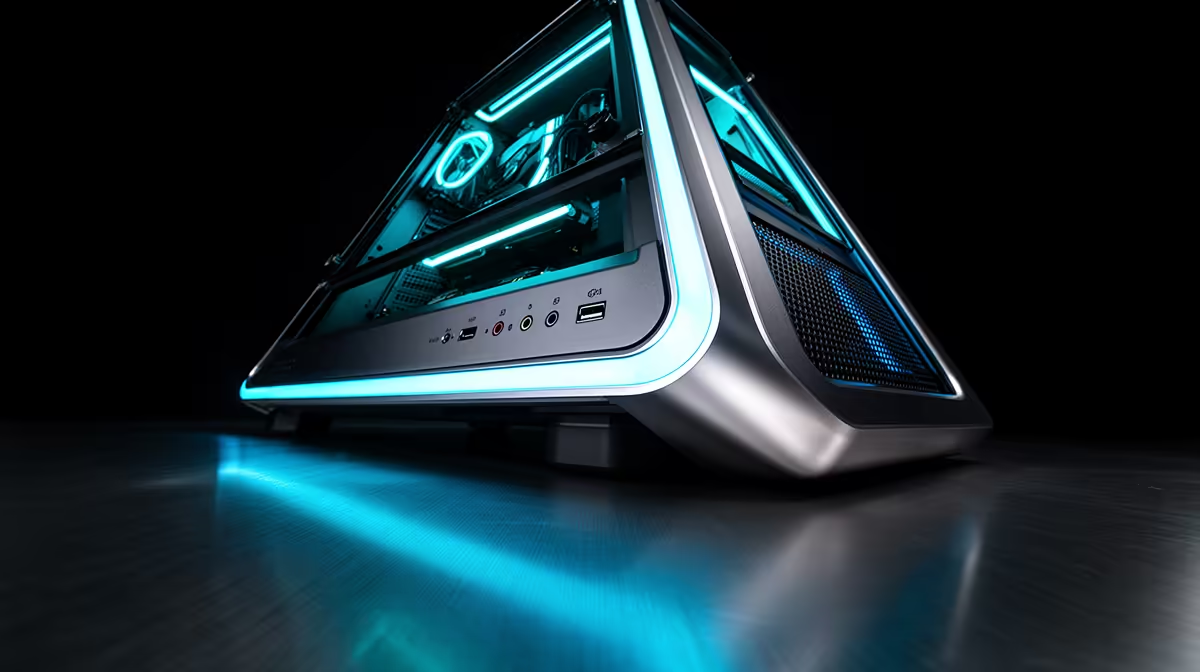
Front I/O is the most frequently used part of any PC case, yet it is often what budget designs cut first. A fast front panel should offer one USB-C at 10Gbps minimum and ideally one at 20Gbps for external SSD and docking station use. Two USB Type-A 3.2 Gen 1 ports cover keyboards, controllers, and flash drives. Avoid cases with only USB 2.0 Type-A ports in 2026; these bottleneck even a basic USB drive at sequential read speeds. A 3.5mm audio combo jack supporting both gaming headsets and studio monitoring headphones completes the essential front panel.
Cooling Real Estate: What Good Looks Like 🌬️
A case with genuine cooling headroom supports a 360mm or 420mm front radiator and a simultaneous 240mm or 360mm top radiator without component interference. Verify the front radiator mount allows 60mm or more of clearance to the GPU bracket when a radiator and fans are installed. Mesh front panels with at least 65 percent open area flow significantly more air than decorative mesh designs that look open but restrict intake. This distinction matters for RTX 5080 and RX 9070 XT builds running at 300W-plus GPU TDP.
Internal Space for Complex Builds 🔧
A cable management channel behind the motherboard tray should be at least 25mm deep to hide thick modular PSU cables without compressing them. Multiple rubber grommets on pass-through holes prevent cables from fraying against metal edges over time. At least two 2.5-inch SSD mounts behind the tray and one 3.5-inch HDD bay in the main chamber covers most gaming and creator storage needs without occupying front airflow space. Tool-free PCIe slot covers are a small convenience that compounds over multiple GPU swaps in a build lifecycle.
Prioritise Front I/O Speed Over Port Count ⚡
A case with one 20Gbps USB-C port is more useful than one with four USB 2.0 ports and no USB-C. When connecting an external NVMe drive for game installs or large video transfers, a single high-speed port saves more time than multiple slow ones. Always check the front I O spec sheet rather than just counting ports.
FAQ
Does front USB-C speed depend on the case or the motherboard?
Both. The case provides the physical port and cable to the motherboard header. The header type determines maximum speed: a 20-pin USB 3.2 Gen 2x2 header delivers 20Gbps; a 19-pin USB 3.0 header delivers 5Gbps through the same-looking port. Match the case front I/O type to the motherboard header spec.
Can good airflow compensate for slow front I/O?
Cooling and front I/O are unrelated. A case with excellent airflow but slow front ports still limits your data transfer workflow. Both specifications need to be evaluated independently before purchase.
How many internal fan headers does a modern mid-range motherboard have?
Most B650, X670, Z790, and Z890 boards include four to eight fan headers. A case with six fan mounts is typically covered without a hub. Nine or more fan positions benefit from a PWM fan hub to avoid overloading individual headers.
After a case that ticks every box for cooling, space, and fast I/O?
Explore Evetech's PC case range and use the filters to find builds that match your exact spec requirements.