Quick Answer
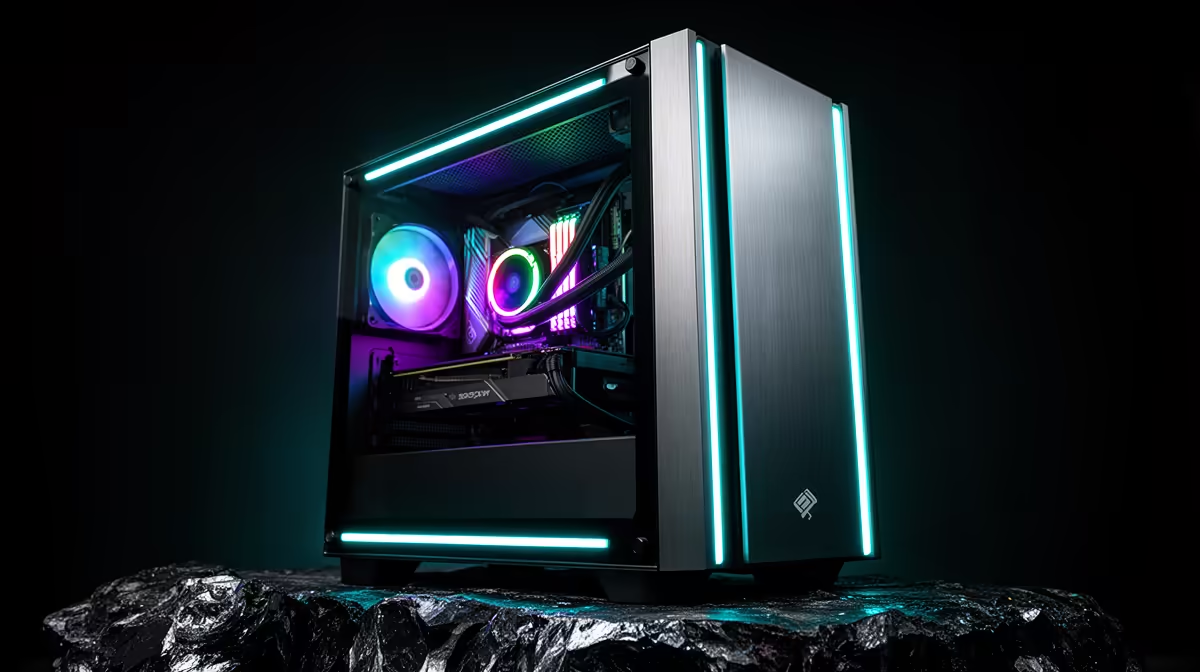
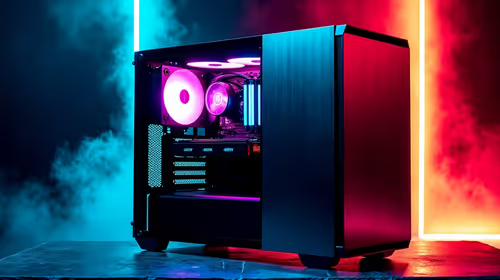
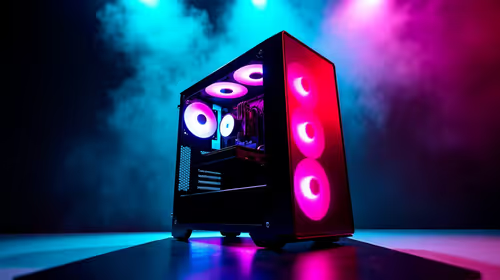
For a build that handles gaming, streaming, and content creation simultaneously, the most important case features are strong front intake airflow for sustained GPU cooling, at least 380mm GPU clearance for a current-gen card, front USB 3.2 Gen 2 Type-C for fast external storage access, and enough internal space to house a 360mm AIO alongside the GPU without conflict. Aesthetics through tempered glass and ARGB fans come second to these thermal and functional requirements.
Airflow and Thermal Features for Multi-Load Builds 💨
A gaming and streaming build runs the CPU and GPU simultaneously at much higher loads than a gaming-only build. Streaming at 1440p with an encoder like NVENC on an RTX 5070 while gaming at near-maximum GPU utilisation pushes system temperatures significantly higher than gaming alone.
Connectivity for Creators 🔧
Front panel I/O on a creator-focused build matters more than on a pure gaming setup. A front USB 3.2 Gen 2 Type-C port at 10Gbps allows fast transfer of footage from cameras, high-resolution audio interfaces, or portable NVMe drives without reaching around to the rear of the case constantly. Additional USB 3.0 Type-A ports at the front are useful for card readers, USB dongles, and peripheral hot-swapping. Cases in the R1,200 to R2,000 range increasingly offer this combination.
Storage and Cable Management Space ✨
Creators and streamers typically accumulate more drives than pure gamers: a primary NVMe for the OS and active projects, a secondary NVMe for captures and renders, and often a 2.5 inch or 3.5 inch SSD for archival footage. Verify the case supports at least two to three M.2 SSD slots via the motherboard (most modern ATX boards provide three to four M.2 slots), and confirm there are at least two 2.5 inch drive mount positions in the case for secondary storage. Cable management is more complex in a multi-drive build, so cases with a full-length PSU shroud, multiple cable routing grommets, and at least 20mm behind the motherboard tray for cable bundling are noticeably easier to build in and maintain.
Prioritise Rear Exhaust Fan Quality ⚡
a combined gaming and streaming build where the CPU and GPU run hot simultaneously, the rear exhaust fan does critical work in pulling heat from both the CPU area and the rising warm air from the GPU. Spend slightly more on the rear exhaust fan position if you are upgrading fans: a quality 120mm FDB fan rated at 70CFM or above at the rear exhaust position improves overall case thermals more per rand than adding a decorative second top fan.
FAQ
Does case size matter for gaming and streaming builds?
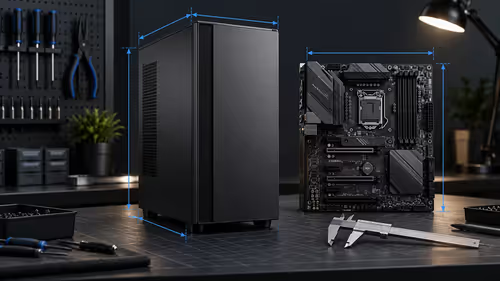
A mid-tower ATX case is sufficient for all but the most extreme dual-radiator streaming workstations. The form factor supports 360mm AIOs, multi-GPU-slot cards, multiple NVMe drives via the motherboard, and adequate cable management. Full-tower cases become relevant only if you are installing custom water cooling loops with dual 360mm or 480mm radiators.
What GPU is recommended for 1440p gaming plus streaming simultaneously?
An RTX 5070 or RTX 5080 handles 1440p gaming with hardware-accelerated NVENC encoding running simultaneously at high quality settings. These cards include a dedicated NVENC encoder core that handles streaming workloads without impacting gaming frame rates. The RTX 5070 is currently stocked at Evetech in the R12,000 to R16,000 range, and the RTX 5080 sits above R20,000.
How many internal drive bays should a creator-focused case have?
At minimum, two 2.5 inch drive bays and two to four M.2 slots via the motherboard cover most creator workflows. If you store large raw video archives on spinning disks, look for cases with at least one 3.5 inch bay as well. Many modern slim mid-tower cases omit 3.5 inch bays entirely, which matters if you depend on high-capacity HDDs for footage archival.
Building a rig that games and creates at the same time?
Find mid-tower ATX cases at Evetech with the airflow, storage options, and front-panel connectivity your combined gaming and creator setup needs.