Quick Answer
The best feature set differs by use case: gaming PCs prioritise high static pressure and wide PWM range; creator workstations need sustained airflow, low bearing noise, and thermal endurance; quiet desk setups demand fluid dynamic bearings and sub-25 dBA ratings above all else.
Gaming PC Fan Priorities 🎮
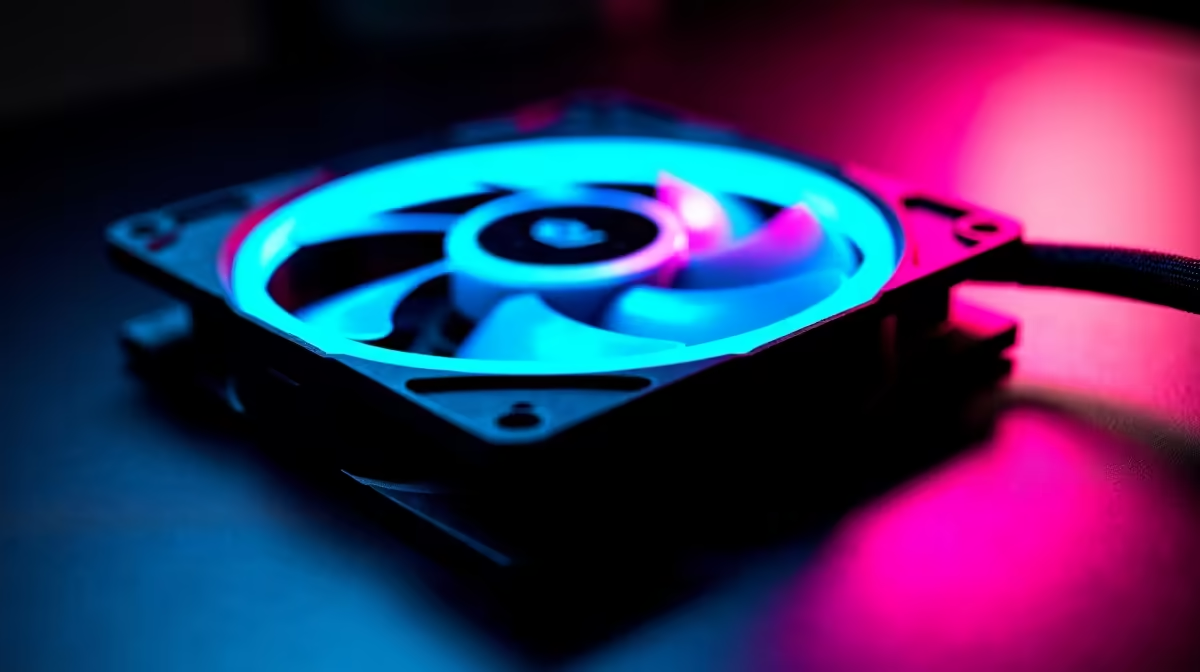
Gaming rigs push GPUs like the RTX 5080 to sustained 250W-plus loads, requiring fans that ramp fast and push dense airflow through GPU-adjacent heatsinks and radiators. Look for static pressure above 2.5 mmH2O, PWM range starting at 20% or lower so the system stays near-silent during desktop use, and a max RPM of at least 1,800 for 120mm units. Impeller blade count between nine and thirteen generally achieves the best pressure-to-noise ratio. Daisy-chain connectors are a bonus for multi-fan radiator setups, reducing cable runs in the cramped area around an AIO pump head.
Creator Workstation Requirements 🖥️
Video editors and 3D artists running Blender on a Ryzen Threadripper or Ryzen 9 9950X need cooling that handles long, steady loads rather than short gaming spikes. Fan longevity matters more here: MTBF ratings above 40,000 hours and fluid dynamic or magnetic levitation bearings are the target. Heat soak from sustained CPU renders can push case temperatures progressively higher over an hour, so choose fans with flat airflow curves that don't lose efficiency as ambient temperature rises. Vibration damping is equally important because microphone-sensitive studio environments notice chassis resonance from cheaper fans.
Quiet Desk Setup Needs ✨
For a work-from-home desk in a Pretoria apartment or a bedroom study, acoustic performance takes priority. The benchmark is 25 dBA or below at a comfortable 70% PWM duty cycle. Fluid dynamic bearings are non-negotiable here; they eliminate both the high-frequency whine of ball bearings and the intermittent chirp of worn sleeve bearings. Opt for 140mm fans where the case allows, since larger blades move the same volume of air at lower RPM. Anti-vibration silicone corner mounts, whether included or bought separately, cut the low-frequency hum transmitted through the case panels into the desk surface.
Set a Custom Fan Curve in BIOS ⚡
Most modern motherboards let you define separate fan curves for CPU and chassis headers. Set a flat 30% duty cycle below 50 degrees Celsius and a steep ramp above 70 degrees. This keeps your build silent 90% of the time and only spins up hard under actual thermal stress, extending bearing life in the process.
FAQ
Can one set of fans work well for both gaming and creator tasks?
Yes. A high-static-pressure PWM fan with FDB bearings at around R380 per unit satisfies both use cases reasonably well. The key is a motherboard or fan controller that lets you switch between an aggressive gaming curve and a near-silent creator curve without rebooting.
How much airflow is enough for a quiet SA home build?
Aim for at least 50 to 60 CFM per 120mm intake fan measured at max RPM. At a comfortable 50% PWM, real-world airflow is 30 to 40 CFM, enough to keep a mid-range build below 70 degrees Celsius even during a hot Highveld summer afternoon.
Does ARGB lighting affect fan acoustic performance?
Not directly. The LED array adds negligible heat and weight. However, ARGB fans connected to low-quality controllers sometimes receive unstable PWM signals, causing audible coil whine or erratic speed behaviour. Use a motherboard-based ARGB header or a reputable hub.
Building a quiet workstation or gaming rig?
Evetech carries a wide range of 120mm and 140mm PWM case fans suited to gaming builds, creator workstations, and near-silent desk setups. Visit the cooling section to find your match.