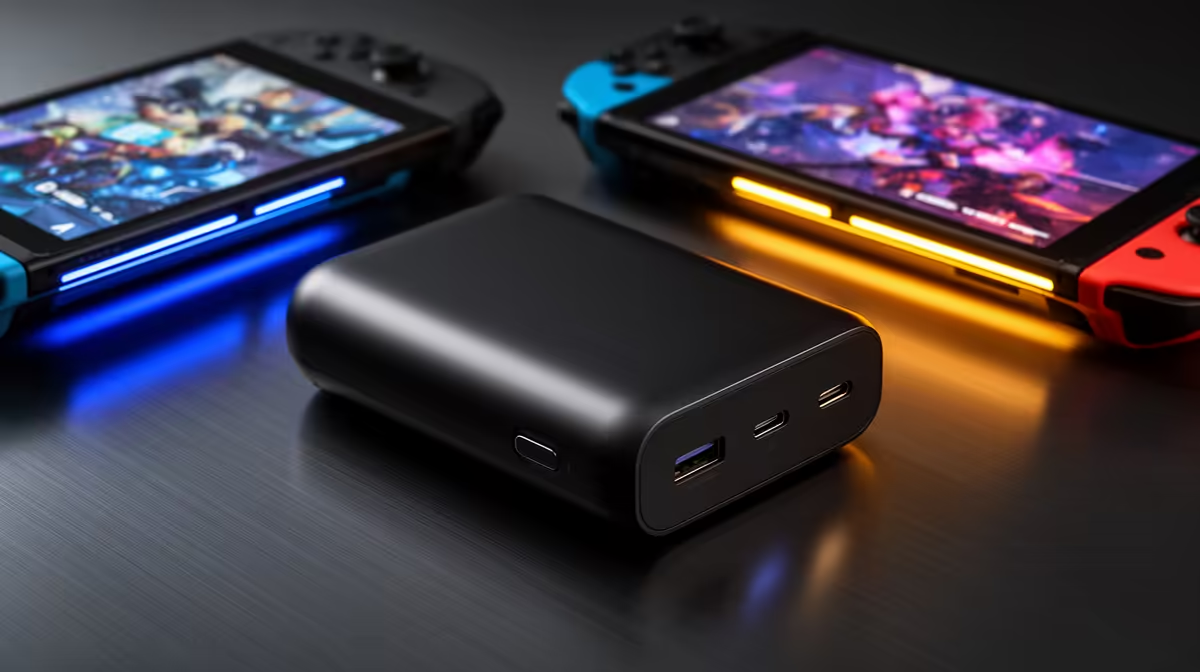
Run out of battery two hours into a long-haul drive and your handheld becomes a paperweight, which is why the best power bank for handheld gaming is the one sized to your specific battery rather than whatever fits in the bag. Modern retro handhelds carry 6,000 to 8,000mAh cells, and matching a power bank's capacity and output to that is the difference between a full extra charge and a frustrating half top-up on a Cape Town to Joburg run.
Quick Answer
For a handheld with a 6,000 to 8,000mAh battery, choose a power bank of at least 10,000mAh so it can deliver a full recharge with headroom, and pick one with USB-C Power Delivery output of at least 18W so it tops up quickly. Higher-draw devices benefit from 30W or more, but 10,000mAh at 18W PD is the sensible baseline.
Sizing Capacity To Your Battery
Power bank capacity does not transfer one-to-one to your device, because some energy is lost to voltage conversion and heat. A rough rule is to expect around 60 to 70 percent of the rated capacity to actually reach your handheld. So a 10,000mAh power bank realistically delivers enough to fully refill a 6,000 to 8,000mAh handheld once, with a little to spare, which is exactly what you want for a day out or a flight.
If you game heavily and want two or more full recharges between wall sockets, step up to a 12,000mAh or 20,000mAh unit. The trade-off is size and weight, and a chunky 20,000mAh brick in a bag alongside the handheld adds up, so match the capacity to how long you are realistically away from power rather than buying the biggest available.
Why Output Wattage Matters As Much As Capacity
Capacity decides how many charges you get; output wattage decides how fast each one happens. A power bank with USB-C Power Delivery of at least 18W will top up a large handheld battery at a useful rate. Pick something weaker and you sit watching a slow trickle, which defeats the point of a quick break.
The more demanding handhelds support faster charging, and some pull 45W or even higher. If your device is one of those, a power bank with a higher PD output, in the 30W to 65W range, charges it much faster and can even sustain charge while you keep playing. As with chargers, the device only draws what it is rated for, so a higher-output bank simply gives you headroom rather than risk.
Charging While You Play
Most handhelds let you game and charge at once, but the game draws power too, so the net top-up is slower and the device runs warmer. A higher-wattage power bank handles this better because it can feed the game and still push charge into the battery. For a faster fill, idle the handheld while it charges.
What the Watt-Hour Rating Tells You
Power bank capacity in mAh is only half the story; the watt-hour (Wh) figure is what airlines and engineers actually care about. A 10,000mAh bank at 3.7V nominal holds roughly 37Wh, and a 20,000mAh bank holds about 74Wh. Conversion losses of around 25 to 30 percent reduce what actually reaches your handheld, which is why that 20,000mAh unit realistically delivers one to one and a half full charges to a 6,000 to 8,000mAh device rather than two and a half.
The 100Wh airline carry-on limit aligns with roughly 27,000mAh at 3.7V, so most 20,000mAh units sit comfortably below it. Banks above 100Wh require airline pre-approval and are often refused; if you travel regularly, stay at or under the 20,000mAh mark to avoid complications at check-in.
Port Count and Simultaneous Charging
If you travel with a handheld and a phone, a power bank with two or more USB-C ports lets you charge both from a single unit. Pay attention to the port power split, because some banks reduce each port to half the rated output when both are in use. A bank rated at 65W on a single port might drop to 45W and 20W when both ports are active, which still covers most handheld charging needs but is worth knowing.
Pass-through charging, where the bank itself charges while also powering your handheld, is useful for an overnight desk setup but is less efficient than charging the bank and the device separately. Most power banks support it, though some slow the throughput to protect the bank's cells during pass-through.
Picking the Right Form Factor for SA Travel
For a Cape Town to Joburg flight or a road trip across the Karoo, the 10,000mAh to 20,000mAh range is the practical sweet spot. It is enough capacity for a full gaming session on most handhelds, stays under airline carry-on limits, and fits in a jacket pocket or small backpack pouch. The larger 25,000 to 30,000mAh bricks are best left at home or in the car for overnight charging rather than carried on day trips where their weight adds up.
Practical Notes For SA Buyers
Pair the power bank with a USB-C to USB-C cable rated for the wattage you need, because a thin cable caps the charge speed regardless of how good the bank is. Pass-through charging, where the bank charges your device while itself plugged into the wall, is a handy feature for an overnight setup. Watch airline rules too, since most carriers cap carry-on power banks around the 100Wh mark, which a 20,000mAh unit can approach, so check before you fly. You can browse current handhelds and what they expect in the handheld gaming range, and the broader travel and desk kit sits in the PC best sellers.
Frequently Asked Questions
What capacity power bank do I need for a handheld?
For a 6,000 to 8,000mAh handheld, at least 10,000mAh gives a full recharge with headroom after conversion losses. Step up to 12,000mAh or 20,000mAh if you want multiple charges between wall sockets.
How many charges will a 10,000mAh power bank give?
Roughly one full charge of a 6,000 to 8,000mAh handheld, since you only get about 60 to 70 percent of the rated capacity after conversion losses. Bigger devices or two charges need more capacity.
What output wattage should the power bank have?
At least 18W USB-C Power Delivery for a useful charge rate. Higher-draw handhelds that support 45W or more benefit from a 30W or higher bank, which also lets you charge while playing.
Can I use a phone power bank for my handheld?
Yes, if it offers enough capacity and USB-C PD output. Handhelds draw more than phones, so prioritise a higher-wattage PD unit rather than a small low-output one.
Will a power bank charge my handheld while I play?
Usually yes, but slower, because the game draws power at the same time and the device gets warmer. A higher-wattage bank handles simultaneous play and charge far better.
Do not let a flat battery cut your session short on a long trip. Explore the handheld gaming range at Evetech and pair your device with a power bank sized to its battery.