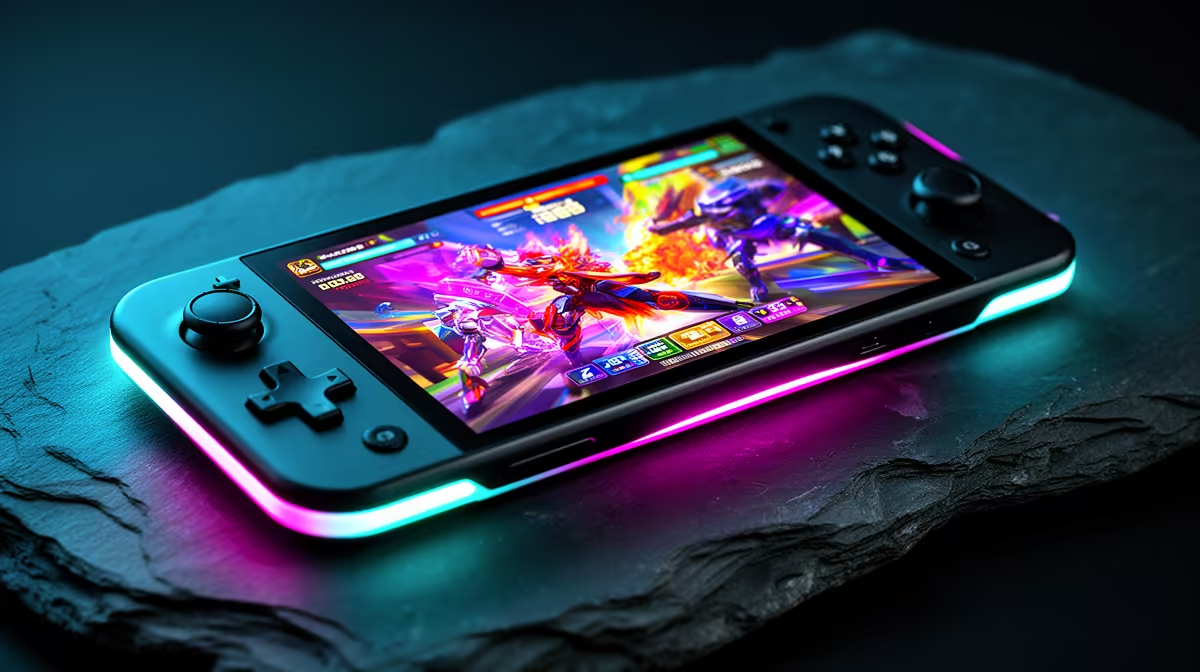
Dark, moody retro games look flat on a backlit LCD, where black is really a dim grey and shadow detail washes out. Put the same game on an AMOLED panel and the blacks go genuinely black, each pixel lit on its own, and the picture gains a depth IPS cannot fake. That is why the best retro handheld with an AMOLED screen is worth seeking out: for emulation, where so many classics lean on inky atmosphere, the display does as much for the experience as the chip behind it.
Quick Answer
The two AMOLED handhelds to weigh up are the Retroid Pocket 5, with a 5.5-inch 1080p AMOLED on a Snapdragon 865, and the Ayn Odin 2 Portal, with a 7-inch 1080p 120Hz AMOLED on a Snapdragon 8 Gen 2. The Pocket 5 is the pocketable all-rounder, the Odin 2 Portal is the big-screen powerhouse. Both deliver true blacks an LCD cannot.
Why AMOLED matters for retro gaming
On an LCD, one backlight shines through the whole panel, so a black scene is only as dark as the panel can dim that light. AMOLED lights each pixel individually, so a black pixel is simply off. The result is true blacks, per-pixel brightness control and far better contrast.
Retro libraries lean into this hard. Survival horror, dungeon crawlers, the dark caverns of platformers and the night stages of shooters all rely on shadow that an LCD muddies into grey. On AMOLED those scenes read the way the original artists intended, with bright sprites popping against a genuinely dark background. Colours look richer too, which suits the punchy palettes of 16-bit and arcade games.
The Retroid Pocket 5: pocketable and balanced
The Retroid Pocket 5 has become the gold-standard mid-range Android handheld, and the screen is a big reason. Its 5.5-inch 1080p AMOLED delivers 500 nits of brightness with 107% sRGB colour coverage, and at that size it slips into a jacket pocket. Inside sits a Snapdragon 865 with Adreno 650 graphics, 8 GB of memory (LPDDR4x) alongside 128 GB of fast UFS 3.1 storage, plus active cooling, hall-effect sticks that resist drift, analogue triggers and a 5,000mAh battery.
What it handles well
That chip comfortably runs everything up to PSP and Dreamcast, handles most GameCube and PS2 titles, and pushes into Switch emulation on the more forgiving games. For the overwhelming majority of retro libraries it never breaks a sweat, and the AMOLED makes the older 2D systems look superb. If you want one device for everything from the NES era up to PS2, this is the natural pick.
Why the display stands out in context
At 5.5 inches and 1080p the Pocket 5's panel sits at a pixel density that makes sprite art genuinely crisp rather than blocky, and the AMOLED contrast means letterbox bars around 4:3 content blend into the bezel rather than showing as washed-out grey strips. That detail sounds minor until you spend an evening with a well-lit dungeon crawl and notice how much cleaner the image looks.
The Ayn Odin 2 Portal: the big-screen option
Where the Pocket 5 is about portability, the Ayn Odin 2 Portal is about the panel. Its 7-inch 1080p AMOLED runs at 120Hz and remains one of the best displays on any handheld, and the Snapdragon 8 Gen 2 driving it is a serious step up in raw emulation power. That extra grunt pays off on the most demanding Switch and PS2 titles, where the larger Snapdragon pulls ahead.
The trade-off is size. At 7 inches the Portal is a two-handed, bag-not-pocket device, closer to a small tablet with controls than something you palm on the commute. If screen real estate and headroom matter more than slipping it into a pocket, the Portal is the one to beat.
Performance headroom on the Portal
The Snapdragon 8 Gen 2 scores roughly 1.4 million on AnTuTu, meaningfully ahead of the Pocket 5's Snapdragon 865. That gap only matters at the top of the emulation catalogue -- Switch titles that stutter on the Pocket 5 often stabilise on the Portal, and the 120Hz panel makes fast-scrolling action games noticeably smoother. For most retro libraries the extra power is surplus, but it is there when you need it.
Which one is for you
Choose the Pocket 5 if you value portability, balance and value, since it covers the vast bulk of retro gaming on a lovely pocket-sized panel. Choose the Odin 2 Portal if you want the largest, smoothest AMOLED and the muscle for the heaviest emulation, and you do not mind carrying a bigger device. You can compare the current portable lineup at Evetech's handheld gaming consoles page, and the PC best sellers are handy if you are also weighing a small emulation-capable mini PC for the TV.
Practical Considerations for SA Buyers
Both devices are imported, and that has implications. The Retroid Pocket 5 has broader distribution and more local visibility, with a growing community of South African users who can share setup tips and emulator configurations. The Odin 2 Portal is less commonly seen locally, which means more reliance on international forums for support. Neither device has a local warranty, so buying through a reputable grey-market or import channel is important -- check return policies before you commit.
In terms of accessories, both use USB-C for charging and data, which is practical since cables and chargers are widely available. Cases are a consideration too: both devices benefit from a form-fitting case or sleeve in a bag, and third-party options are available internationally. Factor that into your total budget if you plan to travel with the device regularly.
Frequently Asked Questions
Is AMOLED really better than LCD for retro games?
For dark and atmospheric titles, clearly yes. AMOLED produces true blacks and per-pixel brightness, so shadow detail and contrast look far better than on a backlit LCD where black is really grey.
Which AMOLED handheld is best for beginners?
The Retroid Pocket 5. It is pocketable, well priced, runs almost every retro system up to PS2 smoothly and has a beautiful AMOLED panel, making it the easiest first serious handheld.
Can these handhelds run Switch games?
The Snapdragon 8 Gen 2 in the Odin 2 Portal handles many Switch titles well, and the Pocket 5 manages the lighter ones. Demanding Switch games favour the more powerful Portal.
Does AMOLED hurt battery life on a handheld?
Not much in practice. AMOLED can be very efficient on dark content since black pixels draw almost no power, and the 5,000 to 6,000mAh batteries in these devices give long sessions.
Does the 120Hz refresh rate on the Portal make a difference?
For fast action games and scrolling menus, yes -- 120Hz delivers noticeably smoother motion compared to the Pocket 5's 60Hz panel. Most retro games do not run above 60 fps, so the benefit there is a smoother UI rather than higher in-game frame rates.
A true AMOLED panel turns a good emulation session into a great one. See the current handheld consoles at Evetech to find the screen and the power that match how you play.