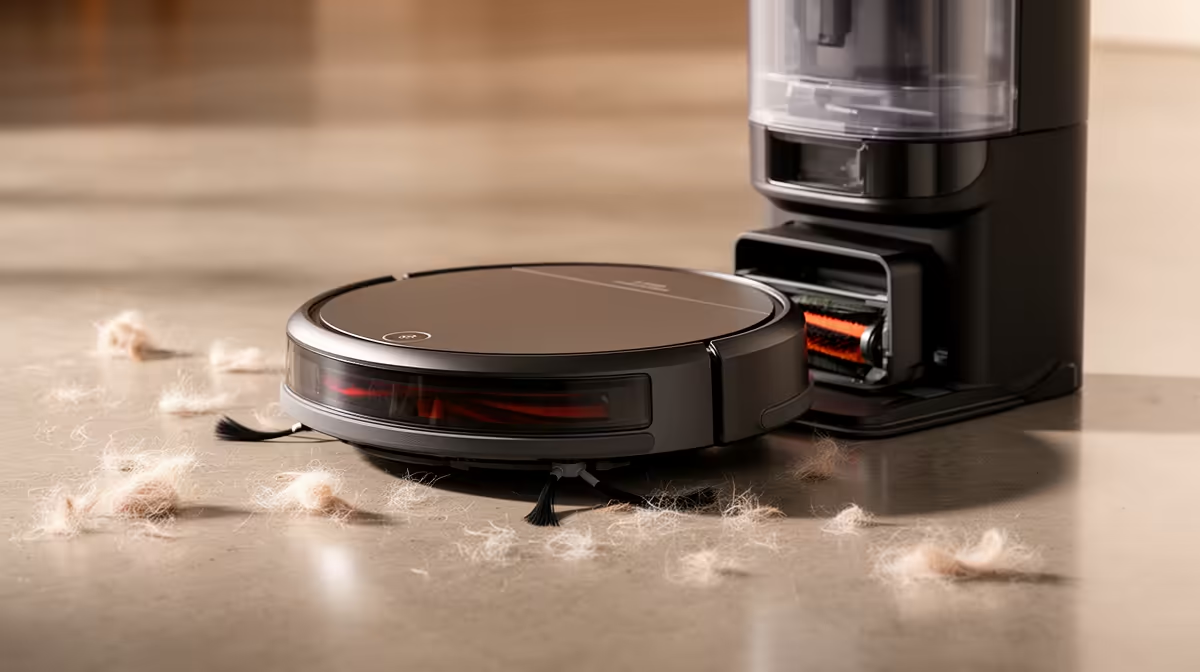
Anyone who shares a home with a shedding dog or a long-haired cat knows the real test of a robot vacuum is not the demo on the box. It is what happens after a month of daily runs through a house carpeted in fur. The best robot vacuums for pet owners win on two specific features that solve the two things that make pet hair miserable: brushes that do not tangle, and a dock that empties itself.
Quick Answer
For pet owners, the two features that matter most are an anti-tangle rubber brush and a self-empty dock. The rubber brush stops shed hair wrapping into a solid mat, and the self-empty dock seals that hair into a base bag after every run so you are not emptying a clogged bin daily. Get both and a robot vacuum becomes genuinely hands-off.
The two features that actually matter
There is a long list of specs on any robot vacuum, but for pet households only a handful change daily life. Strip away the marketing and it comes down to two.
Anti-tangle rubber brushes
The classic bristle brush is pet hair's best friend, and not in a good way. Long hair wraps around the spinning bristle bar and knots into a dense band that you have to cut off with scissors. Do that every few days and the novelty of a robot vacuum wears off fast.
Rubber or silicone brushes solve this by design. They use flexible fins or a dual-roller arrangement instead of bristles, so hair slides along and gets pulled into the bin rather than wrapping and locking. The difference over weeks of pet shedding is enormous: a rubber brush stays clear where a bristle brush would be a solid rope of fur.
Self-empty docks
A robot vacuum's onboard bin is small, and pet hair fills it fast. Without help, a pet owner ends up emptying that little bin almost every single run, which defeats the point of automation. A self-empty dock fixes this. When the robot returns home, the dock sucks the collected hair out of the robot and seals it into a larger bag in the base.
That bag typically holds many runs' worth of debris, so instead of emptying daily you swap a sealed bag every few weeks. Crucially, the hair is contained in a sealed bag rather than puffing back into the air, which matters if anyone in the home is sensitive to pet dander. This is the feature that turns a robot vacuum from a gadget you tend into an appliance that tends itself.
Suction and how it interacts with pet hair
Strong suction helps, but it is the supporting act, not the headline. Pet hair, especially on rugs and upholstery edges, needs decent airflow to lift, so a model with higher suction will pull embedded fur out of carpet better than a weak one. Many pet-focused models also offer a boost mode that ramps suction on detecting carpet.
The catch is that raw suction without a good brush design still leaves you with a tangled roller. Suction and brush work as a pair: the brush agitates and feeds hair in, the suction carries it away. Chasing a huge suction number while ignoring the brush type is a common mistake. Prioritise the rubber brush first, then look for a model with enough suction to handle your floor mix.
Navigation, mapping and pet-proofing
A robot that bumps around randomly will miss the corners where fur gathers, so good navigation earns its keep in a pet home. Models that map your floor plan with laser or camera-based navigation clean methodically, cover the whole floor, and let you set up the cleaning to suit your space.
No-go zones for pet bowls and litter
The most useful mapping feature for pet owners is the ability to draw no-go zones. You can fence off the area around food and water bowls so the robot does not scatter kibble or skate through a spilled drink, and block off a litter tray so it never drives through it. That single setting prevents the messiest failure modes of an automated vacuum in a pet home.
For households with both pets and small children, obstacle avoidance is worth paying for too. Better models recognise and steer around cables, socks and, yes, the occasional pet accident, rather than spreading it across the floor. It is worth browsing the broader smart-home appliance range to see which models pair strong mapping with the pet-friendly brush and dock combination.
Maintenance, even on a self-emptying model
A self-empty dock removes the daily chore, but a pet vacuum still needs occasional attention, and knowing this up front saves frustration:
- Check the rubber brush every week or two and pull off any hair that has gathered at the ends, even on anti-tangle designs.
- Rinse or replace the filter regularly, since fine pet dander clogs filters faster than ordinary house dust.
- Swap the dock bag when it fills, usually every few weeks depending on how much your pet sheds.
- Wipe the sensors and charging contacts so navigation and docking stay reliable.
None of this is heavy work, and it is far less than the daily bin-emptying and scissor-work that a basic model demands. Keeping spare filters and bags on hand, easily picked up alongside other home and PC accessories, means you are never caught with a full dock and nothing to swap in.
Matching the vacuum to your home
The right pick depends on your floors and your pet. For mostly hard floors with a heavy-shedding dog, prioritise the self-empty dock and a good rubber brush; suction matters less on tile and laminate. For a home with rugs and carpets, lean toward a model with stronger suction and a carpet-boost mode so fur is actually lifted out of the pile rather than skimmed over.
If your home is large or multi-level, mapping and battery life become more important so the robot can finish the whole floor in one charge or resume after recharging. For a compact flat, a simpler model with the two core pet features will do the job without paying for navigation you do not need.
Who should buy one, and who can skip it
A robot vacuum with these features is genuinely worth it if you have a shedding pet, hard floors or low-pile carpet, and you are tired of the daily sweep-up. The anti-tangle brush and self-empty dock together remove the two chores that make pet hair relentless.
It is less essential if your home is mostly thick high-pile carpet, where robots struggle and a traditional upright still cleans deeper, or if your pet barely sheds. In those cases a robot can still help between deep cleans, but it will not fully replace your main vacuum. Be honest about your floor type before you buy.
Frequently Asked Questions
What is the most important feature for a pet owner's robot vacuum?
An anti-tangle rubber brush is the single most important feature, because it stops shed hair wrapping into a mat that you have to cut off. Pair it with a self-empty dock and you remove the two biggest daily frustrations of pet hair.
How often do I need to empty a self-emptying robot vacuum?
The robot empties itself into the dock's bag after each run, so you only swap the sealed bag every few weeks, depending on how much your pet sheds. That is a major step down from emptying the small onboard bin almost every clean.
Do robot vacuums handle long pet hair well?
The good ones do, specifically those with rubber or silicone brushes designed to resist tangling. Bristle brushes struggle with long hair because it wraps and knots, so the brush type is what decides whether long hair is handled cleanly.
Can a robot vacuum replace my regular vacuum entirely?
On hard floors and low-pile carpet with a shedding pet, it can largely take over daily cleaning. On thick high-pile carpet it cleans less deeply, so you may still want a traditional vacuum for occasional deep cleans.
Will a robot vacuum make a mess of pet bowls or litter?
Only if you let it. Models with mapping let you draw no-go zones around food and water bowls and litter trays, so the robot avoids them entirely. That setting prevents the messiest failures in a pet home.
If a shedding pet has you sweeping every day, a robot vacuum with an anti-tangle brush and a self-empty dock does the work for you. Compare the pet-friendly models and stock up on spare bags and filters at Evetech, and reclaim your floors.