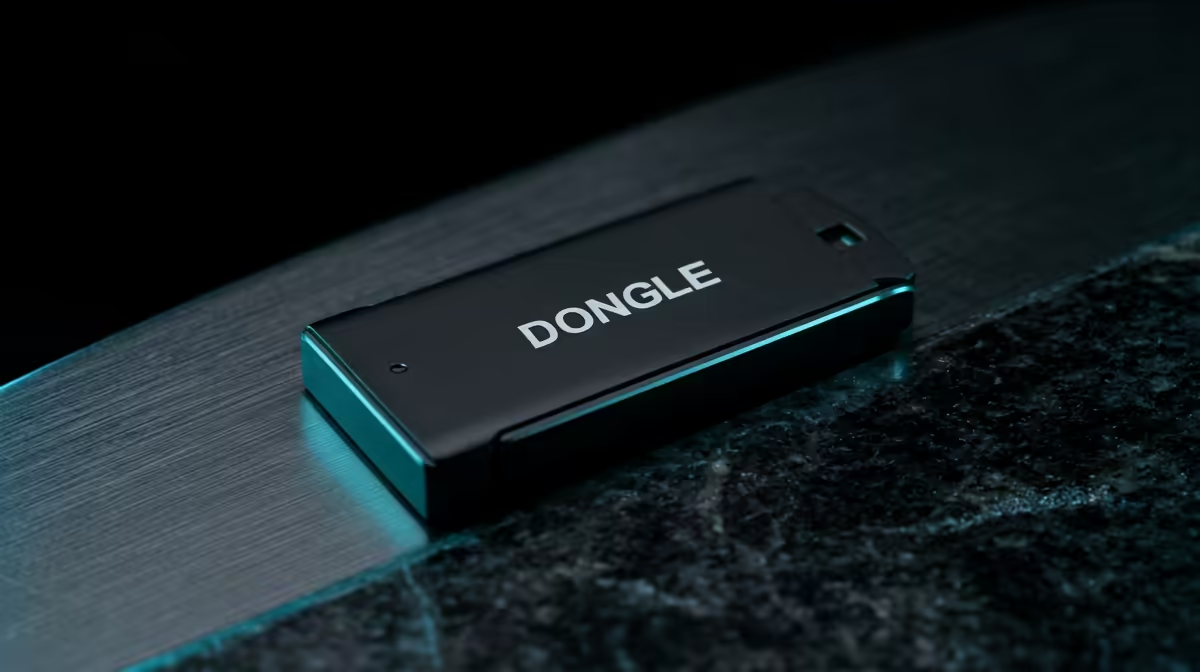
The single most important part of a Home Assistant smart-home setup is not the server or the sensors, it is the little radio stick that talks to them. The best Zigbee and Thread USB dongles for Home Assistant act as the coordinator, the radio that lets your server speak the wireless languages your smart devices use. Pick the right one and your mesh is stable for years; pick a poor one and you fight dropouts forever. For 2026, three coordinators lead the field, and the choice between them comes down to how large your network is and whether you want Thread support alongside Zigbee.
Quick Answer
The SONOFF ZBDongle-E is the proven, affordable Zigbee coordinator that works cleanly with Zigbee2MQTT and ZHA. The Home Assistant Connect ZBT-2 is the current flagship from Nabu Casa, using a next-generation EFR32MG24 chip with a dedicated co-processor for larger and more demanding networks. If you want Thread and Matter support on a single stick, both the ZBT-2 and the ZBDongle-E handle it, making Thread coverage no longer a reason to choose one over the other.
What a Coordinator Actually Does
Home Assistant runs on your server, but it has no radio of its own for Zigbee or Thread. The USB dongle is that radio. It plugs into your server, forms the mesh network, and relays commands between Home Assistant and every bulb, sensor, plug, and switch you add. Every device joins the network the coordinator creates, which is why the coordinator quietly determines how reliable the whole system feels.
Because everything depends on it, the coordinator is the one component worth choosing carefully. A weak or poorly supported stick produces the dropouts and unresponsive devices that frustrate new Home Assistant users, while a strong one fades into the background and simply works. The two software stacks people pair these with, Zigbee2MQTT and ZHA, both support the leading dongles, so your choice of stick does not lock you into one integration.
The SONOFF ZBDongle-E: The Reliable Workhorse
Why It Stays Popular
The SONOFF ZBDongle-E, built on the Silicon Labs EFR32MG21 chip, has earned its reputation through sheer reliability. It supports a large device count, plays cleanly with both Zigbee2MQTT and ZHA, and has a long firmware track record, which matters because a coordinator you cannot update is a coordinator you will eventually outgrow. For the vast majority of homes that only need Zigbee, this is the safe, sensible buy.
Placement Matters
The one tip that transforms its performance is to mount it on a short USB extension cable rather than plugging it straight into the server. USB ports and especially USB 3.0 hardware throw off interference on the 2.4GHz band that Zigbee uses, and an extension lifts the radio clear of that noise. This single change is the most common fix for a flaky Zigbee mesh, so treat it as part of the setup rather than an optional extra.
The Home Assistant Connect ZBT-2: The New Flagship
The Connect ZBT-2, released in late 2025, represents a genuine step up from its predecessor. It uses the EFR32MG24 chip, which brings higher processing power and better sensitivity to weak signals compared to the MG21 in earlier models. What sets it apart architecturally is a dual-chip design: a dedicated ESP32-S3 co-processor handles all communication between the radio and your Home Assistant server, leaving the EFR32MG24 free to devote its full resources to managing the mesh. The result is a coordinator that scales better on large networks and handles the combination of Zigbee and Thread more cleanly than a single-chip solution can.
Who Should Choose the ZBT-2
If you are building a new setup from scratch, the ZBT-2 is the natural starting point. Its extra processing headroom becomes meaningful as you add devices past the first few dozen, and it supports Thread natively without the trade-off that older dual-protocol sticks faced. If you already have a working ZBDongle-E and your network is stable, the case for upgrading is less urgent.
Choosing Between Them
Go with the SONOFF ZBDongle-E if your devices are Zigbee, you want the most proven and affordable coordinator, and your network is a typical home scale. Choose the ZBT-2 if you are starting fresh, building a large network, or want the architecture designed for where Home Assistant is heading with Thread and Matter. Either way, remember the extension-cable trick and keep the coordinator central in your home so the mesh reaches every corner. You can browse the wider smart home range at Evetech to pair your coordinator with compatible bulbs, sensors, and plugs, and the top-selling accessories at Evetech cover the USB extensions and hubs that round out a tidy setup.
Frequently Asked Questions
What is the difference between a Zigbee and a Thread coordinator?
Both are radios that let Home Assistant talk to wireless devices, but they speak different protocols. Zigbee is the long-established smart-home mesh, while Thread is the newer low-power protocol behind much of Matter. Recent coordinators like the ZBT-2 handle both.
Is the SONOFF ZBDongle-E good enough for a large home?
It supports a high device count and works reliably with both Zigbee2MQTT and ZHA. For a Zigbee-only home of almost any size, it is the proven, affordable choice. For very large networks or Thread-heavy setups, the ZBT-2 has more headroom.
Why does my Zigbee network keep dropping devices?
The most common cause is USB interference. Plugging the coordinator directly into the server, especially near USB 3.0 ports, adds 2.4GHz noise. Mount the dongle on a short USB extension cable to clear that interference and stability usually returns.
What is the Home Assistant Connect ZBT-2?
The ZBT-2 is Nabu Casa's current-generation coordinator released late 2025, using the EFR32MG24 chip and a dedicated ESP32-S3 co-processor. It replaces the earlier SkyConnect (now called ZBT-1) and is the recommended new-build choice from Home Assistant.
Does my choice of dongle lock me into ZHA or Zigbee2MQTT?
No. Both leading coordinators work with either software stack, so you can pick the dongle for its radio capability and choose your integration separately based on the features you prefer.