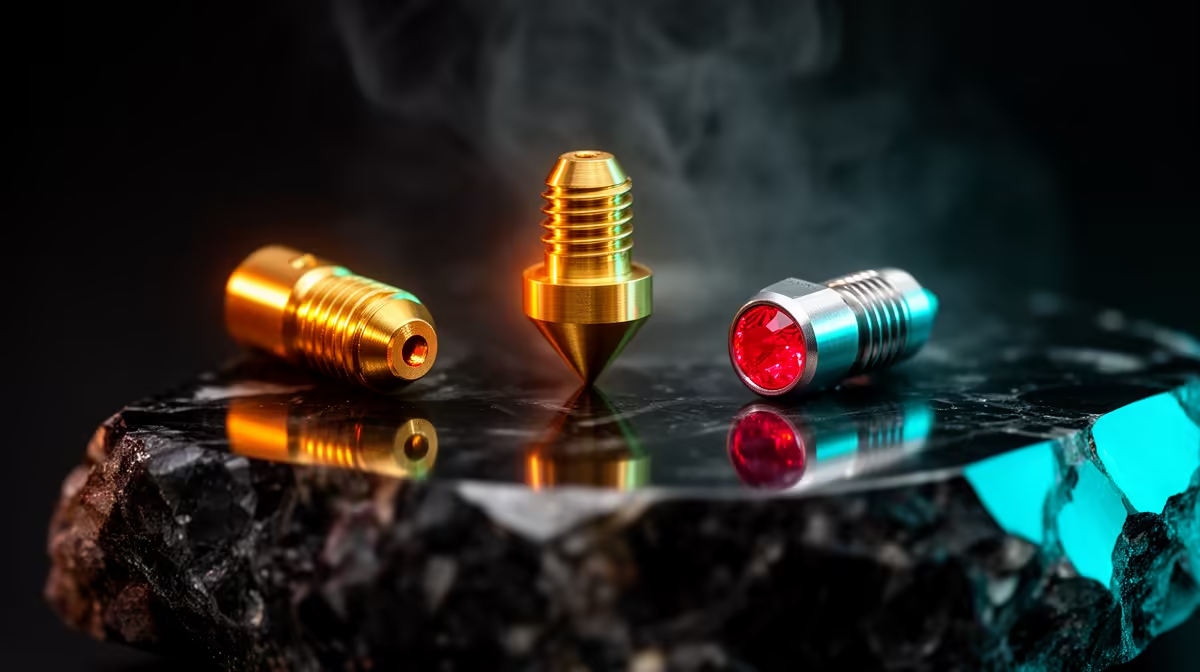
Pick the wrong nozzle and a single carbon-fibre spool will chew a fresh brass tip into junk before the spool is even half gone. The 3D printer nozzle material you choose decides whether a print farm stays calibrated or whether you spend every weekend re-tramming a worn bore. Brass, hardened steel and ruby each win a different fight, and the deciding factor is almost never print quality on day one. It is what the filament does to the tip over the next few hundred hours.
Quick Answer
Use brass for standard PLA, PETG and ABS, where it delivers the cleanest melt and the sharpest detail. Switch to hardened steel the moment you load anything filled with carbon fibre, glass fibre, wood or metal, because brass can widen from 0.4 mm to over 0.6 mm within a few abrasive prints. Choose a ruby tip only if you run abrasives daily and want brass-level heat transfer with the longest lifespan, accepting the higher price and the brittleness risk.
Why Heat Conductivity and Wear Resistance Pull in Opposite Directions
Every nozzle material trades thermal performance against hardness, and the two are inversely related. Brass conducts heat extremely well, so the metal at the thermistor temperature is very close to the metal touching your filament. That is why brass gives such consistent extrusion on standard materials at normal speeds.
Hardened steel is roughly ten to twenty times harder than brass, but it carries heat far less efficiently. A hardened steel tip reading 210 C on the sensor may only be delivering around 195 C to the plastic, so you often nudge the set temperature up by ten to fifteen degrees to compensate. Ruby sidesteps this: it keeps a brass or copper-alloy body for conductivity and presses a tiny synthetic ruby into the very tip for abrasion resistance, giving you most of brass's thermal behaviour with hardness that shrugs off filler particles.
Brass: The Default For Standard Filaments
For PLA, PETG, standard ABS, TPU and silk blends, brass is the correct choice rather than a budget compromise. None of those materials carry abrasive particles, so the soft bore stays dimensionally stable for a very long time. Brass also reaches and holds temperature predictably, which matters for the fine layer detail people print PLA for in the first place.
The trap is loading a glittery, wood-look or "carbon" filament into a printer still wearing its factory brass nozzle. Filler particles act like sandpaper inside the bore. Within one to three spools the orifice widens, your extrusion width drifts, and retraction and pressure tuning that used to work falls apart. If you only ever print plain filaments, brass is cheap, plentiful and exactly right.
Hardened Steel: The Workhorse For Abrasives
Hardened steel is the sensible upgrade for anyone who prints filled materials occasionally or regularly. It holds its diameter through many spools of carbon-fibre nylon, glass-fibre, wood-fill and metal-fill where brass would have failed in hours. For most makers stepping into engineering filaments, this is the nozzle that pays for itself fastest.
What To Change In Your Slicer
Because of the lower heat transfer, treat a hardened steel swap as a recalibration job, not a drop-in. Raise the nozzle temperature by roughly ten to fifteen degrees over your brass profile, then run a fresh temperature tower and a flow-rate check. You will usually want a slightly slower first print to confirm the new thermal behaviour before trusting it on a long job. The range of hardened steel and stainless options sits comfortably alongside the rest of the 3D printer accessories range at Evetech, so matching a nozzle to your machine is straightforward.
Ruby: The Long-Haul Specialist
A ruby-tipped nozzle is built for the person who prints abrasives as their normal workflow, not as a once-off. The synthetic ruby is harder than steel and barely wears, so the bore stays true across a punishing number of abrasive spools, while the brass body keeps heat moving the way you expect.
Two cautions keep ruby honest. First, the price is the highest of the three by a wide margin, so it only makes financial sense at high abrasive volume. Second, ruby is brittle: a hard nozzle crash into the bed or a stubborn print can chip the tip, and a chipped ruby is finished. Macros that lift the nozzle on pause, careful bed levelling and conservative Z-homing protect that investment.
Matching Nozzle To Filament In Practice
Plain PLA, PETG, ABS or TPU: brass, and do not overthink it. Occasional carbon-fibre or glass-fibre nylon: hardened steel, with a temperature bump. A print farm or a daily abrasive workflow: ruby for the lowest long-run cost per print, with crash protection in place. If you are kitting out a new machine, buy one good brass nozzle and one hardened steel nozzle from the outset so a surprise abrasive spool never forces a soft tip into early retirement. Browsing the wider best-selling accessories at Evetech is a quick way to line up spare tips, cleaning needles and the small consumables a maintenance kit needs.
Frequently Asked Questions
How quickly does carbon fibre destroy a brass nozzle?
Faster than most people expect. A carbon-fibre or glass-fibre filled filament can noticeably widen a brass bore within one to three spools, and sometimes within hours of continuous printing. Once the orifice grows past its rated size, extrusion width and pressure tuning become unreliable, which is the cue to move to hardened steel or ruby.
Do I need to change my temperature when I fit a hardened steel nozzle?
Yes. Hardened steel conducts heat less efficiently than brass, so the plastic sees a lower temperature than the sensor reports. Raise your nozzle temperature by roughly ten to fifteen degrees, then re-run a temperature tower and a flow test to dial in the new profile before committing to a long print.
Is a ruby nozzle worth the price for a hobbyist?
Usually not, unless abrasives are your main diet. For occasional filled-filament prints, hardened steel handles the job at a fraction of the cost. Ruby earns its premium in print farms or daily abrasive workflows where its very long lifespan and brass-like heat transfer lower the true cost per print.
Can I use one nozzle for everything?
Hardened steel comes closest to an all-rounder because it prints standard and abrasive filaments without wearing out. The trade-off is slightly softer fine detail and the need to run hotter than brass. Many makers keep brass for their highest-detail standard prints and hardened steel for everything filled.
Why does my detail look slightly worse after switching to steel?
A combination of the lower heat transfer and the harder, less thermally even tip can soften fine features if you keep your old brass profile. Recalibrating temperature, flow and possibly slowing down for detailed prints recovers most of the quality difference.
Matching the right nozzle to your filament saves far more money than replacing a worn tip every week. See current 3D printers, spare nozzles and maintenance consumables in the 3D printer range at Evetech and build a kit that keeps your machine calibrated through every filament you load.