


Using GitHub Copilot: Complete Beginner's Guide for SA Developers
Using GitHub Copilot: Complete Beginner's Guide for SA Developers. Everything you need to know with SA-specific pricing and recommendations.
Read moreOur budget laptop buying guide South Africa helps you understand the essentials! Learn to decode specs like RAM, SSDs, and processors to find the perfect affordable laptop for your needs. No more confusion, just smart choices for your first big tech purchase. 💻✨
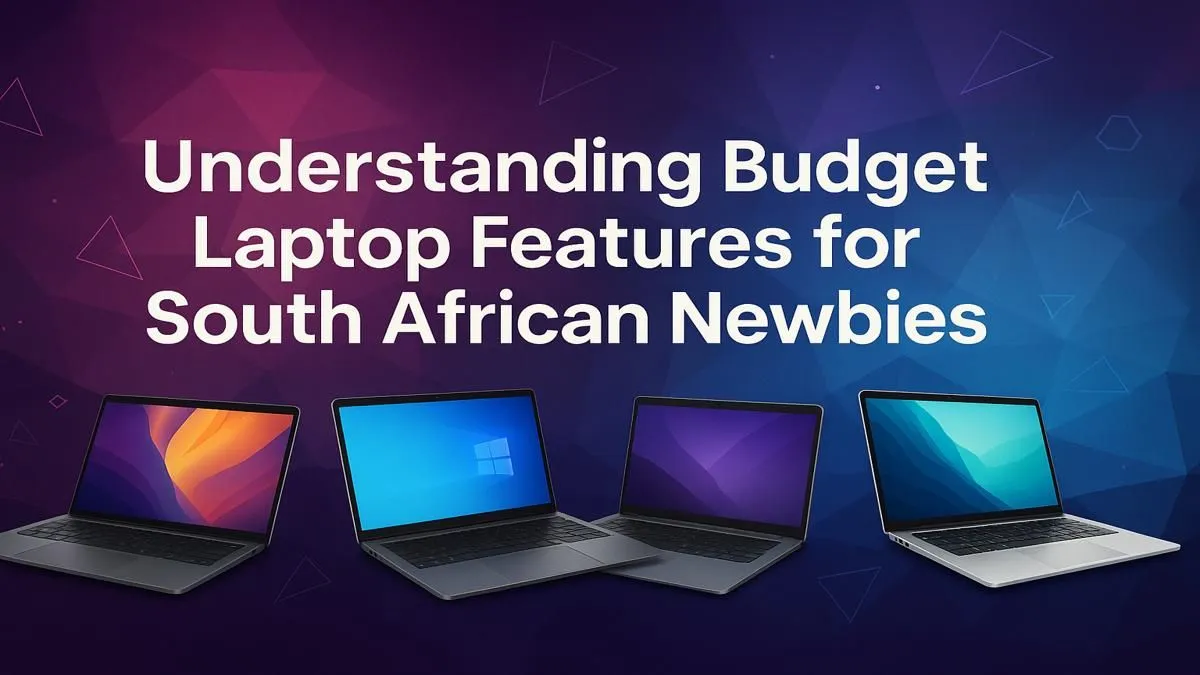
Feeling lost in a sea of tech jargon and confusing prices? You're not alone. This budget laptop buying guide for South Africa is your lifeline. We'll cut through the noise and show you exactly what features matter for students, home offices, and casual users... without breaking the bank. Let’s find you a machine that just works, so you can get on with what’s important. Ready? 🚀
Before you even look at a single spec sheet, ask yourself: what will I actually do with this laptop? The best budget laptop isn't the one with the most impressive numbers; it's the one that perfectly matches your daily tasks.
Knowing your mission makes the next step much easier.
This is where many people get intimidated, but it's simpler than you think. This part of our budget laptop buying guide focuses on the four components that deliver the most bang for your buck in South Africa.
The Central Processing Unit (CPU) is the engine of your laptop. For budget-friendly options, you'll mostly see Intel Core i3/i5 or AMD Ryzen 3/5 processors.
Many modern machines, like the versatile range of Lenovo laptops, offer fantastic options with both Intel and AMD chips to suit your performance needs.
Think of RAM (Random Access Memory) as your desk space. The more space you have, the more projects you can have open at once without everything getting cluttered and slow. In 2024, 4GB is simply not enough for a smooth Windows experience.
8GB of RAM is the non-negotiable minimum. It ensures you can browse, work on documents, and join a video call without your laptop grinding to a halt. You'll find this sweet spot in many affordable HP laptops on special, making them great all-rounders.
If you take one thing away from this guide, let it be this: choose a laptop with a Solid State Drive (SSD). Laptops with older Hard Disk Drives (HDDs) are significantly slower. An SSD means your laptop boots up in seconds, apps open instantly, and the whole experience feels snappy.
For capacity, 256GB is a decent starting point for students and cloud users, while 512GB is ideal if you store more files locally. Brands like ASUS often include fast SSDs even in their more affordable models.
When comparing two similar laptops, check if one has an extra M.2 slot. This is a small detail that means you can easily (and cheaply) add more super-fast SSD storage down the line if you start running out of space. It's a massive win for long-term value.
You'll be staring at this screen for hours, so it needs to be good. Forget confusing terms like NTSC and sRGB on a budget. Just look for one key feature: Full HD (FHD) resolution, which is 1920 x 1080 pixels. This ensures text is sharp, images are clear, and you have enough space to work comfortably. A lower resolution (like 1366 x 768) will look noticeably fuzzy and dated.
The "big four" are crucial, but a few other details separate a good budget laptop from a great one.
Armed with this knowledge, you're no longer a newbie. You're an informed buyer ready to find a fantastic deal.
Ready to Find Your Perfect Match? This budget laptop buying guide gives you the power to choose wisely. Now, put that knowledge to work! Explore our massive range of laptop specials and find the perfect machine to conquer your world.
For everyday use, look for at least an Intel Celeron N-series or AMD Athlon processor, 4GB of RAM, and a 128GB SSD. This ensures smooth performance for browsing and documents.
While 4GB of RAM can handle basic tasks, 8GB is highly recommended for a smoother multitasking experience with research tabs, documents, and apps running simultaneously.
Always choose an SSD (Solid State Drive). Even a smaller 128GB SSD makes your laptop significantly faster for booting up and opening apps compared to a larger, slower HDD.
Aim for a Full HD (1920x1080) display. This has become the standard for a good reason, offering sharp, clear visuals for both work and streaming media.
Brands like Acer, ASUS, Lenovo, and HP offer excellent entry-level laptops in South Africa. They provide a good balance of performance, build quality, and after-sales support.
Think of it as the laptop's brain. For budget models, Intel's Celeron and Pentium are for basic tasks, while a Core i3 or AMD Ryzen 3 offers much better multitasking power.
Using GitHub Copilot: Complete Beginner's Guide for SA Developers. Everything you need to know with SA-specific pricing and recommendations.
Read more
Back-to-School Headset Buying Guide for SA 2026. Everything you need to know with SA-specific pricing and recommendations.
Read more
Mesh Front Panel Setup and Configuration: Complete Tutorial. Comprehensive coverage with SA insights, Rand pricing, and practical recommendations.
Read more
Black Screen: Troubleshooting Guide #1. Everything you need to know with SA-specific pricing and recommendations.
Read more
The Complete 2026 Guide to Storage in South Africa. Everything you need to know with SA-specific pricing and recommendations.
Read more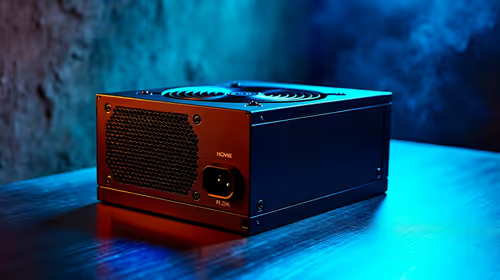
1000W PSU Not Working After Load Shedding: Recovery Guide. Everything you need to know with SA-specific pricing and recommendations.
Read more
AMD RX 9050 XT: Rumoured Specs, Price & Release. SA-focused analysis with local pricing data, real-world insights & actionable buying advice.
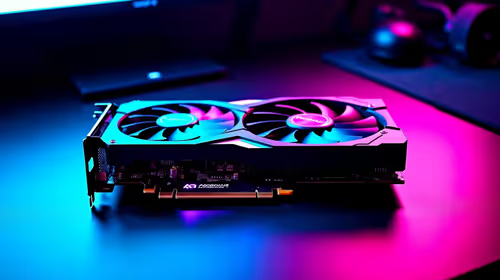
Can RTX 4080 Super Run AI Workloads for SA Developers Detailed answer with SA data, expert analysis & practical recommendations for local buyers.
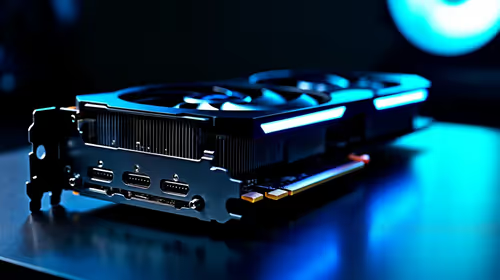
Can RTX 4090 Run AI Workloads for SA Developers Detailed answer with SA data, expert analysis & practical recommendations for local buyers.
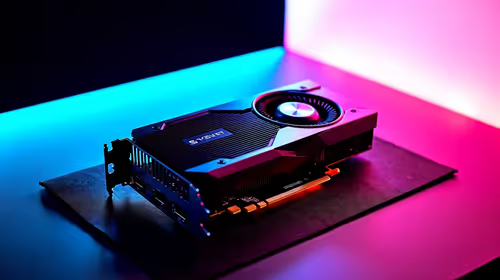
Top Settings for Intel Arc B580 at Ultrawide 1440p picks evaluated on performance, value & SA availability with current Rand pricing from Evetech.

RTX 4060 CS2 Low Settings at 1080p: FPS Results. Real-world benchmark data, FPS numbers & performance analysis. What SA gamers can actually expect.

Visual Artifacts: Possible GPU Issue Issue #1. Diagnosis steps, proven fixes & when to seek professional help. SA-specific support info included.
Can the RTX 4090 Handle 1440p 144Hz Gaming. Performance testing verdict with real data & practical recommendations for SA buyers.

Top ASUS GPU Under R15000 picks evaluated on performance, value & SA availability with current Rand pricing from Evetech.
GTA 6 Max Settings on RTX 5070. Tested & verified settings for best FPS and visual quality on SA hardware budgets.
Cyberpunk 2077 Max Settings on RTX 5080. Tested & verified settings for best FPS and visual quality on SA hardware budgets.
Starfield Max Settings on RTX 5070 Ti. Tested & verified settings for best FPS and visual quality on SA hardware budgets.
Top RTX 5090 Under R5000 picks evaluated on performance, value & SA availability with current Rand pricing from Evetech.