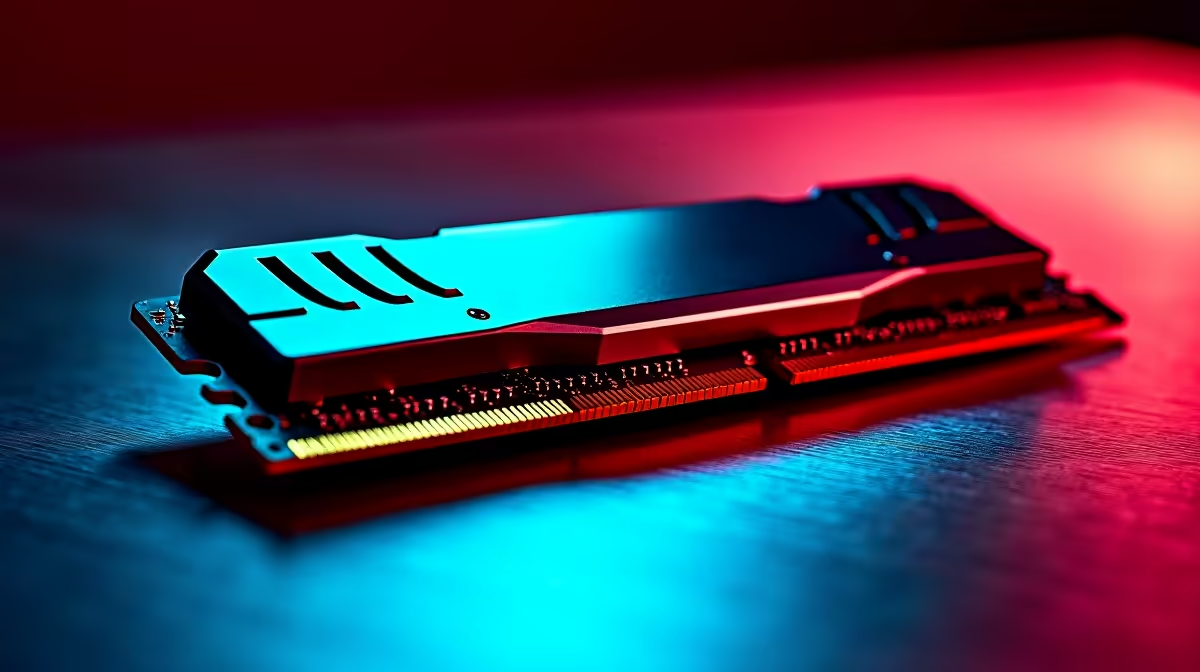
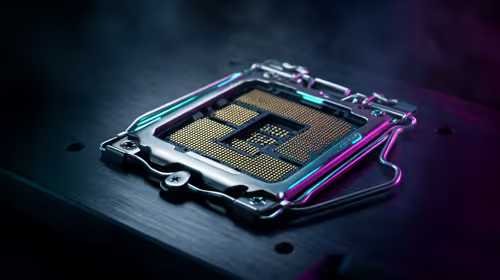
The temptation when building a rig you want to keep for half a decade is to wait for the next big thing, and right now that thing is DDR6 memory. Here is the uncomfortable truth: building a PC you'll keep for years today means going all-in on a fully specced DDR5 platform, not holding back for a DDR6 hedge, because DDR6 lands on a new socket and not one DDR5 component will carry across.
Quick Answer
A long-life build in 2026 is best centred on a maxed-out DDR5 configuration rather than a DDR6 compromise. DDR6 arrives on a new platform, so when you eventually move to it you will replace the CPU, motherboard, and memory together anyway. There is nothing to carry over. SA owners who keep a rig for five years or more get the most longevity by maximising DDR5 capacity and quality now, not by under-building today in anticipation of a swap you cannot actually make piecemeal.
Why The "Wait For DDR6" Plan Falls Apart
The instinct is reasonable: buy a little less now, upgrade the memory later, ride the new standard. With DDR6 that plan does not work, because of how platform transitions happen.
A New Standard Means A New Socket
DDR6 will not drop into a DDR5 motherboard. New memory standards arrive with new CPUs and new motherboards designed for them. So the move to DDR6 is not a memory upgrade, it is a platform replacement: new CPU, new board, new RAM, all at once. The DDR5 you bought does not transfer, the board does not transfer, the processor does not transfer.
So The Hedge Costs You Twice
If you under-spec a DDR5 build today, planning to "upgrade to DDR6 later," you get a weaker machine now and you still have to buy an entire new platform when DDR6 matures. You paid a longevity penalty up front for an upgrade path that was never partial. The smarter money goes into making the DDR5 build as strong as it can be, so it stays capable for its whole life.
How To Build For Genuine Longevity On DDR5
If the goal is five years or more of useful service, here is where to put the effort.
Maximise Capacity Now
Memory capacity is the single most future-proof lever you control on a DDR5 build. A generous amount of RAM keeps a machine fluid as games, browsers, and creative apps grow hungrier over the years. Fitting more capacity at build time, rather than planning to add it later, avoids the hassle of mixing kits and means the system is ready for heavier workloads from day one. You can see what current kits offer in the DDR5 memory range at Evetech when you are sizing your build.
Pick Quality Modules And A Capable Board
Longevity is not just gigabytes. A motherboard with strong power delivery and good memory support, paired with reliable modules, gives the platform room to take a CPU upgrade within the same socket family later. That keeps a mid-life refresh as a chip swap rather than a rebuild.
Balance The Rest Of The Build
Memory is one pillar. A long-life rig also wants a GPU with headroom, fast NVMe storage you can expand, and a power supply rated with margin for a future, hungrier graphics card. Build balanced and nothing becomes the weak link that forces an early teardown.
The SA Angle
For local buyers who tend to hold onto a machine, often well past five years, the maths is clear. Spending on DDR5 capacity and a solid board now buys years of smooth performance, whereas chasing DDR6 means waiting on a platform that, when it arrives, asks you to replace everything anyway. Put the budget where it compounds: more memory, a quality board, and components you will not have to apologise for in 2029. Browsing the best-selling memory kits is a quick way to gauge which capacities and speeds builders are settling on right now.
What DDR6 Will Actually Bring, And Why It Can Wait
It is worth being clear that DDR6 is not hype. New memory generations bring higher bandwidth and tighter efficiency, and over time that helps memory-hungry workloads and keeps pace with faster CPUs and GPUs. The point is not that DDR6 is unimportant, it is that the benefit arrives bundled with a whole new platform you cannot adopt halfway.
Early Adoption Carries Its Own Costs
The first wave of any new memory standard tends to arrive at a price premium with a thinner range of kits and motherboards to choose from. Mature DDR5, by contrast, is plentiful, well-priced, and proven. Building on the settled standard today means more choice and better value per rand than chasing the bleeding edge would offer even once it lands.
When DDR6 Becomes The Right Call
The sensible time to move to DDR6 is when you are ready for a full platform refresh anyway, the CPU, the board, and the memory together. For a five-year keeper, that moment is years away, and by then DDR6 will be mature, affordable, and the obvious choice for a fresh build. Trying to straddle the transition now just leaves you with a weaker machine in the meantime.
A Practical DDR5 Longevity Checklist
Pulling it together, a build meant to last leans on a few concrete decisions:
- Fit generous DDR5 capacity at the start, so you never have to fight kit-matching headaches later.
- Choose a board with strong power delivery and a socket family that can take a future CPU, keeping a mid-life refresh to a chip swap.
- Pick a GPU with headroom and an expandable NVMe drive, the two parts most likely to feel tight as the years pass.
- Spec the power supply with margin so a future, hungrier graphics card does not force a second purchase.
- Skip the DDR6 hedge entirely, since there is no partial upgrade path to hedge toward.
Who This Advice Is For
- The five-year-plus keeper: max DDR5 capacity, buy a strong board, and forget DDR6 until you are ready for a full platform change.
- The frequent upgrader: if you rebuild every two years anyway, platform timing matters less, but you still gain nothing from under-specced memory.
- The budget-conscious long-termer: spend on capacity and a good board first, since those carry your performance furthest before any rebuild.
The Bottom Line
DDR6 is coming, and it will be excellent, but it is a clean break, not an upgrade you bolt onto today's machine. The way to build a PC you will keep for years is to make this DDR5 platform as complete as you can afford now. When DDR6's time comes, you will be replacing the whole core anyway, so there is no reason to handicap the build you are living with for the next several years.
Frequently Asked Questions
Should I wait for DDR6 before building a long-life PC?
No. DDR6 needs a new socket, CPU, and motherboard, so it is a full platform change rather than a memory upgrade. A fully specced DDR5 build now gives better longevity than under-building in anticipation of DDR6.
Will my DDR5 memory work on a future DDR6 motherboard?
No. DDR6 modules require boards designed for DDR6, and DDR5 will not fit them. When you move to DDR6 you replace the memory, board, and CPU together.
How much RAM should a five-year build have?
Maximise sensible capacity at build time, since RAM is the most future-proof lever you control. Fitting plenty now keeps the system fluid as software grows hungrier over the years.
What else matters for longevity besides memory?
A motherboard with strong power delivery, a GPU with headroom, expandable NVMe storage, and a power supply rated with margin. Build balanced so no single component forces an early rebuild.
Is it worth buying a cheaper DDR5 build now and upgrading later?
Only if you plan to replace the whole platform anyway. You cannot upgrade DDR5 to DDR6 in place, so under-spending now just gives you a weaker machine without saving a future rebuild.
Building a rig to keep for the long haul? Start by maxing your memory in the DDR5 range at Evetech and put your budget where it lasts.