Quick Answer
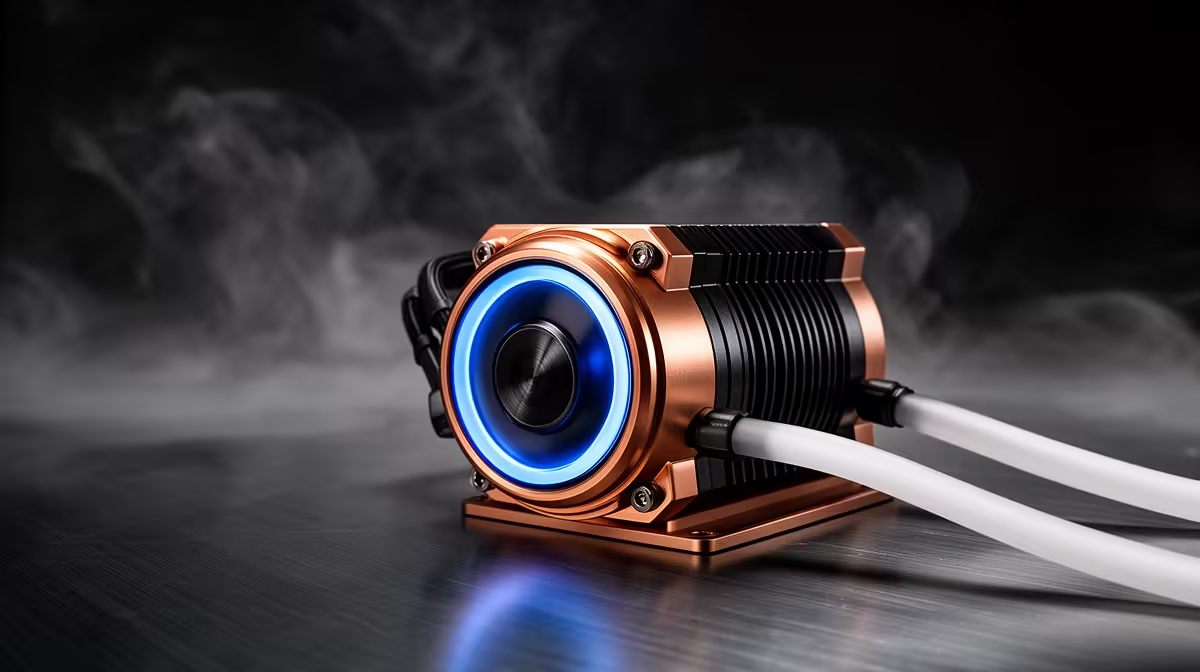
Yes, a three-phase motor pump in an AIO cooler runs measurably quieter than a single-phase motor at equivalent flow rates, typically 2 to 5 dBA lower, because the three-phase design produces smoother rotation with less vibration and bearing chatter. Brands like Lian Li (Galahad II Trinity), NZXT (Kraken series), and Alphacool use three-phase pump motors in their premium units specifically to address noise under sustained load.
How Three-Phase Motors Reduce Vibration Noise 🔧
A single-phase motor produces torque in pulses, creating vibration at each power cycle that resonates through the pump housing and PC case. A three-phase motor generates torque across three offset electrical phases simultaneously, resulting in smoother rotation with near-zero dead spots. This eliminates most of the low-frequency hum that single-phase AIO pumps exhibit at high flow rates. The difference is most audible at pump speeds above 2,500 RPM, exactly the operating range where an AIO works hardest during a sustained rendering session or a summer gaming marathon in a SA home without air conditioning.
What Three-Phase Motors Cannot Fix 🔊
Pump motor noise is only one of three noise sources in an AIO. Radiator fans remain dominant above 1,200 RPM, contributing 28 to 38 dBA depending on fan design and count. Coolant turbulence, a faint gurgling sound, is influenced more by flow rate and tubing routing than motor type. Switching to a three-phase pump while keeping fans at full speed produces a quieter pump but overall volume still dominated by fan noise. The full benefit is realised when paired with a good PWM fan curve and a case with sound-dampening panels.
Are Three-Phase AIO Pumps Available in South Africa? 💰
Premium three-phase pump AIOs are available locally at Evetech, typically in the R2,800 to R4,500 bracket. The Lian Li Galahad II Trinity 360 and NZXT Kraken Elite 360 use three-phase pump designs. For SA builders using their PC as a streaming studio or shared home office where background noise is a genuine issue, the premium over a standard single-phase AIO, usually R400 to R800, is justifiable. For a gaming-only build in a dedicated room, standard pump designs are quiet enough when properly configured with a PWM curve.
Isolate Your AIO Pump From the Case Panels ⚡
Even a three-phase pump transmits some vibration to the case. Use anti-vibration rubber screws or pads on the radiator mounting points to decouple the radiator from case panels. This small addition, costing under R50 from most hardware stores, reduces low-frequency resonance hum noticeably in aluminium cases.
FAQ
Is a three-phase pump AIO worth it for a gaming PC in South Africa?
If noise is your primary concern and you are building in the R15,000 to R25,000 range, yes. If you are prioritising thermal performance per Rand, a quality single-phase 360mm AIO cools equally well at significantly lower cost.
Can I hear the difference between a single-phase and three-phase AIO pump in normal use?
At idle and low pump speeds, most people cannot distinguish the two. The difference becomes audible above 2,000 RPM, which typically occurs only during stress testing or extended all-core workloads. Daily gaming rarely pushes pumps to speeds where the motor type matters audibly.
Do three-phase pump AIOs last longer than single-phase units?
Three-phase motors have fewer vibration stresses on their bearings, which theoretically extends bearing life. In practice, quality single-phase AIO pumps from reputable brands also achieve 50,000 to 70,000 hour MTBF ratings, so real-world lifespan differences are minimal under normal conditions.
After a quieter AIO cooler that performs under load?
Evetech stocks premium AIO coolers including three-phase pump models from Lian Li and NZXT. Browse the cooling range on the Evetech site to compare specifications and current pricing.